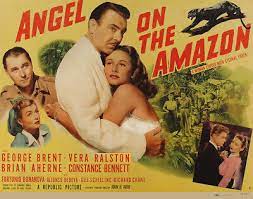
“Angel on the Amazon” (1948)
Adventure

Running Time: 86 minutes
Written by: Lawrence Kimble
Directed by: John H. Auer
Featuring: George Brent, Vera Ralston, Brian Aherne and Constance Bennett
“The sullen killer of the jungles…and the woman who knew no fear! The story of their meeting and the strange events that followed!”
Critical Commentary
Jungle drums beat, not with the primal rhythm of nature, but with the syncopated cadences of 1940s B-movie schlock. We crash-land with the rickety plane of “Angel on the Amazon,” a 1948 celluloid expedition into the heart of both the Amazon rainforest and Hollywood’s delightfully bizarre imagination.
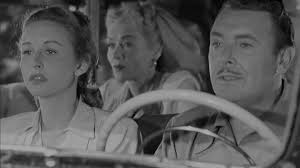
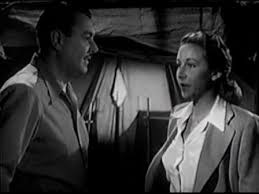
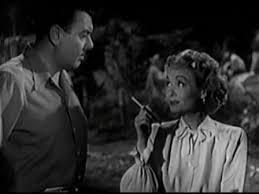
From the ashes of this crash emerges Jim Warburton, a grizzled, world-weary pilot played by George Brent with all the enthusiasm of a man wrestling a hangover in a swamp. Enter Christine, our titular Angel, played by Vera Ralston in a role that would make Tarzan blush. She swings through the trees with the grace of a gazelle and the wardrobe of a Vegas showgirl, clad in shimmering emerald gowns that seem perpetually dry despite the incessant downpours. Her motives are as murky as the river, her past a whisper on the jungle breeze.
The plot, like a boa constrictor after a particularly large rodent, is best described as sinuously loose. An expedition searching for the Fountain of Youth (naturally) stumbles upon Christine’s Edenic domain, a technicolor oasis amidst the emerald chaos. Jim, with the romantic instincts of a soggy log, falls head over heels, while the expedition leader, Dr. Rand (Brian Aherne), channels his inner Dr. Evil, scheming to exploit the mythical spring for his own nefarious purposes.
Don’t expect Attenborough-esque naturalism here. The Amazon is less a living ecosystem and more a jungle disco, populated by rubbery snakes, unconvincing jaguars, and extras playing natives who wouldn’t look out of place at a luau. The dialogue crackles with the voltage of a dying car battery, filled with lines like “She’s as wild as the Amazon itself!” and “Only the jungle knows her secrets!” These gems are delivered with the solemnity of a Shakespearean pronouncement by a cast that seems perpetually surprised to find themselves in this technicolour fever dream.
But amidst the camp and kitsch, something undeniably alluring emerges. Like a macabre orchid blooming in the swamp, “Angel on the Amazon” possesses a strange, hypnotic charm. The film’s pulpy heart beats with a genuine love for the B-movie aesthetic, an infectious enthusiasm that’s hard to resist. It’s a gloriously messy cocktail of adventure, romance, and the supernatural, served in a skull-shaped tiki mug adorned with plastic orchids.
So, should you brave the depths of this cinematic jungle? If you’re a cinephile with a soft spot for the absurd, then absolutely. This is a film to savour with a wink and a raised eyebrow, a camp classic best enjoyed with a group of friends, popcorn, and perhaps a healthy dose of jungle-themed cocktails. It’s a reminder that sometimes, the most entertaining journeys are the ones that are completely off the beaten path, where logic takes a siesta and bad dialogue becomes a charmingly bizarre songbird.
Beyond the surface of campy adventure and rubber snakes, “Angel on the Amazon” whispers a fascinating subtext. The clash between civilization and nature takes center stage, embodied by Jim and Christine. He, a jaded product of the modern world, seeks escape in the jungle’s embrace. She, a creature of the wild, embodies its untamed spirit, its defiance of human control. Their romance is a clash of fire and water, a dance between order and chaos.
Dr. Rand’s avarice for the Fountain of Youth adds another layer of complexity. His quest for eternal life mirrors mankind’s insatiable hunger for control over nature, over time itself. Christine, with her ageless beauty and primal grace, becomes a symbol of what we seek to conquer and exploit. Her tragic past, hinted at in fleeting flashbacks, suggests a cautionary tale about the perils of defying the natural order.
But the film doesn’t offer easy answers. It revels in the ambiguity, leaving us to grapple with the ethical and philosophical quandaries it raises. Is eternal youth a blessing or a curse? Can civilization truly coexist with nature, or are they destined to be locked in an eternal struggle? These are questions that linger long after the credits roll, echoing through the emerald depths of the Amazon like the haunting call of a jaguar.
Beyond the subtext, the film also offers a fascinating glimpse into Hollywood’s Golden Age. It’s a time capsule of the studio system, showcasing the archetypal characters, the larger-than-life performances, and the unapologetic escapism that defined classic B-movies. Watching “Angel on the Amazon” is like stepping onto a soundstage filled with jungle vines and smoke machines, a nostalgic trip back to a time when filmmaking was as much about pure entertainment as it was about artistic expression.
So, dear reader, I urge you to revisit this forgotten gem with fresh eyes. Look beyond the rubber snakes and the B-movie tropes. See the film as a reflection of its time, a pulpy parable about nature, humanity, and the allure of the unknown. And above all, let yourself be swept away by its infectious exuberance, its unapologetic embrace of the absurd. “Angel on the Amazon” may not be a cinematic masterpiece, but it’s a wildly entertaining ride through a Technicolor jungle, a film that refuses to be easily categorized or forgotten.
But beware, dear explorer, for “Angel on the Amazon” is not for the faint of cinematic heart. It’s a film that wears its B-movie badge with pride, reveling in its own outrageousness. If you demand realism and coherence, turn back now. But if you’re seeking an unhinged escape into a world of emerald gowns, rubber snakes, and whispered legends of eternal youth, then step into the plane, buckle up, and prepare to be transported to the heart of this delightfully pulpy paradise.
Special Features
- 1080p High-definition presentation on Blu-ray from a 4K Scan of the original 35mm camera negative (2014)
- Audio Commentary by film historian Phillipa Berry


 spryfilm.com