
“The Mist” (2007)
Horror

Running Time: 126 minutes
Written and directed by: Frank Darabont
Featuring: Thomas Jane, Marcia Gay Harden, Laurie Holden, Andre Braugher, Toby Jones, William Sadler, Jeffrey DeMunn, Frances Sternhagen, Sam Witwer, Alexa Davalos and Nathan Gamble
Ollie: “As a species we’re fundamentally insane. Put more than two of us in a room, we pick sides and start dreaming up reasons to kill one another. Why do you think we invented politics and religion?”
Critical Commentary
“The Mist,” a 2007 science fiction horror film directed by Frank Darabont, stands as a unique and polarizing entry in the realm of cinematic adaptations of Stephen King’s works. Adapted from King’s novella of the same name, the film weaves a tale of survival, human nature, and the unknown. As the mist descends upon a small town, it brings with it not only grotesque creatures but also the darkness within the human soul. This review will explore the film’s strengths, its deviations from the source material, the performances of the cast, the visual and special effects, and its thematic richness.
One of the first considerations when evaluating any adaptation is how faithfully it captures the essence of the source material. In the case of “The Mist,” Darabont stays true to the core premise of King’s novella, but he takes creative liberties with the ending that significantly diverge from the original text. While some purists may bemoan these changes, others appreciate the director’s bold choice to craft an ending that leaves a lasting impact.
In King’s novella, the story concludes on a more ambiguous note, leaving the fate of the protagonists unresolved. Darabont, however, opted for a more emotionally charged and controversial ending, adding a layer of tragedy that lingers in the minds of viewers. The conclusion has sparked debates among audiences, with some praising its emotional weight, while others argue that it deviates too far from the source material’s intent. Regardless of personal opinions on the conclusion, it is undeniably a daring departure from the expected norms of horror film resolutions.
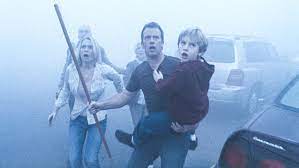
“The Mist” boasts a talented ensemble cast that delivers compelling performances, anchoring the film’s narrative in a sea of terror and uncertainty. Thomas Jane, who plays the lead role of David Drayton, serves as the audience’s emotional anchor throughout the film. Jane’s portrayal of a father desperately trying to protect his son amidst the chaos is both convincing and empathetic.
Supporting performances, notably those by Marcia Gay Harden as Mrs. Carmody and Toby Jones as Ollie Weeks, contribute to the film’s success. Harden’s Mrs. Carmody is a fascinating character study of religious fanaticism and the dangers of unchecked zealotry. Her transformation from a seemingly harmless eccentric to a formidable and divisive figure adds depth to the exploration of human nature under duress.
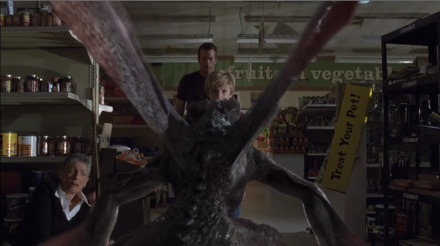
The dynamic among the diverse group of survivors trapped in the supermarket is a microcosm of society in crisis. From the skeptical and rational David to the faithful Mrs. Carmody, the characters’ interactions offer a mirror to the human condition when faced with the unknown. The ensemble cast effectively captures the tension and conflicts arising from fear, desperation, and conflicting worldviews, creating a palpable sense of claustrophobia within the supermarket walls.
“The Mist” received praise for its atmospheric and chilling visual effects, particularly in bringing the nightmarish creatures lurking within the mist to life. The film cleverly employs a mix of practical effects and CGI to create an otherworldly and menacing atmosphere. The diverse array of creatures, from colossal tentacled behemoths to swarming insectoid nightmares, showcases the filmmakers’ commitment to delivering a visually stimulating horror experience.
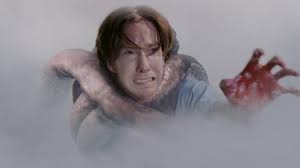
The mist itself becomes an entity, concealing the unknown horrors lurking within. The use of practical effects, such as fog machines and atmospheric lighting, adds an eerie realism to the mist, enhancing the suspense and dread. The integration of CGI, while occasionally showing signs of its mid-2000s origins, generally holds up well, immersing the audience in a nightmarish landscape.
Darabont’s decision to film in black and white for the director’s cut of the movie, available on the home release, further enhances the visual experience. Stripping away color intensifies the contrast, emphasizing shadows and highlights and giving the film a timeless quality. This stylistic choice enhances the bleak and foreboding atmosphere, contributing to the film’s overall impact.
At its core, “The Mist” is more than a creature feature; it is a psychological exploration of the human response to fear and the consequences of unchecked belief systems. The mist serves as a metaphor for the unknown, and the horrors it conceals reflect the fears that reside within the human psyche. The film delves into the darker aspects of human nature, highlighting the fragility of societal norms when faced with existential threats.
Mrs. Carmody’s character embodies the dangers of extremism, using fear and desperation to amass followers and impose her beliefs on the terrified survivors. Her arc serves as a cautionary tale about the potential for manipulation and the destructive power of blind faith. The film raises thought-provoking questions about the thin veneer of civilization and the ease with which it can crumble when confronted by the unknown.
David Drayton’s journey, paralleling the descent into chaos outside the mist, explores the moral dilemmas faced in extreme situations. The choices made by the characters, often driven by fear and desperation, force the audience to reflect on their own ethical boundaries. The film doesn’t shy away from the uncomfortable reality that, in dire circumstances, the line between right and wrong can blur, and the choices made in the heat of the moment can have profound consequences.
Beyond its horror elements, “The Mist” offers a subtle but potent commentary on societal divisions and the fragility of community bonds. The diverse group of survivors in the supermarket represents a cross-section of society, each bringing their biases, prejudices, and beliefs into the pressure cooker of survival. The unfolding events lay bare the fault lines that exist within the group, as alliances form and fracture based on individual loyalties and perceptions.
The film’s portrayal of group dynamics serves as a reflection of real-world societal tensions. It raises pertinent questions about how communities cope with crises, the role of leadership in times of uncertainty, and the impact of fear on collective decision-making. These themes resonate beyond the confines of the horror genre, elevating “The Mist” to a film that invites deeper analysis and discussion.
Upon its release, “The Mist” received a mixed response from both critics and audiences. The film’s divisive ending, in particular, garnered strong reactions, with some praising its emotional weight and others expressing dissatisfaction with its departure from the novella’s conclusion. However, as time has passed, “The Mist” has gained a cult following, and its reputation has grown beyond initial reactions. The film’s willingness to subvert genre expectations and explore profound themes has contributed to its enduring legacy.
The boldness of Darabont’s adaptation and its departure from traditional horror conventions have sparked discussions about the nature of horror storytelling. While some viewers appreciate the film’s departure from a neatly tied ending, others argue that it risks alienating those seeking more conventional resolutions. In retrospect, “The Mist” can be seen as a precursor to a wave of horror films that challenge and subvert established norms, paving the way for a new era of genre storytelling.
“The Mist” distinguishes itself by delving into psychological horror, using the external threat of monstrous creatures as a backdrop to explore the internal fears and conflicts of its characters. The mist becomes a manifestation of existential dread, representing the unknown and the uncontrollable forces that humanity grapples with. This existential layer adds depth to the horror, elevating it beyond mere creature-feature territory.
David Drayton’s emotional journey, from disbelief to desperation, serves as an anchor for the audience. As the mist descends and the horrors unfold, the film becomes a study in the psychological toll of extreme situations. The fear of the unknown, amplified by the creatures lurking within the mist, drives characters to question their beliefs, confront their mortality, and grapple with their own moral compass.
“The Mist” pays homage to classic horror cinema while infusing the genre with modern sensibilities. The film’s black-and-white director’s cut is a nod to the golden age of horror, reminiscent of the atmospheric and chilling works of directors like Alfred Hitchcock. This stylistic choice enhances the timeless quality of the narrative, placing it in conversation with horror classics that continue to resonate with audiences.
Furthermore, the film’s use of the supermarket as a microcosm of society echoes the claustrophobic settings of earlier horror masterpieces like George A. Romero’s “Night of the Living Dead.” The confined space becomes a pressure cooker for tension and conflict, mirroring the societal breakdown occurring outside the supermarket walls.
At its core, “The Mist” is a study of human nature under extreme stress. The film challenges the notion of a cohesive and compassionate society when faced with existential threats. The diverse group of survivors represents a cross-section of humanity, and as their situation becomes increasingly dire, the social fabric begins to unravel.
The character of Mrs. Carmody, with her zealous beliefs and ability to sway the frightened masses, serves as a cautionary tale about the dangers of extremism in times of crisis. Her character arc explores how fear and desperation can lead individuals to embrace radical ideologies, highlighting the fragility of societal norms and the ease with which they can be subverted.
While “The Mist” is undeniably a work of fiction, its themes resonate with contemporary anxieties. The film’s exploration of fear, division, and the consequences of unchecked extremism draws parallels to real-world issues. In an era marked by political and social upheaval, “The Mist” serves as a cautionary parable about the dangers of succumbing to fear, blindly following charismatic leaders, and the potential consequences of societal breakdown.
The mist itself becomes a metaphor for the uncertainties and challenges that humanity faces in an increasingly complex and unpredictable world. By tapping into universal fears and anxieties, the film transcends its genre roots to become a reflection of the human condition in the 21st century.
“The Mist” is a film that transcends the boundaries of traditional horror, offering a compelling narrative that combines visceral scares with thought-provoking themes. Frank Darabont’s bold adaptation and the cast’s stellar performances elevate the film beyond its creature-feature trappings. The visual and special effects contribute to the film’s immersive atmosphere, while the thematic richness and social commentary add layers of complexity to the narrative.
While the deviation from Stephen King’s original ending may be divisive among fans, it undeniably contributes to the film’s lasting impact and distinguishes it from conventional horror fare. “The Mist” remains a standout entry in the horror genre, challenging its audience to confront not only the terrors lurking within the mist but also the darkness that resides within the human soul.
Technical Commentary
Video
“The Mist” drifts onto Blu-ray with a very good 1080p, 1.85:1-framed transfer. This package features both a colour version and a black and white version of the film. I’ll begin with the colour version. The look of the mist itself translates very well to black and white imagery, creating greater drama, though viewing the film on back-to-back nights, some of the tension was reduced due to the film being so fresh in my mind.
Audio
The Dolby TrueHD 5.1 lossless soundtrack accompanying The Mist sets a great tone and atmosphere for the film, but features a few annoying shortcomings. The track does a first-rate job of creating a nice, realistic atmosphere, however, and a spooky one at that once we become ensnared in the mist. It’s not just the sounds of horror that make it so realistic, it’s the way the track so precisely handles everything asked of it, from that distant dialogue heard in the store, to, yes, the more action-oriented sequences in the film. The Mist does not offer a perfect soundtrack, but aside from a few minor quibbles, it’s fine.
Special Features
Disc One
- 1080p high-definition presentation of the Colour Version
- Audio Commentary by writer/director Frank Darabont • Deleted and extended scenes
- Deleted and extended scenes with audio commentary by writer/director Frank Darabont
- A Conversation with author Stephen King and writer/director Frank Darabont
- When Darkness Came: The Making of The Mist – documentary
- Taming the Beast: The Making of Scene 35 – featurette
- Monsters Among Us: A Look at the Creature FX – featurette
- The Horror of it All: The Visual FX of The Mist – featurette
- Drew Struzan: An Appreciation of an Artist – featurette
- Webisodes
Disc Two
- 1080p high-definition presentation of the Black & White Version
- Introduction by writer/director Frank Darabont


 spryfilm.com