
“1408” (2007)
Horror

Running Time: 98 minutes
Written by: Matt Greenberg, Scott Alexander and Larry Karaszewski
Directed by: Mikael Håfström
Featuring: John Cusack, Samuel L. Jackson, Mary McCormack, Tony Shalhoub, Len Cariou and Jasmine Jessica Anthony
Room 1408: “Even if you leave this room, you can never leave this room!”
Critical Commentary
“1408,” a psychological horror film directed by Mikael Håfström and released in 2007, is an adaptation of Stephen King’s short story of the same name. Known for its intense psychological narrative and supernatural elements, the movie takes audiences on a gripping journey through the twisted corridors of the human mind. In this comprehensive review, we will explore the various aspects that contribute to the film’s success, from its stellar performances to its haunting atmosphere and thought-provoking themes.
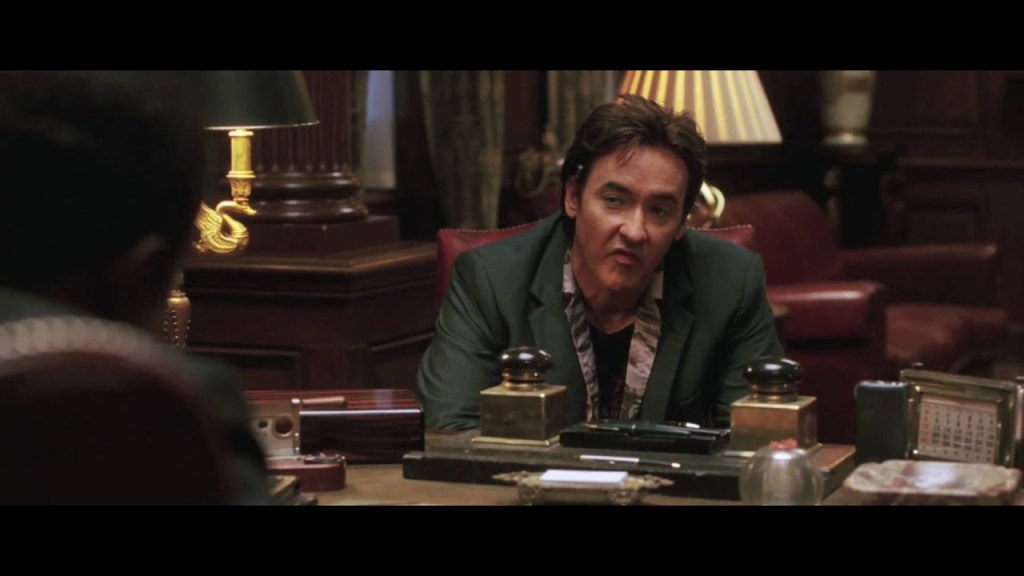
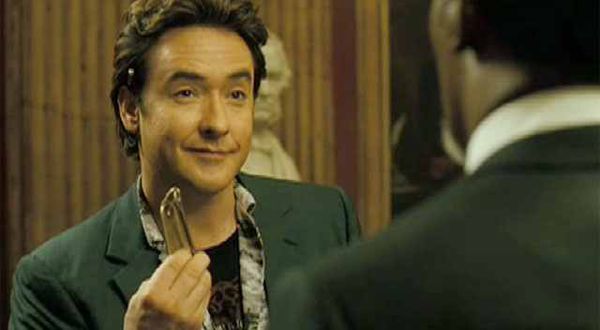
The storyline revolves around Mike Enslin, a skeptical writer played by John Cusack, who specializes in debunking paranormal phenomena. Despite his dismissive attitude towards the supernatural, Enslin becomes intrigued by the notorious Dolphin Hotel’s Room 1408 after receiving a mysterious postcard. The hotel manager, Gerald Olin (Samuel L. Jackson), warns him of the room’s dark history, recounting a series of deaths and tragedies associated with it.
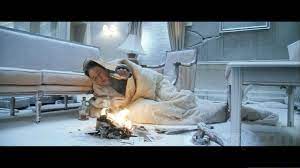
Determined to prove the hotel’s supernatural reputation wrong, Enslin checks into Room 1408, armed with recording equipment and a cynical mindset. However, he quickly discovers that the room is anything but ordinary. As the clock ticks past the initial hour, Enslin becomes entangled in a nightmarish reality where time warps, reality shifts, and his deepest fears manifest in horrifying ways.
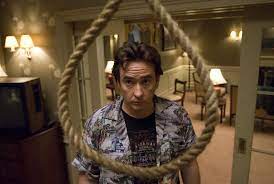
John Cusack delivers a compelling performance as Mike Enslin, capturing the character’s skepticism and vulnerability. Cusack’s portrayal is crucial to the film’s success, as the audience needs to empathize with Enslin’s descent into terror. The actor skillfully navigates the character’s emotional spectrum, from initial skepticism to genuine fear, creating a relatable and engaging protagonist.
Samuel L. Jackson, in the role of hotel manager Gerald Olin, provides a strong supporting performance. Jackson’s commanding presence adds an air of mystery and foreboding to the narrative, effectively setting the tone for the horrors that await Enslin in Room 1408.
Mikael Håfström’s direction plays a pivotal role in the film’s effectiveness. The decision to focus on psychological horror rather than relying on gratuitous violence or jump scares sets “1408” apart from conventional horror fare. Håfström masterfully builds tension through atmospheric elements, utilizing the hotel’s labyrinthine corridors and the eerie ambiance of Room 1408 to create a sense of impending dread.
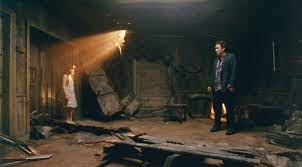
The cinematography, led by Benoît Delhomme, enhances the film’s visual impact. Delhomme’s camera work effectively captures the claustrophobic nature of the hotel room, utilizing tight shots and disorienting angles to mirror Enslin’s growing sense of confinement and paranoia. The use of lighting is particularly noteworthy, with subtle changes in color and intensity contributing to the film’s unsettling atmosphere.
One of the film’s standout features is its ability to establish and maintain a chilling atmosphere. The choice of location, the Dolphin Hotel, with its grand yet decaying interiors, serves as an ominous backdrop to the unfolding horror. The set design, coupled with the haunting score by Gabriel Yared, immerses the audience in a world where reality blurs, and the line between the tangible and the supernatural becomes increasingly ambiguous.
The sound design in “1408” is a crucial element that heightens the suspense and fear. From the subtle creaks and whispers in the hotel corridors to the jarring bursts of music during moments of intense horror, the soundscapes crafted by the audio team contribute significantly to the film’s overall impact. The effective use of silence, punctuated by sudden and disconcerting sounds, creates an unsettling auditory experience that lingers in the viewer’s mind.
At its core, “1408” is a psychological thriller that delves into the complexities of the human mind. As Mike Enslin navigates the surreal horrors of Room 1408, the film challenges not only his sanity but also the audience’s perception of reality. The narrative unfolds as a mind-bending puzzle, with each twist and turn leading to deeper psychological exploration.
The film cleverly employs psychological themes such as guilt, grief, and the fear of the unknown. Enslin’s haunted past and the strained relationship with his deceased daughter become central motifs that add emotional weight to the horror. The room itself acts as a metaphorical manifestation of his inner demons, forcing him to confront the traumas he has long suppressed.
“1408” incorporates rich symbolism and metaphorical elements, elevating it beyond a typical horror movie. The room becomes a symbol of the subconscious mind, a place where buried fears and unresolved emotions resurface. The recurring motif of the clock, with its relentless ticking, symbolizes the inevitability of time and the inescapable nature of one’s past.
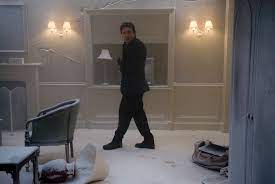
The changing appearances of the room reflect Enslin’s fractured psyche, mirroring the disintegration of his grip on reality. As the boundaries between dream and reality blur, the film invites viewers to question the nature of perception and the thin line between the tangible and the imagined.
Beneath the surface of its horror elements, “1408” explores existential and philosophical questions. The film challenges conventional notions of reality, prompting viewers to ponder the subjective nature of experience. The existential dread that permeates Enslin’s journey echoes themes found in the works of existentialist philosophers, where individuals grapple with the meaning of life and the absurdity of existence.
The concept of psychological haunting, where one’s inner demons become tangible, raises questions about the nature of fear and the power of the mind to shape perception. “1408” invites the audience to consider the boundaries between the physical and the psychological, urging them to confront the inherent fears that dwell within the recesses of the human psyche.
One of the film’s strengths lies in its nuanced character development, particularly that of Mike Enslin. As the story progresses, Enslin evolves from a skeptical and somewhat detached individual into a deeply vulnerable and emotionally raw protagonist. John Cusack’s portrayal allows the audience to witness the gradual erosion of Enslin’s skepticism, replaced by a genuine and palpable fear. The character’s journey becomes a mirror for the viewers, inviting them to confront their own fears and vulnerabilities.
The transformation is not limited to Enslin alone. The spectral manifestations within Room 1408, ranging from apparitions to inanimate objects taking on a life of their own, reflect the deepest fears of those who enter. This multifaceted approach to horror, where the psychological and supernatural elements coalesce, adds layers of complexity to both the narrative and the characters’ experiences.
“1408” excels in its pacing, expertly balancing moments of quiet tension with intense bursts of horror. The gradual escalation of fear is a testament to the filmmakers’ understanding of the psychological thriller genre. The film masterfully exploits the confined space of Room 1408, utilizing it to amplify the sense of isolation and helplessness.
The strategic use of time as a narrative device contributes significantly to the film’s suspense. As the clock ticks inexorably, the audience is drawn into Enslin’s race against time, heightening the stakes and intensifying the horror. This time-centric approach adds an element of urgency, making every passing minute within Room 1408 feel like an eternity.
“1408” stands out for its willingness to subvert traditional horror tropes. Rather than relying on conventional jump scares or gratuitous violence, the film opts for a more psychological and atmospheric approach. The horror emerges from the internal struggles of the characters, the disintegration of reality, and the unsettling atmosphere within the room.
By eschewing clichés, “1408” manages to create a more enduring sense of fear. The horror is not fleeting; it lingers in the mind, leaving the audience with a lingering sense of unease. The film challenges the viewer’s expectations, delivering a more cerebral and emotionally resonant experience that transcends the boundaries of conventional horror storytelling.
Mikael Håfström’s direction in “1408” pays homage to classic horror films while infusing the narrative with a contemporary sensibility. The use of suspenseful camera angles and the deliberate pacing echo the works of psychological horror pioneers such as Alfred Hitchcock. Additionally, the film’s exploration of psychological torment draws inspiration from Stanley Kubrick’s “The Shining,” another adaptation of a Stephen King work.
While “1408” acknowledges its cinematic predecessors, it also forges its own identity. The film’s unique blend of psychological horror, supernatural elements, and existential themes sets it apart in a genre often saturated with formulaic approaches. It serves as a bridge between the traditional and modern aspects of horror cinema, appealing to both seasoned enthusiasts and newcomers to the genre.
Upon its release, “1408” received generally positive reviews from both critics and audiences. The film’s success was attributed to its effective blend of psychological horror, strong performances, and a thought-provoking narrative. John Cusack’s portrayal of Mike Enslin was particularly praised, as were the film’s atmospheric elements and suspenseful pacing.
Over the years, “1408” has gained a cult following and is often cited as one of the standout psychological horror films of its time. Its enduring legacy lies in its ability to evoke fear through psychological unease rather than relying on conventional horror conventions. As the genre continues to evolve, “1408” remains a benchmark for those seeking a more cerebral and emotionally resonant horror experience.
“1408” stands as a testament to the potency of psychological horror when executed with precision and nuance. From its compelling performances to its masterful direction, the film captivates audiences by weaving a narrative that transcends the boundaries of conventional horror. Through its exploration of psychological torment, existential themes, and the interplay between reality and the supernatural, “1408” leaves a lasting imprint on the viewer’s psyche.
As we navigate the labyrinthine corridors of Room 1408 alongside Mike Enslin, we are confronted not only with the external horrors that manifest but also with the internal demons that lurk within us all. Mikael Håfström’s directorial prowess, coupled with Stephen King’s source material, creates an experience that lingers long after the credits roll—a chilling reminder that the most profound horrors are often those that reside within the recesses of the human mind. “1408” stands as a paragon of psychological horror, inviting viewers to confront their deepest fears and question the very nature of reality itself.
Technical Commentary
Video
“1408” arrives with a 1080p, 2.39:1-framed transfer. What we see is a somewhat dark, nondescript transfer that offers little in the way of eye-catching detail. It’s a good transfer, there is a golden tint to much of the image with a hint of green, too.
Audio
“1408” arrives on Blu-ray with a strong Dolby TrueHD 5.1 lossless soundtrack. Dialogue is strong and natural There is a nice clarity and presence to the entirety of the soundtrack. It is very well-mixed with nothing coming across as too loud at reference volume, and the track is very good at doing what it’s primary purpose should be: compliment the movie perfectly without drawing unwarranted attention to itself.
Special Features
Disc One
- 1080p high-definition presentation of the Theatrical Cut
- Alternate Ending #1
- Alternate Ending #2
- Deleted Scenes
- Deleted Scenes with audio commentary by director Mikael Håfström and writers Scott Alexander & Larry Karaszewski
- John Cusack on 1408 – vintage featurette • Inside Room 1408 – vintage featurette
- Theatrical Trailer
- The Secrets of 1408: Vintage Featurettes – The Characters, The Director, The Physical Effects and The Production Design
Disc Two
- 1080p high-definition presentation of the Director’s Cut
- Audio Commentary by director Mikael Håfström and writers Scott Alexander & Larry Karaszewski
- 1408: The Premiere – vintage featurette
 spryfilm.com