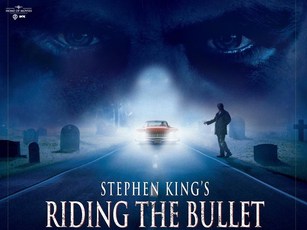
“Riding the Bullet” (2004)
Horror

Running Time: 98 minutes
Written and directed by: Mick Garris
Featuring: Jonathan Jackson, David Arquette and Cliff Robertson
Mature Alan: [voice over] “Nothing seems to last. But the bullet. The bullet is constant. The bullet is always there. You wait in line, that’s all. And when it’s your turn to ride the bullet, maybe you ride, maybe you run. Either way it comes to the same thing. Fun is fun. And done is done. Nobody lives forever, but we all shine on.”
Critical Commentary
Released in 2004, “Riding the Bullet” is a psychological horror film directed by Mick Garris, based on Stephen King’s novella of the same name. The film takes audiences on a chilling journey that combines elements of horror, drama, and supernatural suspense. With its unique storyline, gripping performances, and atmospheric cinematography, “Riding the Bullet” delivers an unsettling and thought-provoking cinematic experience.
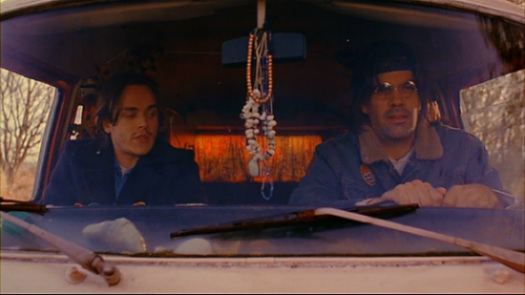
Set in 1969, the film follows the life of Alan Parker (played by Jonathan Jackson), a young artist with a troubled past and a strained relationship with his overbearing mother, Jean Parker (Barbara Hershey). Alan receives news of his mother’s sudden stroke, prompting him to hitchhike to the hospital. Along the way, he encounters a mysterious stranger named George Staub (David Arquette), who appears to be a spectral figure with ominous intentions.
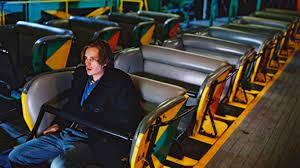
The narrative takes a surreal turn when George offers Alan a choice between life and death, represented by a sinister carnival ride called “The Bullet.” Faced with the decision to either confront his fears or succumb to the unknown, Alan embarks on a nightmarish journey through his own psyche, revisiting traumatic events from his past and encountering various supernatural entities.
“Riding the Bullet” explores themes of mortality, redemption, and the consequences of one’s choices. The titular bullet ride becomes a metaphor for life’s uncertainties, the inevitability of death, and the unpredictable nature of the human experience. The film delves into the psychological aspects of fear, guilt, and the search for meaning in the face of mortality.
The ghostly encounters that Alan experiences during his journey serve as symbolic representations of his inner demons. Each encounter forces him to confront unresolved issues and make choices that will ultimately shape his destiny. The narrative cleverly weaves together elements of horror and drama, creating a rich tapestry of emotional intensity and supernatural intrigue.
Mick Garris, known for his work in the horror genre, masterfully crafts a visually compelling and atmospheric film. The cinematography, led by director of photography C. Kim Miles, captures the eerie landscapes and haunting environments that Alan navigates during his odyssey. From desolate highways to abandoned carnival grounds, the film’s visual elements enhance the overall sense of foreboding.
The use of lighting and shadows plays a crucial role in creating a tense and suspenseful atmosphere. Garris employs a mix of practical effects and CGI to bring the supernatural elements to life, striking a balance between the tangible and the ethereal. The result is a film that immerses the audience in a world where reality and the supernatural seamlessly blend.
Jonathan Jackson delivers a compelling performance as Alan Parker, portraying the character’s vulnerability and inner turmoil with authenticity. His journey from a troubled artist to a man confronting his deepest fears is conveyed with nuance and emotional depth. Barbara Hershey’s portrayal of Jean Parker adds another layer to the film, as her character’s influence looms large over Alan’s psyche.
David Arquette’s portrayal of the mysterious George Staub adds an enigmatic quality to the narrative. Arquette strikes a balance between charm and menace, keeping the audience guessing about George’s true nature and motives. The supporting cast, including Cliff Robertson and Erika Christensen, contribute solid performances that enhance the overall ensemble.
The film’s soundtrack, featuring a mix of 1960s rock and folk music, enhances the nostalgic setting while also underscoring the emotional beats of the story. The score, composed by Nicholas Pike, complements the film’s eerie atmosphere with its haunting melodies and dissonant tones. The music becomes an integral part of the narrative, heightening the tension and accentuating key moments of horror and revelation.
“Riding the Bullet” employs a non-linear narrative structure, seamlessly weaving together past and present events. This approach adds a layer of complexity to the storytelling, inviting the audience to piece together the puzzle of Alan’s life and choices. The pacing is deliberate, allowing for moments of introspection and character development amid the supernatural occurrences.
While some viewers may find the narrative shifts disorienting, the film’s structure ultimately serves the thematic exploration of Alan’s journey towards self-discovery and redemption. The gradual revelation of his past through a series of flashbacks adds depth to the character and invites empathy from the audience.
Despite its many strengths, “Riding the Bullet” is not without its criticisms. Some viewers may find the film’s blend of horror and psychological drama to be uneven, as the narrative occasionally veers into surreal and disjointed territory. Additionally, the film’s reliance on supernatural elements may not resonate with those who prefer more grounded horror experiences.
The character of George Staub, while intriguing, could have benefited from further exploration. His motivations and backstory remain somewhat enigmatic, leaving certain aspects of the narrative open to interpretation. Some viewers may find this ambiguity adds to the film’s mystique, while others may wish for a more concrete explanation.
As “Riding the Bullet” celebrates its one-year anniversary since this review was written, it’s worthwhile to reflect on how the film has continued to resonate with audiences and the broader cinematic landscape. The passage of time often allows for a deeper appreciation of a film’s impact, and in the case of “Riding the Bullet,” its legacy has evolved beyond its initial critical reception.
One notable aspect of the film’s legacy is the development of a cult following. Over the past year, discussions about the film have persisted in online forums, social media, and within niche horror communities. Fans of the genre continue to dissect the intricacies of the narrative, share theories about the symbolism, and engage in spirited debates about the film’s enigmatic conclusion.
The film’s ambiguity, which was both a strength and a point of contention in the original review, has become a catalyst for ongoing interpretations. Viewers continue to offer diverse perspectives on the nature of George Staub, the symbolic significance of the carnival ride, and the psychological underpinnings of Alan’s journey. This sustained interest speaks to the film’s ability to spark intellectual curiosity and encourage viewers to revisit its haunting landscapes.
In the year following its release, “Riding the Bullet” has left its mark on the horror genre, inspiring subsequent filmmakers to explore similar themes of psychological horror and supernatural redemption. The film’s non-linear narrative structure, atmospheric cinematography, and emphasis on character-driven horror have influenced a new wave of filmmakers seeking to blend traditional horror elements with thought-provoking storytelling.
The success of “Riding the Bullet” in carving its niche within the broader horror landscape has demonstrated the enduring appeal of films that challenge the boundaries of the genre. As filmmakers and audiences continue to seek innovative approaches to horror storytelling, “Riding the Bullet” stands as a testament to the genre’s ability to evolve and captivate audiences with fresh, psychologically rich narratives.
As part of the extensive catalogue of Stephen King adaptations, “Riding the Bullet” has found its place within the broader tapestry of King’s cinematic universe. While not as universally recognized as some of King’s more iconic works, the film has solidified its status as a distinctive entry in the author’s filmography. Discussions surrounding the film often include its unique take on King’s themes and the effectiveness of the adaptation in capturing the essence of the original novella.
In the context of Stephen King’s diverse body of work, “Riding the Bullet” remains a noteworthy exploration of the author’s fascination with the supernatural, mortality, and the human psyche. Its place within the broader King cinematic universe ensures that it will continue to be revisited by fans and scholars alike as they explore the thematic threads that run through King’s extensive literary canon.
“Riding the Bullet” stands as a unique and thought-provoking entry in the horror genre. Mick Garris successfully adapts Stephen King’s novella into a visually captivating and emotionally resonant film. Jonathan Jackson’s performance anchors the narrative, guiding audiences through a nightmarish odyssey that explores the complexities of life, death, and the choices we make.
The film’s atmospheric cinematography, evocative soundtrack, and well-crafted performances contribute to its overall impact. While not without its criticisms, “Riding the Bullet” is a rollercoaster of horror and redemption that invites viewers to confront their own fears and reflect on the profound mysteries of existence. As the film celebrates its place in the pantheon of supernatural cinema, it continues to resonate with audiences seeking a cinematic experience that lingers in the recesses of the mind.


 spryfilm.com