
“Secret Window” (2004)
Horror/Drama

Running Time: 96 minutes
Written and directed by: David Koepp
Featuring: Johnny Depp, John Turturro, Maria Bello, Timothy Hutton and Charles S. Dutton
Mort: “You know, the only thing that matters is the ending. It’s the most important part of the story, the ending. And this one… is very good. This one’s perfect.”
Critical Commentary
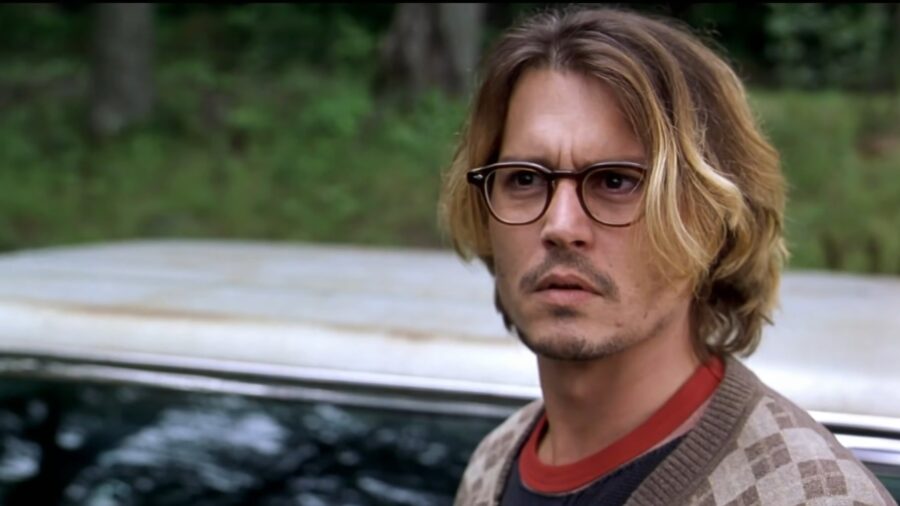
“Secret Window,” directed by David Koepp and based on Stephen King’s novella “Secret Window, Secret Garden,” is a psychological thriller that delves into the complexities of identity, creativity, and madness. Released in 2004, the film follows the life of Mort Rainey, a successful but troubled writer portrayed by Johnny Depp. As Rainey confronts the collapse of his marriage and a looming plagiarism accusation, the film explores the thin line between reality and fiction, sanity and madness. This essay aims to dissect the thematic elements of “Secret Window,” focusing on the protagonist’s internal struggles, the blurred boundaries of creativity, and the psychological unravelling that shapes the narrative.
At the heart of “Secret Window” lies Mort Rainey’s profound identity crisis. Mort, grappling with the fallout of his failed marriage, retreats to a secluded cabin in upstate New York to find solace and work on his writing. However, his isolation becomes a breeding ground for inner demons. The film masterfully portrays Mort’s deteriorating mental state through Depp’s nuanced performance, capturing the essence of a man on the brink of self-destruction.
Mort’s sense of self is further challenged when a mysterious stranger named John Shooter, played by John Turturro, accuses him of plagiarism. Shooter claims that Mort stole his story, setting off a chain of events that blurs the lines between reality and delusion. The film skillfully navigates Mort’s internal conflict, leaving the audience questioning whether Shooter is a real person or a figment of Mort’s imagination. This ambiguity contributes to the suspense and psychological tension that defines “Secret Window.”
Isolation is a recurring motif in the film, symbolizing both a retreat from the outside world and a descent into the depths of Mort’s troubled psyche. The cabin, surrounded by dense woods and devoid of neighbours, serves as a physical manifestation of Mort’s emotional isolation. The paradox lies in the fact that while seeking solitude to heal and rediscover his identity, Mort unwittingly intensifies his internal struggles.
The isolation paradox is not just a backdrop but a catalyst for the unfolding events. It magnifies Mort’s vulnerability, making him susceptible to the manipulation of external forces, whether real or imagined. As Mort becomes increasingly entangled in the web of his own mind, the boundaries between the external world and his internal reality blur, amplifying the film’s psychological tension.
“Secret Window” explores the relationship between creativity and madness, highlighting the thin line that separates artistic brilliance from mental instability. Mort Rainey, a successful author, finds himself at the crossroads of these two realms. His ability to create compelling stories becomes a double-edged sword as he grapples with the darker corners of his imagination.
The film raises questions about the nature of inspiration and the toll it takes on the creative mind. Mort’s struggle to produce new work mirrors his internal turmoil, with the creative process serving as both a refuge and a battleground. As Mort becomes consumed by his writing, the boundaries between fiction and reality blur, reflecting the film’s overarching theme of the fragility of identity.
“Secret Window” skilfully employs narrative ambiguity to keep the audience on the edge of their seats. The question of Shooter’s existence becomes a central enigma, and the film leaves ample room for interpretation. Is Shooter a real person seeking justice, or is he a manifestation of Mort’s guilt and unravelling sanity?
The unravelling of reality is not just confined to Mort’s perception but extends to the audience’s understanding of the events. As the film progresses, viewers are left to decipher the true nature of Mort’s predicament. This narrative technique adds layers of complexity, forcing the audience to engage actively with the storyline and draw their conclusions.
“Secret Window” employs symbolism and visual imagery to deepen its psychological impact. The recurring motif of the cornfield, for example, represents the labyrinth of Mort’s mind, with tall stalks obscuring visibility and creating an eerie atmosphere. The film’s setting, particularly the isolated cabin and its surroundings, serves as a visual metaphor for Mort’s internal landscape.
The constant presence of rain throughout the film contributes to the somber mood and mirrors Mort’s emotional state. Rain becomes a symbolic element, reflecting the turbulence within the protagonist’s mind. The film’s visual elements work in tandem with its thematic exploration, creating a rich tapestry of meaning that resonates beyond the surface narrative.
Guilt and paranoia are central themes in “Secret Window,” driving the narrative forward and shaping Mort’s descent into madness. The plagiarism accusation becomes a catalyst for Mort’s internal conflict, triggering a cascade of guilt and self-doubt. The film explores the psychological toll of guilt, depicting Mort’s increasing inability to distinguish between right and wrong.
Paranoia, another psychological thread woven into the narrative, amplifies Mort’s internal struggles. As the line between reality and delusion blurs, Mort becomes increasingly paranoid, suspecting everyone around him of conspiring against him. This psychological tension adds layers of complexity to the film, keeping the audience guessing about the true nature of Mort’s predicament.
One of the striking aspects of “Secret Window” is its skilful manipulation of dual narratives. The film presents the possibility of two distinct realities: one where Shooter is a real person seeking justice, and the other where Shooter is a manifestation of Mort’s fractured psyche. This duality keeps the audience engaged, encouraging them to scrutinize each scene for clues that may lean the narrative in one direction or the other.
As the story unfolds, the dual narratives weave together seamlessly, blurring the boundaries between Mort’s fiction and the supposed reality. The tension created by this ambiguity serves not only as a plot device but as a mirror reflecting the complexities of Mort’s own mental landscape. The audience, much like Mort, is forced to grapple with uncertainty and question the authenticity of the events transpiring on screen.
At the heart of Mort’s internal turmoil is the betrayal he feels, both in his failed marriage and the accusation of plagiarism. These betrayals become driving forces behind Mort’s unraveling sanity. The film paints a vivid portrait of the psychological toll of betrayal, portraying Mort as a man haunted by his past actions and unable to escape the consequences.
The thematic exploration of betrayal adds emotional depth to Mort’s character, transforming him from a simple protagonist into a complex and flawed individual. This emotional weight is palpable in Depp’s performance, as he navigates Mort’s journey with a subtlety that captures the nuances of the character’s pain, guilt, and desperation.
“Secret Window” invites viewers to consider the power of perspective in shaping one’s reality. The film suggests that reality is not an absolute truth but a subjective experience, moulded by individual perceptions and interpretations. Mort’s perspective, tainted by guilt and paranoia, becomes the lens through which the audience witnesses the events of the film.
This thematic emphasis on perspective challenges the viewer to question the reliability of Mort’s narration. Can we trust Mort’s version of events, or is it distorted by his fragile mental state? The film encourages a critical examination of the protagonist’s perspective, prompting the audience to become active participants in deciphering the truth behind the unfolding mystery.
David Koepp’s directorial choices play a pivotal role in crafting the mood and atmosphere of “Secret Window.” The use of subdued lighting, coupled with a muted colour palette, contributes to the film’s brooding and suspenseful ambiance. The camera work, characterized by subtle and disorienting angles, mirrors Mort’s internal disarray, creating an immersive experience that draws the audience into the character’s psychological labyrinth.
The film’s musical score, composed by Philip Glass, further heightens the tension and adds a layer of unease to the narrative. The haunting melodies and dissonant tones underscore Mort’s mental unravelling, enhancing the overall psychological impact of the film.
“Secret Window” has endured as a compelling entry in the psychological thriller genre, leaving an indelible mark on audiences and sparking discussions about its enigmatic conclusion. The film’s legacy lies not only in its narrative intricacies but in its ability to provoke thought on themes that transcend the confines of the screen.
The enduring appeal of “Secret Window” can be attributed to its willingness to subvert genre expectations and challenge conventional storytelling norms. By delving into the complexities of identity, creativity, and madness, the film offers a narrative that lingers in the minds of viewers long after the credits roll.
“Secret Window” stands as a psychological thriller that goes beyond the conventions of the genre. Through its exploration of identity, creativity, and madness, the film invites viewers to embark on a journey into the recesses of the human mind. Mort Rainey’s internal struggles, the blurred boundaries of reality, and the psychological unraveling that defines the narrative contribute to the film’s lasting impact.
By masterfully combining narrative ambiguity, visual symbolism, and compelling performances, “Secret Window” invites audiences to confront their own perceptions of reality. The film’s exploration of the thin line between creativity and madness serves as a poignant reminder of the fragility of the human psyche. As Mort Rainey grapples with his demons in the isolated confines of the cabin, “Secret Window” challenges viewers to question their understanding of the mind and the intricate dance between sanity and madness.
Technical Commentary
Video
“Secret Window” comes to Blu-ray with an MPEG-2 encoded 1080p transfer presented in a 2.35:1 aspect ratio. This is a slightly above-average high definition transfer, with a decent level of clarity and fine detail in most every scene. There is a slight bit of grain over the image, and some noise to be seen in one or two of the brighter backdrops seen in the movie.
Audio
Sony opens “Secret Window” on Blu-ray with a quality PCM 5.1 uncompressed soundtrack. Secret Window offers a fine lossless soundtrack that is one of the more subtly effective ones to date.


 spryfilm.com