<!– /* Style Definitions */ p.MsoNormal, li.MsoNormal, div.MsoNormal {mso-style-unhide:no; mso-style-qformat:yes; mso-style-parent:””; margin:0cm; margin-bottom:.0001pt; mso-pagination:widow-orphan; font-size:12.0pt; font-family:”Times New Roman”,serif; mso-fareast-font-family:”Times New Roman”;} p.MsoListParagraph, li.MsoListParagraph, div.MsoListParagraph {mso-style-priority:34; mso-style-unhide:no; mso-style-qformat:yes; margin-top:0cm; margin-right:0cm; margin-bottom:0cm; margin-left:36.0pt; margin-bottom:.0001pt; mso-add-space:auto; mso-pagination:widow-orphan; font-size:12.0pt; font-family:”Times New Roman”,serif; mso-fareast-font-family:”Times New Roman”;} p.MsoListParagraphCxSpFirst, li.MsoListParagraphCxSpFirst, div.MsoListParagraphCxSpFirst {mso-style-priority:34; mso-style-unhide:no; mso-style-qformat:yes; mso-style-type:export-only; margin-top:0cm; margin-right:0cm; margin-bottom:0cm; margin-left:36.0pt; margin-bottom:.0001pt; mso-add-space:auto; mso-pagination:widow-orphan; font-size:12.0pt; font-family:”Times New Roman”,serif; mso-fareast-font-family:”Times New Roman”;} p.MsoListParagraphCxSpMiddle, li.MsoListParagraphCxSpMiddle, div.MsoListParagraphCxSpMiddle {mso-style-priority:34; mso-style-unhide:no; mso-style-qformat:yes; mso-style-type:export-only; margin-top:0cm; margin-right:0cm; margin-bottom:0cm; margin-left:36.0pt; margin-bottom:.0001pt; mso-add-space:auto; mso-pagination:widow-orphan; font-size:12.0pt; font-family:”Times New Roman”,serif; mso-fareast-font-family:”Times New Roman”;} p.MsoListParagraphCxSpLast, li.MsoListParagraphCxSpLast, div.MsoListParagraphCxSpLast {mso-style-priority:34; mso-style-unhide:no; mso-style-qformat:yes; mso-style-type:export-only; margin-top:0cm; margin-right:0cm; margin-bottom:0cm; margin-left:36.0pt; margin-bottom:.0001pt; mso-add-space:auto; mso-pagination:widow-orphan; font-size:12.0pt; font-family:”Times New Roman”,serif; mso-fareast-font-family:”Times New Roman”;} .MsoChpDefault {mso-style-type:export-only; mso-default-props:yes; font-family:”Cambria”,serif; mso-ascii-font-family:Cambria; mso-ascii-theme-font:minor-latin; mso-fareast-font-family:”MS Mincho”; mso-fareast-theme-font:minor-fareast; mso-hansi-font-family:Cambria; mso-hansi-theme-font:minor-latin; mso-bidi-font-family:”Times New Roman”; mso-bidi-theme-font:minor-bidi; mso-ansi-language:EN-US;} @page WordSection1 {size:612.0pt 792.0pt; margin:72.0pt 72.0pt 72.0pt 72.0pt; mso-header-margin:36.0pt; mso-footer-margin:36.0pt; mso-paper-source:0;} div.WordSection1 {page:WordSection1;} /* List Definitions */ @list l0 {mso-list-id:1617560813; mso-list-type:hybrid; mso-list-template-ids:1026691260 1065923338 67698691 67698693 67698689 67698691 67698693 67698689 67698691 67698693;} @list l0:level1 {mso-level-start-at:0; mso-level-number-format:bullet; mso-level-text:-; mso-level-tab-stop:none; mso-level-number-position:left; margin-left:21.0pt; text-indent:-18.0pt; font-family:”Times New Roman”,serif; mso-fareast-font-family:”Times New Roman”;} @list l0:level2 {mso-level-number-format:bullet; mso-level-text:o; mso-level-tab-stop:none; mso-level-number-position:left; margin-left:57.0pt; text-indent:-18.0pt; font-family:”Courier New”;} @list l0:level3 {mso-level-number-format:bullet; mso-level-text:; mso-level-tab-stop:none; mso-level-number-position:left; margin-left:93.0pt; text-indent:-18.0pt; font-family:Wingdings;} @list l0:level4 {mso-level-number-format:bullet; mso-level-text:; mso-level-tab-stop:none; mso-level-number-position:left; margin-left:129.0pt; text-indent:-18.0pt; font-family:Symbol;} @list l0:level5 {mso-level-number-format:bullet; mso-level-text:o; mso-level-tab-stop:none; mso-level-number-position:left; margin-left:165.0pt; text-indent:-18.0pt; font-family:”Courier New”;} @list l0:level6 {mso-level-number-format:bullet; mso-level-text:; mso-level-tab-stop:none; mso-level-number-position:left; margin-left:201.0pt; text-indent:-18.0pt; font-family:Wingdings;} @list l0:level7 {mso-level-number-format:bullet; mso-level-text:; mso-level-tab-stop:none; mso-level-number-position:left; margin-left:237.0pt; text-indent:-18.0pt; font-family:Symbol;} @list l0:level8 {mso-level-number-format:bullet; mso-level-text:o; mso-level-tab-stop:none; mso-level-number-position:left; margin-left:273.0pt; text-indent:-18.0pt; font-family:”Courier New”;} @list l0:level9 {mso-level-number-format:bullet; mso-level-text:; mso-level-tab-stop:none; mso-level-number-position:left; margin-left:309.0pt; text-indent:-18.0pt; font-family:Wingdings;} –>
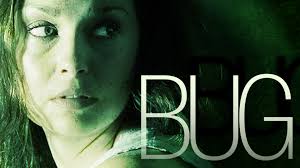
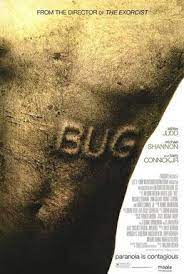
“Bug” (2006)
Horror/Drama

Running Time: 102 minutes
Written by: Tracy Letts
Directed by: William Friedkin
Featuring: Ashley Judd, Michael Shannon and Harry Connick Jr.
Agnes White: “I guess I’d rather talk with you about bugs than nothing with nobody.” Critical Commentary
Released in 2006 and directed by William Friedkin, “Bug” is a psychological horror film that dives into the depths of paranoia, isolation, and the fragile nature of the human mind. Adapted from Tracy Letts’ play of the same name, the movie offers a gripping narrative and intense performances that explore the thin line between reality and delusion. In this 2000-word review, we’ll delve into the various elements that make “Bug” a unique and unsettling cinematic experience.
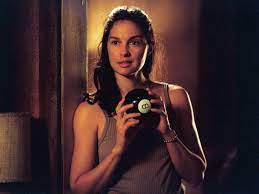
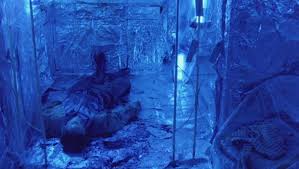
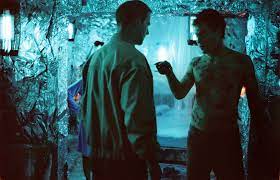
The story revolves around Agnes White (Ashley Judd), a lonely and emotionally scarred woman living in a run-down motel. Her life takes an unexpected turn when she meets Peter Evans (Michael Shannon), a mysterious drifter with a troubled past. As their relationship intensifies, so does the paranoia that engulfs them. Convinced that they are being watched by government conspirators and infested by bugs, the two descend into a shared delusion that blurs the lines between reality and madness. Friedkin’s directorial choices play a crucial role in creating an atmosphere of claustrophobia and unease. The majority of the film unfolds within the confines of Agnes’s motel room, amplifying the sense of isolation and intensifying the psychological pressure on the characters. The use of tight shots and dim lighting adds to the overall sense of discomfort, making the audience feel like they too are trapped in the confined space with Agnes and Peter.
The film’s score, composed by Brian Tyler, complements the escalating tension on screen. The eerie and unsettling music heightens the sense of paranoia, effectively becoming a character in its own right. The subtle, pulsating tones create a sense of foreboding, keeping the audience on edge throughout the film. The soundtrack serves as a sonic manifestation of the characters’ unraveling mental states, enhancing the overall viewing experience. The strength of “Bug” lies in its characters, brought to life by the exceptional performances of Ashley Judd and Michael Shannon. Ashley Judd delivers a haunting portrayal of Agnes, a woman haunted by her past and seeking solace in a relationship that ultimately accelerates her descent into madness. Michael Shannon, reprising his role from the original stage production, is a revelation as Peter. His intensity and conviction make Peter simultaneously sympathetic and terrifying, leaving the audience unsure of his true intentions until the very end.
The success of “Bug” heavily relies on the chemistry between the two leads. Judd and Shannon’s performances are not only convincing but also deeply unsettling. The gradual transformation of their characters from vulnerable individuals seeking companionship to paranoid co-conspirators is a testament to their acting prowess. The palpable tension between them keeps the audience hooked, as they question the authenticity of their connection and the reality of the threats they perceive.
“Bug” explores the theme of paranoia with unflinching intensity. The film masterfully captures the psychological unraveling of its characters, depicting how isolation and emotional vulnerability can pave the way for delusions to take root. As Agnes and Peter become increasingly convinced of the government’s surveillance and the presence of microscopic bugs, the audience is taken on a disorienting journey into the darkest corners of the human psyche. While “Bug” is undeniably a psychological thriller, it also carries subtle social commentary. The characters’ fear of government surveillance taps into contemporary anxieties about privacy and the erosion of personal freedoms. The film raises questions about the fine line between legitimate concerns and irrational paranoia, offering a reflection of the societal fears prevalent during the early 2000s.
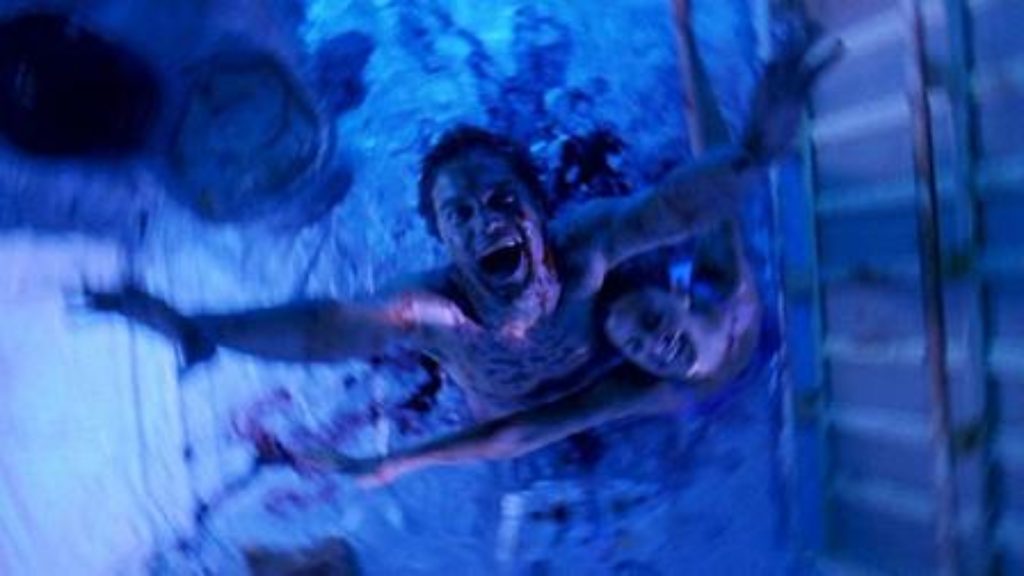
Friedkin employs visual symbolism to enhance the film’s thematic depth. The use of red lighting, particularly during moments of heightened tension, creates a surreal and nightmarish atmosphere. The symbolism of bugs, initially a metaphor for emotional scars, evolves into a literal manifestation of the characters’ psychosis. The film’s visuals add layers of meaning, inviting viewers to interpret the narrative beyond its surface level. “Bug” is a slow burn that gradually builds tension, allowing the audience to become immersed in the characters’ deteriorating mental states.
The deliberate pacing may challenge those seeking a conventional horror experience, but it serves a purpose in cultivating a sense of unease that lingers long after the credits roll. The film’s commitment to psychological horror over jump scares sets it apart in a genre often reliant on more immediate thrills. One of the most discussed aspects of “Bug” is its ambiguous ending. Without giving away spoilers, the film concludes in a way that leaves interpretation open to the audience. Some may find the lack of a definitive resolution frustrating, while others appreciate the room for individual interpretation. Friedkin’s decision to keep certain elements open-ended adds to the film’s mystique, encouraging viewers to reflect on the events and draw their own conclusions.
“Bug” received a mixed response from critics upon its release. Some praised its psychological depth, performances, and unnerving atmosphere, while others found fault in its unconventional narrative and the discomfort it provoked. The film’s divisive nature has since contributed to its cult status, with a dedicated fan base appreciating its unconventional approach to horror and psychological drama. While not a commercial blockbuster, “Bug” has left a lasting impact on the horror genre. Its willingness to explore the psychological aspects of fear rather than relying on traditional horror tropes sets it apart. The film’s emphasis on atmosphere, character development, and the power of suggestion has influenced subsequent psychological horror films that aim to engage audiences on a deeper, more cerebral level.
Over the years, “Bug” has gained a cult following, with its reputation growing as a unique and daring exploration of psychological horror. The film’s unconventional narrative, combined with its ambiguous ending, has sparked ongoing discussions and interpretations among cinephiles. It has become the kind of movie that invites repeated viewings, each time offering new nuances and insights into the characters’ deteriorating mental states. Ashley Judd’s performance in “Bug” is a standout in her career, showcasing her versatility as an actress. While she had previously been known for her roles in more mainstream films, “Bug” allowed Judd to delve into darker and more challenging territory. Her portrayal of Agnes is raw and emotionally charged, capturing the character’s vulnerability and descent into madness with a haunting authenticity. It’s a performance that deserves recognition for its depth and complexity.
“Bug” marked a turning point in Michael Shannon’s career. His portrayal of Peter Evans is a tour de force, cementing his status as a formidable actor. Shannon’s intensity and commitment to the role make Peter a simultaneously sympathetic and terrifying figure. The actor’s ability to convey the character’s internal struggles and moments of apparent clarity adds layers to the film’s narrative, keeping audiences on edge and questioning the true nature of Peter’s reality. Tracy Letts, who adapted his own play for the screen, deserves credit for crafting a screenplay that captures the claustrophobic intensity of the original stage production. The dialogue is sharp, and the gradual unfolding of the characters’ paranoia is executed with precision. Letts’ script lays the foundation for the film’s psychological depth, creating an atmosphere where the audience is as uncertain about reality as the characters themselves.
“Bug” transcends the typical boundaries of horror by delving into the realm of mental health. The film raises important questions about the nature of reality and the subjective experience of paranoia. As Agnes and Peter succumb to their shared delusions, “Bug” becomes a harrowing exploration of the fragility of the human mind. In this way, the film contributes to a broader conversation about mental health in the context of horror cinema. The influence of “Bug” on subsequent psychological horror films is evident in its emphasis on psychological tension over explicit scares. Filmmakers seeking to engage audiences on a deeper, more intellectual level have looked to “Bug” as a reference point. The film’s impact is felt in works that prioritize atmosphere, character development, and the psychological aspects of fear, paving the way for a subgenre of horror that challenges and unsettles its audience in unconventional ways.
While “Bug” has found acclaim among a certain demographic of film enthusiasts, it is not without its challenges and controversies. The film’s slow pace and deliberate unfolding of the narrative may alienate viewers accustomed to more conventional horror storytelling. Additionally, the intense and uncomfortable subject matter, including themes of isolation and mental breakdown, can be a divisive factor, with some finding it too unsettling for their tastes. The film’s portrayal of mental illness has also been a point of contention. While “Bug” does not explicitly diagnose its characters, the intersection of paranoia and mental health raises ethical questions about how mental illness is depicted in cinema. Some critics argue that the film perpetuates stigmas and misunderstandings surrounding mental health, while others assert that it serves as a metaphorical exploration rather than a clinical examination.
“Bug” remains a fascinating and polarizing entry in the realm of psychological horror. Its enduring legacy lies not only in its ability to unnerve and challenge audiences but also in its influence on subsequent films within the genre. The powerhouse performances of Ashley Judd and Michael Shannon, combined with William Friedkin’s masterful direction, create a cinematic experience that is as uncomfortable as it is unforgettable. “Bug” invites viewers to confront the darker recesses of the human psyche, where reality and delusion blur, and the line between sanity and madness becomes perilously thin. As the film continues to be dissected and discussed, its status as a cult classic is solidified, offering a lasting testament to the potency of psychological horror that transcends the boundaries of traditional genre conventions. Whether embraced for its daring approach or debated for its discomforting themes, “Bug” stands as a bold and unapologetic exploration of the psychological horrors that reside within us all.
Technical Commentary
Video
Presented in an aspect ratio of 1.78:1, encoded with MPEG-4 AVC and granted a 1080p transfer, “Bug” arrives on Blu-ray courtesy of Imprint Films. The release is sourced from an older master that was supplied by Lionsgate Films. This master has some noticeable limitations, on a larger screen, some darker background nuances are not as good as they can be. Delineation, clarity, and depth are good, but some small fluctuations can be observed. Colour balance is very, very good. In fact, the blue footage looks great. A few primaries can be fresher, and some nuances can be expanded, but color temperature and balance are convincing. There are no traces of problematic digital corrections. Image stability is very good. Finally, I noticed a few nicks, but I did not see any annoying large blemishes, cuts, stains, or other similar imperfections.
Audio
There are two standard audio tracks on this Blu-ray release: English DTS-HD Master Audio 5.1 and English LPCM 2.0. Optional English SDH subtitles are provided for the main feature.
Special Features
– Commentary One – in this archival audio commentary, William Friedkin discusses in great detail what inspired him to do Bug, the visual style of the film (and specifically the symbolism of various objects and close-ups), the awkward evolution of the relationship between Agnes and Peter, the psychological element in the horror that defines the film, etc. – Commentary Two – this new audio commentary was recorded by author/critic Troy Howarth and Tony Strauss, of WK Books and editor of Wengs Chop Magazine. The two gentlemen discuss the difficult production and marketing history of Bug, The casting choices (with some very interesting comments about Michael Shannon’s take on his part), William Friedkin’s direction and various preferences he had, the tone and atmosphere of the film, etc. – Discussion with William Friedkin – in this archival program, William Friedkin discusses a wide range of topics, from the production of Bug to the evolution of cinema and directing techniques to his love for unique characters and the best moments of his career. A fantastic program. In English, not subtitled. (29 min).- Bug: An Introduction – in this archival program, William Friedkin explains what attracted him to Tracy Letts’ play and how his film offers a different interpretation of it. Also included are clips from interviews with Ashley Judd, Michael Shannon, Harry Connick, Jr., Lynn Collins, and producer Gary Huckabay, as well as raw footage from the shooting process. In English, not subtitled. (12 min).

 spryfilm.com