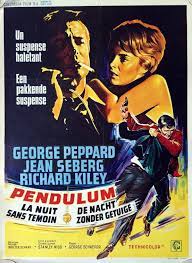
“Pendulum” (1969)
Drama

Running Time: 102 minutes
Written by: Stanley Niss
Directed by: George Schaefer
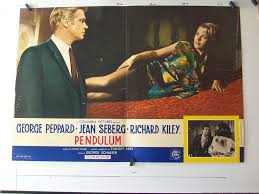
Featuring: George Peppard, Jean Seberg and Richard Kiley
Judge Kinsella: “On your last appearance before me, Mr. Sanderson, it was my unpleasant duty to sentence you to death in the electric chair. Now, the duty I have before me now is in some respects even more unpleasant. I have no quarrel with the principle of law involved, it’s a good and wise application of our constitutional guarantees, but in this case, it results in turning loose upon society a degraded and immoral person.”
Critical Commentary
“Pendulum” is a 1969 crime drama film directed by George Schaefer and starring George Peppard, Jean Seberg, and Richard Kiley. Set in San Francisco, this film tells the story of a district attorney investigating a series of murders, and his journey into the seedy underworld of the city’s sexual revolution. In this review, we will delve into the various aspects of the movie, including the plot, performances, direction, and the cultural context of the late 1960s.
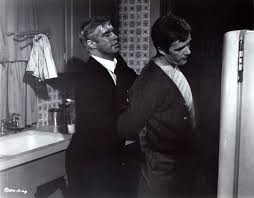
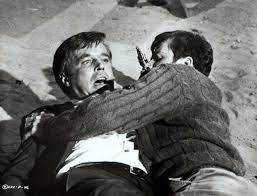
Plot: The plot of “Pendulum” is a classic crime drama with elements of mystery and suspense. The story revolves around District Attorney Frank Macklin (George Peppard) who is assigned to investigate a series of brutal murders in San Francisco. The victims are all young women, and as Macklin delves deeper into the case, he discovers that the common link between the victims is their involvement in the city’s burgeoning sexual revolution.
The film’s title, “Pendulum,” alludes to the constant shift between the conservative values of law and order and the changing social norms of the era. Macklin’s investigation exposes him to a world of sexual freedom, decadence, and moral ambiguity. The plot keeps the audience engaged as Macklin follows the clues to catch the killer while wrestling with his own moral dilemmas.
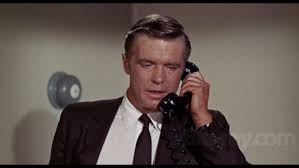
George Peppard delivers a strong performance as District Attorney Frank Macklin. His portrayal captures the internal conflict of a man dedicated to upholding the law while being drawn into the counterculture movement of the 1960s. Peppard’s charismatic presence and the emotional depth he brings to his character make the film compelling.
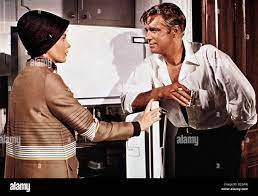
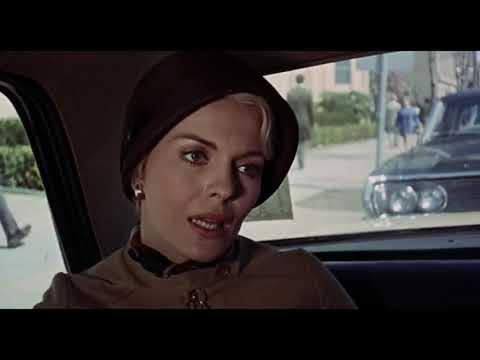
Jean Seberg, as Louise, one of the victims’ friends, also delivers a noteworthy performance. Her character serves as a connection between Macklin and the world he’s investigating. Her chemistry with Peppard on-screen adds depth to the story.
Richard Kiley plays a pivotal role as Dr. L. Mills, a psychologist who assists Macklin in understanding the psyche of the killer. Kiley’s performance adds an element of tension and intrigue to the narrative.
George Schaefer’s direction in “Pendulum” is notable for its exploration of the societal shifts and moral dilemmas of the era. The film effectively captures the contrasting worlds of the conservative legal system and the evolving counterculture. The use of San Francisco as the backdrop is particularly apt, given the city’s historical significance in the 1960s counterculture movement.
The cinematography by Ellsworth Fredericks also plays a significant role in setting the tone and atmosphere of the film. The camera work effectively conveys the contrast between the grim crime scenes and the vibrant, colourful world of the counterculture, highlighting the moral pendulum that Macklin must navigate.
“Pendulum” is a product of its time, and it reflects the cultural shifts and tensions of the late 1960s. The sexual revolution, the rise of counterculture movements, and the clash of traditional values with new social norms are all central themes in the film. The movie offers a glimpse into the changing societal landscape of the era, making it a historical and cultural artefact of the late 1960s.
The film’s portrayal of the sexual revolution and the exploration of sexual freedom might have been provocative for its time, and it remains a significant part of the movie’s historical context. It showcases how the era challenged societal norms and presented law enforcement with new, complex challenges.
While “Pendulum” may not be as well-known as some of the iconic films of the late 1960s, it still holds a place in cinematic history for its exploration of the cultural and social changes occurring during that period. The film’s portrayal of the sexual revolution and its impact on society, as seen through the lens of a crime drama, remains an interesting subject for film enthusiasts and historians.
The film also serves as a reminder of the talented cast and crew involved. George Peppard’s performance in “Pendulum” is a testament to his versatility as an actor, showcasing his ability to convey complex emotions and inner conflict. This movie, while not one of the most famous entries in his filmography, remains a testament to his skill as an actor.
Moreover, “Pendulum” is a time capsule that provides a window into the societal changes and moral dilemmas of the late 1960s. It allows viewers to revisit a pivotal moment in American history when traditional values clashed with the emergence of new social norms. This historical context is vital in understanding the cultural and societal shifts of the time.
While “Pendulum” has its merits, it is not without its flaws. Some viewers may find the pacing to be uneven, and the film’s exploration of the counterculture movement might not be as in-depth as one would expect. The balance between the crime drama and the societal exploration is occasionally uneven, and some characters may feel underdeveloped.
Additionally, the film’s treatment of certain themes and characters may appear dated or controversial when viewed through a modern lens. This is a common issue when revisiting older films, as societal norms and sensibilities evolve over time. It is essential for viewers to approach “Pendulum” with an understanding of the era in which it was made and the perspectives prevalent at that time.
Despite not achieving the same level of recognition as some of the era’s iconic films, “Pendulum” has likely influenced later works that explore similar themes. In subsequent decades, crime dramas and thrillers have continued to explore the interplay between societal shifts, moral dilemmas, and criminal investigations. The film may have paved the way for later works to delve into these subjects more deeply.
“Pendulum” is a compelling crime drama that effectively captures the cultural and societal tensions of the late 1960s. George Peppard’s performance as the conflicted District Attorney, along with the film’s exploration of the sexual revolution, make it an intriguing piece of cinema history. The direction and cinematography contribute to the film’s atmosphere, while the cultural context adds depth to the narrative. If you’re interested in crime dramas that reflect the shifting morals of a pivotal era, “Pendulum” is a film worth watching.
Technical Commentary
Video
“Pendulum” is presented on Blu-ray with an AVC encoded 1080p transfer in 1.85:1. On the whole, this is a fairly pleasing looking transfer, though it suffers from variations in colour temperature throughout, with some moments looking fairly faded and skewed toward brown and even purple, and others looking much more natural, with a warmer and more vivid palette. Detail levels are generally very good to excellent throughout, and grain resolves naturally throughout the presentation.
Audio
“Pendulum” features a DTS-HD Master Audio 2.0 mono track that more than capably supports the film’s dialogue and score. It’s obvious that at least a few moments were post looped, as evidenced by some rather loose sync, and it even appears that perhaps a couple of lines spoken by Seberg during filming were changed sometime afterward, since her lip movements don’t match the words.
Special Features
- 1080P High-definition presentation on Blu-ray
- Aspect Ratio 1.85:1
- Audio English LPCM 2.0 Mono
- Optional English HOH subtitles
 spryfilm.com