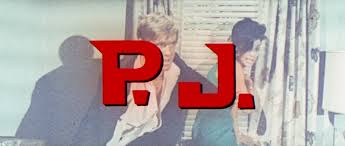
“P.J.” (1968)
Drama

Running Time: 109 minutes
Written by: Philip Reisman Jr.
Directed by: John Guillermin
Featuring: George Peppard, Gayle Hunnicutt, Raymond Burr, Wilfrid Hyde-White, Brock Peters and Susan Saint James
P.J. Detweiler: [to Orbison, after the latter has made a cruel remark] “You know something? You’re all… armpit.”
Critical Commentary
George Peppard was a versatile actor known for his charismatic screen presence and diverse roles. While he’s often associated with classics like “Breakfast at Tiffany’s” and “The A-Team,” one of his less-known yet intriguing works is “P.J.,” a crime drama from 1968. Directed by John Guillermin, “P.J.” presents Peppard in a role that showcases his talent and versatility. In this review, we’ll delve into the film’s plot, Peppard’s performance, its significance in his career, and the overall cinematic experience it offers.
“P.J.” revolves around P.J. Detweiler, played by George Peppard, a New York City private investigator with a reputation for getting the job done. The film begins with a wealthy playboy, Tony Lomax, who believes his wife has been unfaithful to him. He hires P.J. to follow his wife, inspect her actions, and provide him with evidence. As P.J. begins his investigation, he quickly uncovers a much more intricate and perilous situation than he anticipated.
The narrative takes a turn when P.J. discovers that Lomax’s wife is murdered, plunging him into a complex web of deceit, politics, and organized crime. Along the way, he encounters a cast of dubious characters, including a suave lawyer, a manipulative crime boss, and a troubled ex-cop. P.J. is driven by a sense of duty and his desire for justice, which leads him to uncover the truth behind the murder.
What makes “P.J.” engaging is the evolving mystery at its core. The film keeps viewers on the edge of their seats as P.J. digs deeper into the case, encountering numerous twists and surprises. This ever-unfolding storyline is a testament to the skillful storytelling, which draws the audience into the world of private investigation and criminal intrigue.
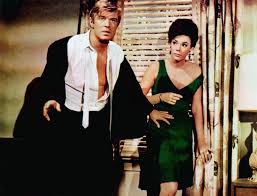
George Peppard’s portrayal of P.J. Detweiler is one of the standout aspects of the film. He brings depth and charisma to the character, making it clear why he was chosen for this role. P.J. is a multi-faceted character with a blend of toughness, intelligence, and a touch of vulnerability, and Peppard embodies him convincingly.
Peppard’s P.J. is a far cry from some of his more well-known roles. He’s not a suave leading man like Paul Varjak in “Breakfast at Tiffany’s” or a rough-and-tumble action hero like Hannibal Smith in “The A-Team.” Instead, he’s a grounded, street-smart detective who’s not afraid to get his hands dirty to solve a case. Peppard’s performance exudes a sense of world-weariness, which is essential for a character who has seen his fair share of the dark side of life.
The actor’s ability to convey P.J.’s emotions, especially his determination and grit, is commendable. We can see the character’s frustrations, triumphs, and moral dilemmas clearly through Peppard’s expressive acting. The audience can connect with P.J. on a personal level, despite the character’s rough exterior.
Furthermore, Peppard’s charisma and presence on screen contribute significantly to the film’s overall appeal. He carries “P.J.” effortlessly, holding the audience’s attention throughout its runtime. His performance underscores why he was a respected actor in Hollywood, capable of taking on a wide range of characters.
The chemistry between Peppard and the supporting cast is also noteworthy. He shares the screen with a talented ensemble that includes Raymond Burr, Gayle Hunnicutt, and Brock Peters, each contributing to the film’s depth and intrigue. Peppard’s interactions with these actors enhance the authenticity of the characters and their relationships, making the film’s narrative even more captivating.
“P.J.” marked a particular point in George Peppard’s career. It was released in the late 1960s, a period in which Peppard was transitioning from his earlier leading man roles to more character-driven and mature performances. While “Breakfast at Tiffany’s” and “The A-Team” are among his most iconic works, “P.J.” demonstrates his versatility and willingness to embrace diverse roles.
Throughout his career, Peppard was known for his commitment to his craft. He was a respected actor who continually sought to challenge himself, even if it meant departing from his comfort zone. “P.J.” is a testament to his dedication to delivering strong performances, regardless of the film’s commercial success or visibility.
The 1960s were a transformative period for Hollywood, with a shift toward more complex, character-driven narratives. “P.J.” reflects this change, as it explores intricate themes and shades of morality. It is an intriguing snapshot of the era’s cinema, offering a more nuanced and mature story compared to some of Peppard’s earlier, more straightforward roles.
While “P.J.” may not be as well-remembered as some of his other works, it is a valuable addition to George Peppard’s filmography. It showcases his ability to adapt to a wide range of roles, a hallmark of a talented and versatile actor. Moreover, the film’s exploration of crime, corruption, and the morality of a private investigator is a reflection of the changing times and evolving cinematic tastes of the late 1960s.
From a cinematic perspective, “P.J.” has its strengths and a few areas that may be considered shortcomings, depending on personal preferences. The film’s direction by John Guillermin is competent, with a focus on storytelling and character development. It successfully captures the gritty and sometimes shadowy atmosphere of New York City, which serves as a fitting backdrop for the narrative.
The film’s cinematography by Lionel Lindon is worth noting. It effectively captures the urban landscape of New York in the late 1960s, with its dark alleys, dimly lit bars, and high-rise apartments. The use of shadows and low-key lighting enhances the film’s noir-like atmosphere, contributing to the sense of mystery and suspense. Lindon’s work complements the film’s genre and story, adding a visual layer to the narrative.
The screenplay, penned by Philip H. Reisman Jr., is a key component of “P.J.” It provides the necessary depth to the characters and the evolving storyline. The dialogue is sharp and engaging, offering a glimpse into the different motivations and conflicts of the characters. Reisman’s writing keeps the audience invested in the unfolding mystery and the moral dilemmas faced by the characters.
The film’s score, composed by Neal Hefti, is another asset. It effectively underscores the tension and drama, enhancing the viewing experience. The music sets the tone for various scenes, creating a dynamic atmosphere that complements the narrative’s twists and turns.
However, some viewers may find that the pacing of “P.J.” can be somewhat uneven. While the film excels in building suspense and intrigue, there are moments where the plot seems to slow down, and the audience may wish for a more rapid progression. This can be attributed to the film’s focus on character development and the complexity of the case, which requires time for proper exposition. While this approach adds depth to the story, it may not suit those seeking a fast-paced action thriller.
“P.J.” may not be George Peppard’s most celebrated work, but it holds a significant place in his filmography, especially for those interested in exploring his versatility as an actor and the changing landscape of 1960s cinema.
One of the notable aspects of “P.J.” is its exploration of moral ambiguity and the role of a private investigator in a complex and morally grey world. The character of P.J. is not a typical hero; he’s a flawed and pragmatic individual who is willing to bend the rules in his pursuit of justice. This complexity in the character aligns with the evolving narrative trends of the late 1960s, which were moving away from simplistic portrayals of good versus evil and embracing more nuanced, character-driven stories.
Additionally, the film serves as a reflection of the changing times in the 1960s. It captures the urban grittiness of New York City and the societal shifts occurring during that era. The late 1960s marked a period of cultural and political transformation, and “P.J.” encapsulates some of the anxieties and challenges of the time. The film’s exploration of corruption, crime, and the dark underbelly of the city mirrors the societal unrest and questioning of authority prevalent during that era.
In terms of George Peppard’s career, “P.J.” showcases his willingness to take on diverse roles and adapt to the changing landscape of Hollywood. While he is often associated with iconic characters like Paul Varjak and Hannibal Smith, “P.J.” is a reminder that Peppard was not content to rest on his laurels. He continued to seek out challenging and interesting characters that allowed him to display his range as an actor.
Although “P.J.” may not have achieved the same level of recognition as some of Peppard’s other works, it remains a valuable piece of his filmography and a testament to his dedication to his craft. It’s a film that provides viewers with an opportunity to see a different side of this talented actor, one that may not be as commonly associated with his name.
Moreover, “P.J.” serves as a bridge between the classic Hollywood of the 1950s and the more complex, character-driven cinema of the late 1960s and 1970s. It embodies the evolving trends in filmmaking, embracing intricate narratives and morally ambiguous characters, which became more pronounced in the following decades.
“P.J.” can be viewed as a precursor to the modern crime drama genre. It incorporates elements of film noir, detective stories, and character-driven narratives that would become prominent in the 1970s and beyond. While it may not have received the same level of attention as some other films of the era, its influence on subsequent crime and detective dramas is worth acknowledging.
The film’s approach to storytelling, which focuses on the moral dilemmas and inner conflicts of its characters, can be seen as a precursor to the more complex crime dramas of the 1970s, such as “Chinatown” and “The French Connection.” It helped pave the way for a shift in the genre, where protagonists were no longer one-dimensional heroes but individuals with their own sets of flaws and ethical ambiguities.
Furthermore, “P.J.” contributes to the tradition of private investigator stories, a subgenre that has remained popular over the years. This genre often revolves around complex characters like Sam Spade in “The Maltese Falcon” or Philip Marlowe in “The Big Sleep.” “P.J.” continues in this tradition, offering a protagonist who must navigate a treacherous world to uncover the truth.
In essence, “P.J.” can be seen as a precursor to a more modern and evolved form of crime drama, where the focus is on both the crime itself and the psychological and moral challenges faced by the characters involved.
“P.J.” received mixed reviews upon its release in 1968, with some critics praising the film’s suspense and Peppard’s performance, while others found fault with its pacing and certain plot developments. The film’s legacy has evolved over time, with contemporary audiences and film historians appreciating it more for its place in the changing landscape of 1960s cinema and for Peppard’s performance.
While not a box office blockbuster, “P.J.” has found a niche audience among fans of George Peppard and crime dramas. It’s often included in discussions of the actor’s filmography and has been recognized for its contribution to the crime drama genre.
In retrospect, “P.J.” stands as a testament to the changing times in Hollywood and the evolution of crime dramas in cinema. It’s a film that offers a snapshot of the late 1960s, a period of transition and experimentation in storytelling. The character of P.J. remains an intriguing and memorable creation, thanks in large part to George Peppard’s performance.
“P.J.” is a crime drama that might not be as famous as some of George Peppard’s other works, but it remains a fascinating piece of his filmography and a valuable chapter in the history of crime dramas. The film’s intricate narrative, morally complex characters, and Peppard’s compelling performance all contribute to its enduring appeal.
As a character-driven crime drama, “P.J.” foreshadows the changing trends in filmmaking, setting the stage for the more nuanced and morally ambiguous crime stories that would become prominent in the 1970s. It serves as a bridge between the classic Hollywood era and the evolving cinematic landscape of the late 1960s.
In addition, “P.J.” offers viewers the opportunity to see George Peppard in a different light, portraying a character that showcases his versatility and depth as an actor. The film reminds us that he was not merely a leading man but an artist willing to explore a wide range of roles.
For those interested in exploring the works of George Peppard, delving into the shifting cinematic trends of the late 1960s, or simply enjoying a well-crafted crime drama, “P.J.” is a film that deserves attention and appreciation. It may not be a household name, but it remains a hidden gem in the realm of classic crime dramas.
Technical Commentary
Video
Presented in an aspect ratio of 2.35:1, encoded with MPEG-4 AVC and granted a 1080p transfer. The release is sourced from an exclusive new 2K master that gives the film a terrific healthy look. Depth is terrific as well, though you should expect to see some minor fluctuations that are introduced by specific stylistic preferences. The grading job is outstanding as well. There are solid, very healthy primaries, with equally great and nicely balanced supporting nuances. The best news is that there are absolutely no traces of problematic digital adjustments. The encoding is solid as well. All in all, this really is a fantastic presentation that makes rediscovering the film on Blu-ray quite the special treat.
Audio
There is only one standard audio track on this Blu-ray release: English DTS-HD Master Audio 2.0. Optional English SDH subtitles are provided for the main feature. When turned on, they appear inside the image frame.
Special Features
- 1080p High-definition presentation on Blu-ray from a 2K scan
- Audio Commentary by film historian & author Toby Roan
- Audio Commentary by critics Howard S. Berger and Steve Mitchell
- Interview with author & screenwriter Courtney Joyner on the career of director John Guillermin
- Video essay on George Peppard & John Guillermin
- Theatrical Trailer



 spryfilm.com