
“Cross of Iron” (1977)
War

Running Time: 133 minutes
Written by: Julius Epstein, James Hamilton and Walter Kelley
Directed by: Sam Peckinpah
Featuring: James Coburn, Maximilian Schell, James Mason, David Warner and Senta Berger
Colonel Brandt: “What will we do when we have lost the war?”
Captain Kiesel: “Prepare for the next one.”
Critical Commentary
“Cross of Iron,” directed by Sam Peckinpah and released in 1977, is a war film that stands out in the genre. Unlike many other war movies of its time, “Cross of Iron” portrays the Eastern Front of World War II from the perspective of the German Army. This unique viewpoint, combined with the masterful direction of Peckinpah, creates a film that is not only visually stunning but also a thought-provoking examination of the human condition in the midst of one of the deadliest conflicts in history. This review will delve into the film’s various elements, including its plot, characters, cinematography, and its impact on the war film genre.
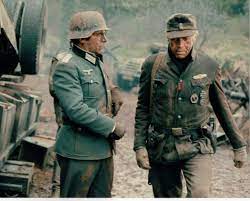
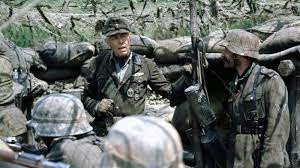
“Cross of Iron” is set on the Eastern Front of World War II, primarily in 1943, as the tide of the war began to turn against Nazi Germany. The story revolves around a platoon of German soldiers stationed in the brutal and unforgiving Russian wilderness. Led by the battle-hardened and cynical Steiner (played brilliantly by James Coburn), the platoon is depicted as an exhausted and demoralized group of men, who are well aware of the bleak prospects they face.
The plot centres on their struggles, not only against the relentless Russian forces but also within their own ranks. The conflict between the platoon’s officers, led by the arrogant and cowardly Captain Stransky (played by Maximilian Schell), and the enlisted men, like Steiner and his loyal comrades, adds an extra layer of tension to the narrative.
One of the remarkable aspects of “Cross of Iron” is its willingness to explore the psychological and emotional toll of warfare on the soldiers. It goes beyond the glorification of combat and delves into the harrowing realities of war, where survival often trumps heroism.
The film’s characters are portrayed with depth and complexity, making them more than just archetypal war movie figures. James Coburn’s portrayal of Rolf Steiner is a standout performance, giving depth to a character who embodies the weariness and disillusionment of the German soldier on the Eastern Front. His stoic determination and sense of camaraderie with his fellow soldiers create a character with whom the audience can empathize.
On the other hand, Maximilian Schell’s Captain Stransky is a despicable and manipulative officer who seeks to earn the coveted Iron Cross for his own personal glory, regardless of the cost to his men. His character serves as a stark contrast to Steiner and embodies the worst aspects of military leadership during the war.
The supporting cast is equally impressive, with standout performances by James Mason as Colonel Brandt and David Warner as Captain Kiesel. Each character, from the battle-hardened veterans to the green recruits, is portrayed with authenticity and nuance, making the audience feel a connection with their struggles and sacrifices.
Sam Peckinpah is renowned for his distinct and innovative filmmaking style, characterized by slow-motion sequences, intricate editing, and intense violence. “Cross of Iron” is no exception, and it showcases Peckinpah’s unique approach to storytelling.
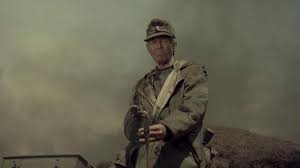
The film’s cinematography, under the skilled hands of John Coquillon, is nothing short of breathtaking. The stark, desolate landscapes of the Eastern Front are captured with a haunting beauty that accentuates the isolation and hopelessness of the soldiers’ situation. The battle scenes are intense, chaotic, and visceral, giving the audience a visceral sense of the horrors of war.
Peckinpah’s use of slow-motion, often during combat sequences, adds a poetic quality to the brutality, making the violence all the more impactful. This style has become synonymous with the director’s work and is a defining feature of “Cross of Iron.”
“Cross of Iron” is not merely a war film; it is a complex exploration of various themes and symbolism. One of the central themes is the futility of war, and the toll it takes on individuals and societies. The film doesn’t shy away from showing the senseless violence, the loss of innocence, and the moral degradation that war can bring.
The contrast between Steiner and Stransky symbolizes the conflict between duty and personal ambition, selflessness and selfishness, which is a recurring theme throughout the film. It raises questions about the nature of heroism and the sacrifices made in the name of duty.
The “Cross of Iron” itself, representing the Iron Cross, becomes a potent symbol of honor and valor. Its meaning evolves throughout the film, reflecting the shifting moral landscape of the characters and their changing motivations.
“Cross of Iron” had a profound impact on the war film genre. Its unflinching portrayal of war as a harrowing and brutal experience, rather than a glorified adventure, challenged the conventions of the genre at the time. The film’s influence can be seen in subsequent war films, particularly those that explored the darker aspects of war and the moral complexities faced by soldiers.
Additionally, the decision to present the German perspective was ground-breaking, as it humanized the soldiers on the opposing side, allowing the audience to empathize with their plight. This approach has been emulated in other war films, fostering a more nuanced understanding of the individuals caught up in the maelstrom of war.
Since its release in 1977, “Cross of Iron” has continued to maintain its relevance and influence in the world of cinema. It has garnered a cult following and remains a staple for enthusiasts of both war films and Sam Peckinpah’s directorial work. The film’s impact on the war film genre and its unique perspective have left an indelible mark.
The film’s message about the futility of war, the dehumanizing effects of conflict, and the complexity of human nature is timeless. It serves as a reminder of the high cost of war, not only in terms of human lives but also in the toll it takes on the human spirit.
In today’s context, where war films continue to be produced, “Cross of Iron” stands as a testament to the importance of challenging traditional narratives and offering new perspectives. The film has set a standard for authenticity and unvarnished storytelling, reminding filmmakers of the need to capture the emotional and psychological impact of war on soldiers and civilians.
“Cross of Iron” is not without its criticisms and controversies. Some have questioned the historical accuracy of the film, as it depicts German soldiers as sympathetic figures, which has raised concerns about the potential for historical revisionism. The film does not delve deeply into the atrocities committed by the German Army on the Eastern Front, and this omission has been a point of contention for some viewers.
Furthermore, the graphic violence and intense combat scenes in the film have been criticized by those who find them excessive or gratuitous. It’s important to note that Sam Peckinpah was known for his controversial use of violence in films, and “Cross of Iron” is no exception.
The film’s pacing, which can be slow at times, and its lack of a traditional hero may not appeal to all audiences. It demands patience and an appreciation for nuanced character development and storytelling.
“Cross of Iron” is a war film masterpiece that stands the test of time. It is a searing and unapologetic exploration of the Eastern Front during World War II, offering a unique perspective on a conflict that has been extensively depicted on screen. With its well-drawn characters, striking cinematography, and thought-provoking themes, the film transcends the boundaries of the war genre, delivering a powerful and unforgettable cinematic experience. Sam Peckinpah’s direction and the exceptional performances by the cast ensure that “Cross of Iron” remains a landmark in the history of war cinema, and a must-watch for those seeking a more profound understanding of the human experience during times of conflict.
Technical Commentary
Video
Presented in an aspect ratio of 1.84:1, encoded with MPEG-4 AVC and granted a 1080p transfer, Sam Peckinpah’s “Cross of Iron arrives” on Blu-ray courtesy of the Imprint label.
It is a very good high-definition transfer, however it is not perfect, it has a terrific look that does the film justice. First of all, there are no traces of problematic digital corrections. Second, contrast levels remain stable throughout the entire film. Finally, there are no distracting age-related imperfections.
Audio
There is only one audio track on this Blu-ray disc: English LPCM 2.0. The English LPCM 2.0 track enhances the many battle scenes in the film very well. Obviously, the dynamic intensity is not as impressive as that of recent war films that have appeared on Blu-ray, but the sound has very pleasing depth and vibrancy; there are no balance issues either. The dialog is crisp, clean, stable, and easy to follow. For the record, there are no problematic pops, cracks, hissings, or audio dropouts.
Special Features
Disc One: Cross of Iron – 4K UHD – Brand new 2023 4K restoration (HDR)
- NEW Audio Commentary by filmmaker / Peckinpah scholar Mike Siegel
- Promoting STEINER – International posters and lobby cards & more
- STEINER on the Set – a selection of 100 behind the scenes stills
- Filming STEINER: Part 1 – 100 behind the scenes stills from contact sheets
- Filming STEINER: Part 2 – 100 behind the scenes stills from contact sheets
- STEINER in Colour – a selection of 100 colour stills
- Aspect Ratio 1.85:1
Disc Two: Cross of Iron – Blu-ray
- 1080p High-definition presentation on Blu-ray from a new 4K restoration (2023)
- NEW Audio Commentary by filmmaker / Peckinpah scholar Mike Siegel
- Audio Commentary by film historian & author Stephen Prince
- NEW Deleted Scenes (12 minutes)
- NEW Five animated gallery featurettes
- NEW Interview with editors Tony Lawson and Michael Ellis
- NEW Interview with make up artist Colin Arthur
- Promoting STEINER – International posters and lobby cards & more
- STEINER on the Set – a selection of 100 behind the scenes stills
- Filming STEINER: Part 1 – 100 behind the scenes stills from contact sheets
- Filming STEINER: Part 2 – 100 behind the scenes stills from contact sheets
- STEINER in Colour – a selection of 100 colour stills
- US/UK TV Spots
- Original English Theatrical Trailer
- Original German Theatrical Trailer
- Aspect Ratio 1.85:1
Disc Three: Cross of Iron – Grindhouse Version – “Steiner – Das Eiserne Kreuz”
- 1080p High-definition presentation on Blu-ray from a 2K Scan
- NEW scan from a vintage German 35mm theatrical print, presenting an authentic 70’s cinema experience
- Passion & Poetry: Sam Peckinpah’s War – Documentary featuring interviews with key cast/crew & behind the scenes footage
- On Location – Audio interviews with Sam Peckinpah, James Coburn, James Mason, Maximilian Schel & David Warner
- Kruger Kisses Kern – Interview with actor/director/producer Vadim Glowna
- Vadim & Sam: Father and Son – actor/director/producer Vadim Glowna recalls his relationship with Peckinpah
- Cutting Room Floor – Interviews with cast & crew on the cut scenes
- Steiner in Japan – Two Japanese TV commercials directed by Peckinpah, starring James Coburn
- Mike’s Homemovies: Steiner & Kiesel Meet Again – Introduction to the film by David Warner and James Coburn for the film screening in Padua, Italy 2000
- Theatrical Trailer



 spryfilm.com