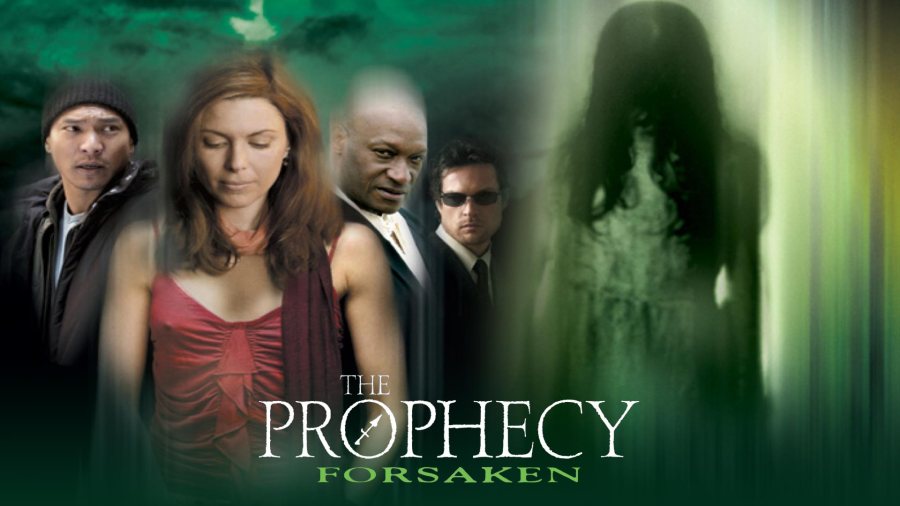
“The Prophecy: Forsaken” (2005)
Action

Running Time: 75 minutes
Written and directed by: Joel Soisson
Featuring: Kari Wuhrer, Jason Scott Lee, John Light, Jason London and Tony Todd
John Reigart: “The last chapter of the Bible is called Revelations. It promises the end of life as we know it. If that’s the case, you might want to ask yourself: Is that really such a good thing?”
Critical Commentary
The Prophecy franchise has long been a staple of supernatural horror cinema, known for its unique blend of theological elements and gritty storytelling. With the release of “The Prophecy: Forsaken,” the fourth installment in the series, fans eagerly anticipated another dose of the angelic warfare and moral ambiguity that characterized the earlier films. However, it is with heavy hearts that we must report that “Forsaken” falls far short of its predecessors, offering little more than a shadow of the series’ former glory. This review will delve into the strengths and weaknesses of the film, offering a comprehensive analysis of where it went wrong.
“The Prophecy: Forsaken” picks up the narrative of the series, with the eternal struggle between angels and demons taking center stage. However, the plot seems tired and uninspired. This time around, our protagonist is Danyael (John Light), an ex-Legion angel who has fallen in love with a human. He seeks to protect his son, born of a union between angel and human, from the relentless pursuit of other celestial beings.
While the core concept of angels and demons battling for dominance remains intriguing, the execution leaves much to be desired. The narrative meanders, and the film often loses focus, failing to build the suspense and intrigue that the franchise is known for. The lack of a compelling antagonist diminishes the stakes, and the central conflict feels forced and uninspired.
The characters in “The Prophecy: Forsaken” are unfortunately one-dimensional, lacking the complexity and depth that characterized the earlier entries in the series. The film introduces new characters, including a troubled cop (Jason London) and an enigmatic priest (Jason Scott Lee), but their backstories and motivations are woefully underdeveloped. The film fails to make the audience genuinely care about their fates, a stark contrast to previous instalments that excelled in creating morally ambiguous, multi-faceted characters.
Christopher Walken, who portrayed the iconic angel Gabriel in the first three films, reprises his role in “Forsaken.” However, even Walken’s magnetic presence can’t save the film from its shortcomings. His character, once a charismatic and complex figure, is reduced to a mere cameo. His limited screen time leaves fans yearning for more of the charismatic and morally ambiguous angel that made Gabriel a franchise highlight.
One area where “The Prophecy: Forsaken” occasionally shines is in its visuals and special effects. The film features some dark and atmospheric cinematography, creating a suitably grim and foreboding atmosphere. The use of practical effects for the angelic and demonic transformations adds a sense of physicality that is often lacking in modern horror films that rely solely on CGI.
However, the special effects are uneven, and there are moments where the CGI feels dated and unconvincing. The film’s limited budget is apparent in some of the more ambitious sequences, and this detracts from the overall experience. While it’s understandable that the franchise may not have the resources of a major studio production, fans may find it disappointing that “Forsaken” doesn’t live up to the visual standards set by its predecessors.
One of the strengths of the earlier Prophecy films was their ability to balance theological and philosophical themes with a dark and gritty atmosphere. “The Prophecy: Forsaken” fails to maintain this balance, often feeling disjointed in its tone. The film occasionally flirts with thought-provoking ideas, such as the nature of free will and the consequences of defying destiny. Still, it lacks the depth and philosophical exploration that fans of the series have come to expect.
The atmosphere, while occasionally atmospheric, never reaches the same level of dread and suspense that characterized the earlier films. The plot meanders and fails to maintain a consistent tone, leaving the audience disconnected from the events unfolding on screen. This lack of cohesion is a glaring departure from the franchise’s established identity.
Dialogue and Script: A Missed Opportunity
The script for “The Prophecy: Forsaken” is where the film truly falls short. While the earlier entries in the series were known for their memorable and often cryptic dialogue, the dialogue in “Forsaken” lacks the same impact. The film’s attempts at philosophical discourse often come across as heavy-handed and forced, with characters delivering exposition in a manner that feels unnatural.
Furthermore, the absence of a strong antagonist results in weak conflicts and uninspired confrontations. The dialogue between characters lacks the sharp wit and moral ambiguity that defined the earlier films. This, in turn, undermines the sense of moral and intellectual engagement that made the franchise so appealing.
Director Joel Soisson, who also wrote the screenplay, struggles to capture the essence of the Prophecy series. The pacing of “The Prophecy: Forsaken” is uneven, with moments of tension and intrigue abruptly giving way to dull and meandering sequences. Soisson fails to sustain a consistent tone or maintain the tension necessary for a successful supernatural horror film.
The lack of a clear vision for the film’s narrative and themes is evident in the final product. It often feels like a hodgepodge of ideas and concepts that have been clumsily stitched together, lacking the cohesion and direction that the franchise deserves. As a result, the film frequently leaves the audience disoriented and disengaged.
One of the few redeeming qualities of “The Prophecy: Forsaken” is its musical score. Composed by Stephen Edwards, the score provides a sense of grandeur and gravitas that the film’s plot and characters fail to achieve. The orchestral music adds a layer of depth and emotion to the proceedings, helping to elevate certain moments.
The music enhances the film’s atmosphere and creates a sense of foreboding, reminding the audience of the series’ potential for evocative storytelling. It’s a testament to the power of a well-composed score to salvage an otherwise lacklustre film.
As “The Prophecy: Forsaken” concludes its less-than-satisfying narrative, it leaves viewers longing for the days when the franchise was at its peak. The lack of compelling character development, the absence of a strong antagonist, and a disjointed plot are unfortunate aspects of this instalment. However, it’s essential to remember that while “Forsaken” may have faltered, the Prophecy series as a whole still has moments of brilliance to offer.
For those who have followed the franchise closely, it’s clear that the first “The Prophecy” film, released in 1995, set a high bar with its exploration of themes of free will, redemption, and the blurred lines between good and evil. Its sequel, “The Prophecy II,” continued in the same vein and added complexity to the characters. The third instalment, “The Prophecy 3: The Ascent,” while not as strong as its predecessors, still managed to maintain the franchise’s philosophical undertones.
One cannot help but wonder what could have been if “The Prophecy: Forsaken” had lived up to the legacy established by these earlier films. Unfortunately, it falls short in its attempt to carry the torch and explore the profound theological and philosophical questions that the franchise had once raised.
While “Forsaken” might not be completely devoid of merit, it is undoubtedly an outlier in the Prophecy series, a franchise that once held a unique place in the world of supernatural horror cinema. If you are a die-hard fan of the series, you might still find moments of enjoyment and nostalgia in this fourth instalment. However, for those unacquainted with the franchise, “Forsaken” is not the place to start, as it fails to capture the essence and depth that made its predecessors memorable.
Ultimately, “The Prophecy: Forsaken” serves as a cautionary tale in the world of franchise filmmaking. It reminds us that even a beloved and established series can lose its way when the core elements that made it great are not carefully preserved and nurtured. In the case of this once-promising franchise, it appears that a lack of clear vision, poor character development, and uninspired dialogue have led to its downfall.
As we bid farewell to “The Prophecy: Forsaken,” it’s with the hope that future attempts to revive or continue beloved franchises will learn from the mistakes made in this particular instalment. The supernatural horror genre has much to offer in terms of exploring deep philosophical and theological themes, and it would be a disservice to fans and newcomers alike if such opportunities were squandered.
“The Prophecy: Forsaken” is a disheartening departure from the intriguing and thought-provoking series that fans have cherished. While it occasionally showcases moments of visual flair and a captivating musical score, these aspects are overshadowed by a lacklustre plot, underdeveloped characters, uninspired dialogue, and a lack of a consistent tone. The film’s inability to capture the essence of its predecessors is a true letdown for fans who have followed the series since its inception.
The film feels like a missed opportunity to explore the deeper philosophical and theological themes that the Prophecy franchise has been known for. Its failure to engage with complex characters and ideas leaves it a mere shadow of what it once was. “The Prophecy: Forsaken” may find a place as a curiosity for die-hard fans of the series, but for most, it serves as a reminder of how a once-great franchise can falter and lose its way.


 spryfilm.com