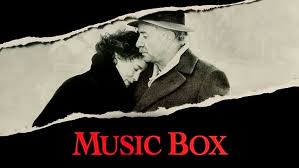
“Music Box” (1989)
Drama

Running Time: 124 minutes
Written by: Joe Eszterhas
Directed by: Costa-Gavras
Featuring: Jessica Lange, Armin Mueller-Stahl, Frederic Forrest and Lukas Haas
Mikey Talbot: “Grandpa told me that the holocaust was a big exaggeration.”
Critical Commentary
In the vast realm of cinematic history, there are films that entertain, films that enlighten, and films that haunt our deepest emotions. “Music Box,” directed by Costa-Gavras and released in 1989, is a masterpiece that falls into the latter category. This haunting thriller, wrapped in a family drama, explores themes of justice, identity, and the dark secrets that bind generations. It is a film that not only entertains but leaves an indelible mark on the viewer’s psyche.
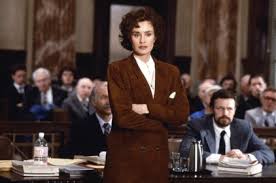
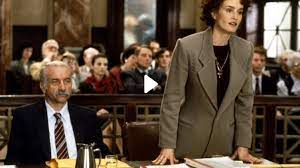
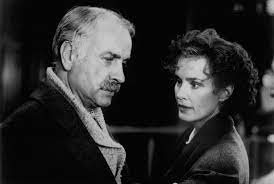
“Music Box” tells the story of Ann Talbot, portrayed by the exceptional Jessica Lange, a successful attorney in Chicago. The film unfolds as Ann’s seemingly serene life takes a nightmarish turn when her father, Michael J. Laszlo (Armin Mueller-Stahl), an immigrant from Hungary, is accused of war crimes committed during World War II. Ann is compelled to defend her father, and what follows is a gripping courtroom drama, shrouded in the unsettling aura of a dark family secret.
Intriguingly, the story is loosely based on real events, adding an extra layer of authenticity to the narrative. As Ann delves deeper into her father’s past, she uncovers disturbing truths, and the audience is taken on an emotional rollercoaster ride filled with suspense and moral dilemmas.
The film’s success hinges on the remarkable performances of its cast. Jessica Lange delivers a tour de force performance as Ann Talbot, a daughter torn between her unwavering love for her father and the growing suspicion that he may not be the man she thought he was. Lange masterfully portrays the inner conflict, vulnerability, and strength of her character, earning her an Academy Award nomination for her role.
Armin Mueller-Stahl’s portrayal of Michael J. Laszlo is equally compelling. His transformation from a loving, doting grandfather to a man haunted by a dark past is riveting. Mueller-Stahl’s portrayal makes it difficult for the audience to pass a final judgment on his character, echoing the film’s central theme of moral ambiguity.
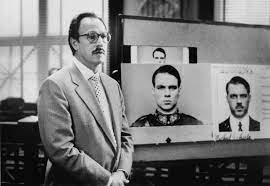
Supporting performances from Frederic Forrest as Jack Burke, Ann’s ex-husband, and Lukas Haas as Mikey, her son, add depth to the family dynamics. These characters serve as pillars of support for Ann as she navigates the turbulent waters of her father’s past.
At its core, “Music Box” is a film about identity and justice. Ann’s journey to uncover her father’s past forces her to confront uncomfortable truths about her family’s history and her own identity. It raises profound questions about how well we truly know the people we love and the lengths we are willing to go to protect them.
The courtroom scenes are particularly powerful, as Ann grapples with the responsibility of defending her father against the allegations of war crimes. The moral ambiguity of the situation is palpable, and the film challenges the audience to ponder where their loyalties would lie in such a predicament.
Additionally, the film explores the concept of justice in the context of historical atrocities. It raises important questions about the accountability of individuals who may have committed heinous acts during wartime. “Music Box” forces viewers to consider whether justice should have a statute of limitations and whether individuals can ever truly be held accountable for their actions, no matter how much time has passed.
Costa-Gavras, known for his politically charged and socially relevant films, brings his signature style to “Music Box.” His direction creates an atmosphere of tension and unease that lingers throughout the film. The use of lighting, camera angles, and a hauntingly beautiful score by Philippe Sarde all contribute to the film’s overall sense of foreboding.
The film’s pacing is deliberate, allowing the audience to become fully immersed in the unfolding drama. The gradual unveiling of secrets and the steady buildup of suspense keep viewers on the edge of their seats, making “Music Box” a true cinematic thriller.
The use of flashbacks is another notable aspect of the film’s craftsmanship. As Ann investigates her father’s past, the audience is transported to Hungary during World War II, providing crucial context and emotional weight to the narrative. These flashback sequences are skillfully interwoven with the present-day storyline, creating a seamless narrative flow.
“Music Box” is firmly rooted in a historical context that adds depth and significance to its narrative. The film touches on the dark history of Hungary during World War II, including the collaboration of some Hungarians with Nazi forces and the persecution of Jews. This historical backdrop adds layers of complexity to the characters and their motivations, making the film more than just a courtroom drama; it becomes a reflection on the legacy of war and the moral dilemmas it leaves in its wake.
The film also explores the post-World War II era when many war criminals fled Europe and sought refuge in the United States. This historical reality forms the basis of the film’s central conflict and raises questions about how effectively justice can be served in such cases.
Impact and Controversy
Upon its release, “Music Box” garnered critical acclaim and sparked significant controversy. It was praised for its powerful performances and thought-provoking themes but also faced accusations of anti-Hungarian bias. Some Hungarian groups objected to the film’s portrayal of Hungarians during World War II, arguing that it painted an unfairly negative picture of the entire nation. Nevertheless, the film’s impact and lasting legacy cannot be denied.
“Music Box” opened up discussions about historical accountability and the ethical complexities of defending individuals accused of war crimes. It also prompted viewers to reflect on the enduring trauma of war and the hidden scars that can affect generations.
One of the most compelling aspects of “Music Box” is its exploration of the dynamics within the Talbot family. Ann’s unwavering love for her father, Michael, is at the heart of the story. Her commitment to defending him, despite the mounting evidence against him, raises profound questions about the lengths to which we are willing to go for our loved ones.
The film depicts the complexities of familial loyalty and the emotional turmoil Ann experiences as she grapples with the possibility that her father may have committed heinous acts during the war. It challenges viewers to consider the extent to which they would protect their own family members, even when faced with uncomfortable truths. This theme resonates with audiences on a deeply personal level, as it taps into the universal experience of grappling with family secrets and moral dilemmas.
Costa-Gavras is renowned for his ability to tackle complex and politically charged subjects in his films. “Music Box” is no exception, as it delves into the morally murky waters of war crimes, accountability, and the passage of time. The director’s keen eye for storytelling and his skill in building tension are evident throughout the film.
One of Costa-Gavras’s notable strengths as a director is his ability to create a palpable atmosphere of unease and suspense. He achieves this through meticulous attention to detail, such as the use of dimly lit interiors and a haunting musical score by Philippe Sarde. These elements work in tandem to create an unsettling mood that pervades the entire film.
The film’s use of flashbacks is another example of Costa-Gavras’s directorial prowess. These sequences seamlessly transport the audience to wartime Hungary, providing essential context and emotional resonance to the narrative. The juxtaposition of past and present enhances the storytelling and deepens the audience’s engagement with the characters and their struggles.
“Music Box” remains a relevant and thought-provoking film even decades after its release. Its exploration of war crimes, justice, and the enduring impact of historical events continues to resonate in a world where similar questions persist. As societies grapple with issues of accountability and reconciliation, the film serves as a reminder of the moral complexities surrounding these topics.
Furthermore, the film’s portrayal of family secrets and the moral dilemmas they entail remains timeless. Audiences from all walks of life can relate to the idea of uncovering uncomfortable truths about their own families, and “Music Box” provides a framework for examining the emotional and ethical dimensions of such revelations.
The film’s enduring impact is also reflected in its critical acclaim and its inclusion in discussions of cinematic classics. It continues to be studied in film schools and discussed in academic circles for its thematic depth and powerful storytelling
“Music Box” is a cinematic gem that defies easy categorization. It is a thriller, a courtroom drama, a family saga, and a historical exploration all rolled into one. Costa-Gavras’s masterful direction, coupled with exceptional performances by Jessica Lange and Armin Mueller-Stahl, elevates the film to the realm of cinematic classics.
The film’s exploration of identity, justice, and the dark secrets of the past makes it a thought-provoking and emotionally resonant experience. “Music Box” challenges its audience to grapple with difficult moral questions and leaves a lasting impression that continues to haunt long after the credits roll.
As we revisit this film from 1989, it remains a testament to the power of cinema to delve into the deepest recesses of the human soul and shed light on the complexities of our shared history. “Music Box” is not just a movie; it is an enduring work of art that will continue to captivate and haunt audiences for generations to come.
Special Features
- Audio Commentary by Gary Crowdus, editor of Cineaste Magazine (2023)
- Life Imidates Tragedy – screenwriter Joe Eszterhas on Music Box (2023)
- Through a Different Doorway – production designer Jeannine Oppewall on Characters and their Environments (2023)
- Folk Dancing and Home Brew Fluency – actor Michael Rooker on the Actor’s Craft (2023)
- Filmstruck – The Early Career of actor Lukas Haas (2023)
- A Time Of Trial – featurette
- Profile: Taking Risks – Costa-Gavras and Irwin Winkler – featurette
- Archival interview with actor Jessica Lange (1989)
- Archival interview with actor Armin Mueller-Stahl (1989)
- Archival interview with director Costa-Gavras (1989)


 spryfilm.com