
“House of Sand and Fog” (2003)
Drama

Running Time: 126 minutes
Written by: Shawn Lawrence Otto and Vadim Perelman
Directed by: Vadim Perelman
Featuring: Jennifer Connelly, Ben Kingsley, Ron Eldard, Frances Fisher and Kim Dickens
Behrani: [Praying for his dying son] “Please, God, don’t take my joon-am. I make my nazr. My nazr, hear me, please to hear me. I will give everything to one who is less fortunate. Yes! I will make it for the broken bird. Please, God, I’m making nazr to this woman. To Kathy Nicolo. And I, to you I promise, if you heal my son, I will return her father’s house. I will also give to her all the money I have. My God, Khoda. I make nazr only for my son. Please, I want only for my son. I beg you. I will do whatever is your will. I will purchase ten kilos of the finest seed and I will find an American mosque and I will feed them to all the birds outside. I will let the birds cover me and peck out my eyes! Please, God, my nazr is in your hands!”
Critical Commentary
In the realm of cinematic storytelling, few films manage to convey the raw intensity of human emotions and the complexities of morality as effectively as “House of Sand and Fog.” Released in 2003 and directed by Vadim Perelman, this adaptation of Andre Dubus III’s novel takes viewers on an unforgettable journey through the lives of two individuals, Kathy Nicolo (Jennifer Connelly) and Massoud Amir Behrani (Ben Kingsley), whose fates become inexorably intertwined by a disputed house. With themes of loss, identity, and the collision of cultures at its core, “House of Sand and Fog” delivers a compelling narrative that challenges our perceptions of right and wrong.
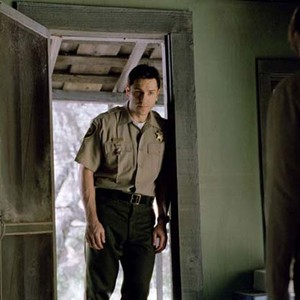
“House of Sand and Fog” begins by introducing us to Kathy Nicolo, a recovering addict who is struggling to regain her footing in life after a painful divorce. Her home, a modest bungalow left to her by her father, is mistakenly seized and auctioned by the county due to an unpaid tax bill. This pivotal moment sets the stage for a tragic conflict, as Massoud Amir Behrani, a former Colonel in the Iranian Air Force, buys the house at auction with hopes of securing a better future for his family in America.
The film unfolds as a gripping battle for ownership of the house ensues, fueled by stubbornness, pride, and desperation. As Kathy and Behrani’s lives become increasingly entangled, the audience is confronted with the moral complexities surrounding their actions. Who deserves the house? What is the true cost of achieving the American dream?
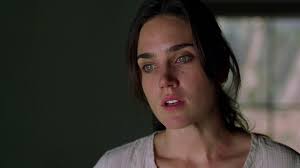
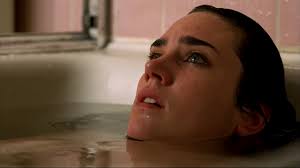
Jennifer Connelly delivers a powerhouse performance as Kathy Nicolo, portraying a woman teetering on the precipice of despair with remarkable vulnerability. Her character is haunted by personal demons, struggling with addiction and a profound sense of loss. Connelly’s portrayal allows the audience to empathize with Kathy’s plight, even when her actions take a darker turn.
Ben Kingsley’s portrayal of Massoud Amir Behrani is equally compelling. Behrani is a proud and dignified man driven by a deep desire to provide a better life for his family. Kingsley masterfully captures the complexities of Behrani’s character, making him more than just an antagonist. Behrani’s moral compass may be skewed, but it is rooted in love and a longing for a sense of belonging in a foreign land.
The film’s supporting cast, including Shohreh Aghdashloo as Behrani’s wife Nadi, and Ron Eldard as Kathy’s boyfriend Lester, add depth and authenticity to the story. Aghdashloo’s performance is particularly noteworthy, as she portrays a woman trapped between her husband’s aspirations and her own sense of displacement.
“House of Sand and Fog” is a masterclass in storytelling, exploring a multitude of themes that resonate deeply with the human experience. The film delves into the consequences of bureaucracy, the pursuit of the American dream, the clash of cultures, and the destructive power of pride and stubbornness.
The cinematography, helmed by Roger Deakins, captures the melancholic beauty of the coastal setting, emphasizing the isolation and desolation experienced by the characters. The use of color and lighting serves to accentuate the emotional depth of the narrative, with darker tones reflecting the characters’ inner turmoil.
James Horner’s haunting musical score adds another layer of emotional resonance to the film. The score’s melancholic strings and haunting melodies heighten the sense of tragedy that permeates the story. It’s a testament to Horner’s ability to convey complex emotions through music.
What truly sets “House of Sand and Fog” apart is its refusal to offer easy answers or moral clarity. The film thrusts its audience into a morally gray quagmire, forcing them to grapple with the ethical dilemmas faced by the characters. As the tension escalates, it becomes increasingly difficult to categorize the characters as heroes or villains. This moral ambiguity is a testament to the film’s thought-provoking storytelling.
The house itself serves as a potent symbol throughout the film. It represents not only the physical manifestation of the American dream but also the elusive nature of happiness and security. Kathy’s attachment to the house is not just about property; it’s about reclaiming a sense of control and identity in a world that has often dealt her a losing hand.
The fog that envelops the coastal landscape is another powerful metaphor. It symbolizes the uncertainty and obscurity that shroud the characters’ motivations and actions. Just as the fog obscures the horizon, the characters’ choices are clouded by their own desires and circumstances.
The Persian rug, a family heirloom, becomes a focal point in the story, symbolizing the Behrani family’s heritage and their determination to preserve their identity in a foreign land. It becomes a poignant reminder of the cultural clash and the longing for a sense of belonging.
In “House of Sand and Fog,” Vadim Perelman has crafted a deeply affecting and morally complex film that leaves a lasting impact on its audience. With its outstanding performances, evocative cinematography, and thought-provoking themes, it stands as a testament to the power of storytelling in cinema. The film’s refusal to provide easy answers and its exploration of the moral gray areas of life make it a truly compelling and emotionally resonant work of art. “House of Sand and Fog” invites us to confront our own preconceptions and biases, ultimately challenging us to reflect on the often tragic consequences of pride, stubbornness, and the pursuit of the American dream. It is a cinematic masterpiece that lingers in the mind long after the credits roll.
Technical Commentary
Video
The 1.85:1 anamorphic transfer transfer is saturated and though this results in a lot of grain in some scenes, it also gives it a very unique look and feel. For a movie that’s new to Blu-ray, the transfer is not the best out there for a film of its age.
Audio
The Dolby Digital 5.1 track is actually very robust. Dialogue is very clean and though there is some Iranian dialogue (with subtitles), it sounds fine. The surrounds offer an unexpected ambiance to the track as well.
Special Features
- 1080P High-definition presentation on Blu-ray from a 2K scan
- Audio Commentary with actor Ben Kingsley, director Vadim Perelman and novelist Andre Dubus III
- When The Fog Clears – director Vadim Perelman Twenty Years Later (2023)
- Building The House – editor Lisa Zeno Churgin on House Of Sand And Fog (2023)
- Finding Nadi – a conversation with actress Shohreh Aghdashloo (2023)
- Deleted scenes (with optional audio commentary by Vadin Perelman)
- Behind-the-scenes – archival featurette
- Shohreh Aghdashloo Audition Footage
- Slide Show with comments by cast and crew



 spryfilm.com