
“Waking the Dead” (2000)
Drama

Running Time: 105 minutes
Written by: Robert Dillon
Directed by: Keith Gordon
Featuring: Billy Crudup, Jennifer Connelly, Molly Parker, Janet McTeer, Paul Hipp, Sandra Oh and Hal Holbrook
Sarah Williams: “You can’t be everything to me.”
Fielding Pierce: “I want to be.”
Sarah Williams: “Oh, dear. I love that you said that.”
Critical Commentary
Released in 2000, “Waking the Dead” is a thought-provoking and emotionally charged film directed by Keith Gordon. Based on the novel of the same name by Scott Spencer, the movie delves into themes of love, loss, and redemption through a complex narrative structure that moves seamlessly between the past and the present. Starring Billy Crudup and Jennifer Connelly in the lead roles, the film offers a gripping and emotionally resonant cinematic experience.
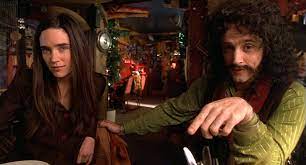
The movie revolves around Fielding Pierce (played by Billy Crudup), a young and ambitious political activist with aspirations of becoming a Congressman. Fielding’s life takes an unexpected turn when he meets Sarah Williams (Jennifer Connelly), a passionate and artistic woman who shares his passion for social justice. Their passionate love affair is at the center of the film’s narrative, serving as the driving force behind Fielding’s journey of self-discovery and transformation.
The story unfolds through a dual narrative structure, skillfully weaving between the 1970s, when Fielding and Sarah’s love story blossomed, and the 1980s, when Fielding is haunted by Sarah’s memory as he pursues his political career. This narrative technique allows the audience to explore the profound impact of Sarah’s life and death on Fielding’s psyche and political aspirations.
The strength of “Waking the Dead” lies in its compelling character development, particularly that of Fielding Pierce. Billy Crudup delivers a remarkable performance, portraying Fielding’s evolution from an idealistic young activist to a haunted and conflicted politician. As the film oscillates between the past and the present, Crudup skillfully conveys Fielding’s emotional turmoil and inner conflict, making the character’s journey deeply relatable and engaging.
Jennifer Connelly’s portrayal of Sarah Williams is equally impressive. Her character is complex, exuding both passion and vulnerability. Connelly brings Sarah to life with depth and authenticity, making her a captivating presence throughout the film. The chemistry between Crudup and Connelly is palpable, and their on-screen romance is both intense and believable.
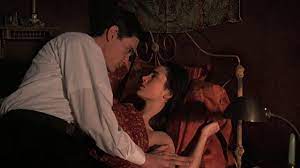
At its core, “Waking the Dead” explores the enduring power of love and the profound impact of loss on the human psyche. Fielding’s love for Sarah is all-encompassing and all-consuming. Their relationship is passionate, filled with idealism and youthful fervor. However, it is also plagued by the challenges of the tumultuous era they live in, with political activism, personal ambitions, and external pressures threatening to tear them apart.
The film’s portrayal of loss is poignant and heart-wrenching. After Sarah’s tragic death, Fielding is left grappling with guilt, grief, and a sense of abandonment. His memories of Sarah haunt him, and he becomes obsessed with unraveling the mystery surrounding her death. The film raises thought-provoking questions about the nature of love and whether it can transcend death. Fielding’s journey to come to terms with his loss and find closure forms the emotional core of the movie.
As Fielding pursues his political career in the 1980s, “Waking the Dead” delves into the moral dilemmas and compromises that come with the territory. Fielding’s idealism from the 1970s clashes with the pragmatism and compromises required in the world of politics. The film explores the tension between personal ambition and staying true to one’s principles, a theme that remains relevant in contemporary politics.
Fielding’s internal struggle to balance his political aspirations with his memories of Sarah adds depth to his character. The film doesn’t shy away from portraying the morally ambiguous choices he makes, highlighting the complexity of political life. This aspect of the film invites viewers to reflect on the compromises and ethical decisions individuals in positions of power often face.
“Waking the Dead” boasts strong visual storytelling, with cinematography by Tom Richmond that effectively captures the different time periods and moods of the film. The use of color palettes and lighting techniques helps distinguish between the past and the present, creating a visual distinction that aids in the narrative’s fluidity.
The film’s soundtrack, featuring a mix of period-specific and contemporary music, enhances the emotional resonance of the story. The music serves as a backdrop to the characters’ experiences and adds depth to their emotional journeys.
The editing by Jeff Wishengrad is particularly noteworthy, as it seamlessly weaves together the two timelines, allowing the audience to navigate the complex narrative structure with ease. This editing style mirrors Fielding’s own attempts to reconcile his past and present, creating a sense of unity in the storytelling.
One of the strengths of “Waking the Dead” is its narrative complexity. The film invites viewers to actively engage with the story, piecing together the puzzle of Fielding’s life and the mystery of Sarah’s death. As the film unfolds, it becomes apparent that the past and present are interconnected, and every detail serves a purpose in unraveling the central mystery.
The use of symbolism, such as recurring motifs like the red beret and the Polaroid photographs, adds depth to the narrative. These symbols serve as visual cues that tie the two timelines together, reinforcing the idea that Fielding’s past is inextricably linked to his present.
Since its release in 2000, “Waking the Dead” has garnered a dedicated following of cinephiles who appreciate its nuanced storytelling and emotional depth. The film’s exploration of love, loss, and the moral dilemmas of political life has allowed it to remain relevant even years after its initial release.
One of the enduring aspects of the film is its ability to spark discussions and reflections on the themes it presents. Viewers often find themselves pondering questions about the nature of love, the impact of personal choices on one’s life trajectory, and the challenges of maintaining one’s ideals in a world filled with compromise. These themes are universal and continue to resonate with audiences, making “Waking the Dead” a timeless piece of cinema.
Additionally, the film’s narrative structure and use of symbolism have been studied and discussed by film enthusiasts and scholars alike. Its creative approach to storytelling, with its seamless shifts between past and present, serves as an example of how cinema can push boundaries and engage viewers on both intellectual and emotional levels.
Billy Crudup’s Career and Impact
“Waking the Dead” also played a significant role in cementing Billy Crudup’s reputation as a versatile and talented actor. His portrayal of Fielding Pierce demonstrated his ability to inhabit complex characters and convey a wide range of emotions. Following the film’s release, Crudup’s career continued to flourish, and he became a sought-after actor in both film and theatre.
Crudup’s performance in “Waking the Dead” solidified his status as an actor capable of delivering compelling and emotionally charged roles. This led to a series of acclaimed performances in various films, including “Almost Famous” (2000) and “Big Fish” (2003), further establishing him as a respected figure in the film industry.
Jennifer Connelly’s performance as Sarah Williams in “Waking the Dead” also contributed to her growing reputation as a talented actress. Her ability to bring depth and authenticity to her characters caught the attention of both critics and audiences. Connelly’s career continued to thrive, and she went on to win an Academy Award for her role in “A Beautiful Mind” (2001).
The chemistry between Crudup and Connelly in “Waking the Dead” is a testament to their acting abilities and made them a memorable on-screen pair. While their careers took them in different directions, their collaboration in this film remains a standout moment in both of their filmographies.
“Waking the Dead” also left its mark on independent filmmaking. The film’s success, albeit modest, showcased the potential of indie cinema to tackle complex and emotionally resonant narratives. It demonstrated that smaller, character-driven films could have a lasting impact and find dedicated audiences, even in the midst of a crowded and competitive industry.
The film’s use of a dual narrative structure, where past and present interweave to create a compelling story, has served as an inspiration for other filmmakers exploring nonlinear storytelling techniques. It remains an example of how innovative narrative structures can elevate a film’s storytelling and engage viewers in a more profound way.
In “Waking the Dead,” director Keith Gordon delivers a haunting and emotionally charged cinematic experience. The film’s exploration of love, loss, and redemption is both thought-provoking and deeply moving. Billy Crudup and Jennifer Connelly deliver exceptional performances, bringing their characters to life with authenticity and emotional depth. The film’s dual narrative structure, combined with its use of symbolism and compelling character development, makes it a memorable and intellectually engaging viewing experience.
While “Waking the Dead” may not have achieved widespread recognition upon its release, it remains a hidden gem in the realm of indie cinema. Its exploration of timeless themes and its portrayal of the complexities of love and politics continue to resonate with audiences. For those who appreciate films that challenge the mind and touch the heart, “Waking the Dead” is a must-watch that deserves a place among the classics of contemporary cinema.
Technical Commentary
Video
“Waking The Dead” is presented in a 1.85:1 anamorphic widescreen transfer. This is a flawless visual presentation, one with no problems to report. The contrast is of supreme important in this movie, as the visuals can become dark at times and this transfer delivers in all respects. Shadow depth is dead on, black levels are well balanced, and detail level is always high. The blacks seem crisp here and that adds a lot to the visual impact of the film. The colours are of a more natural scope here, but some brighter shades do emerge and flesh tones seem normal and warm also. No compression problems surface either, this is a tremendous visual transfer in every aspect.
Audio
This disc includes a Dolby Digital 5.1 track this turned out to be an impressive mix. The dialogue is the major element in this mix and sounds clean here, with no volume errors or harshness in the least. But the surrounds see a lot of attention, though perhaps not in an overpowering fashion. I noticed a lot of directional and subtle use, such as when Sarah speaks to Fielding after her death and those moments were enhanced tenfold by the audio presence. This is much like a romantic ghost story and as such, some terrific atmospheric audio is placed on display in this mix. The music is fantastic and arrives in a rich texture here, which is much appreciated. You can find many of the cues from the score on the menus pages, should you want to relax and listen to them in isolated form. This disc also includes a 2.0 surround track and subtitles in Spanish & English.
Special Features
- 1080P High-definition presentation on Blu-ray from a 2K scan
- Audio Commentary by director Keith Gordon
- Audio Commentary by film critic Bilge Ebiri (2023)
- The Sum Total of Change – Interview with director Keith Gordon (2023)
- Desperately Clinging to Utopian Ideals – Interview with actor Billy Crudup (2023)
- Making-Of – archival featurette
- Deleted scenes (with optional commentary by director Keith Gordon)
- Theatrical Trailer
- Aspect Ratio 1.85:1
- Audio DTS HD 5.1 Surround
- English HOH Subtitles



 spryfilm.com