
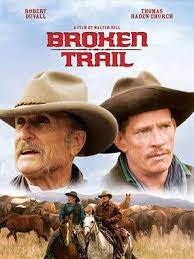
“Broken Trail” (2006)
Western

Running Time: 184 minutes
Written by: Alan Geoffrion
Directed by: Walter Hill
Featuring: Robert Duvall, Thomas Haden Church, Greta Scacchi, Gwendoline Yeo, Chris Mulkey, Rusty Schwimmer, Scott Cooper, Donald Fong and James Russo
Prentice Ritter: “Without marriage and women we’d all have been drunk, shot ourselves to death, or died of the clap.”
Critical Commentary
In the vast landscape of television, there are some shows that transcend mere entertainment to become unforgettable experiences. “Broken Trail,” a limited television series that aired in 2006, is undoubtedly one of those gems. This western drama, directed by Walter Hill and starring Robert Duvall and Thomas Haden Church, takes viewers on a captivating journey through the American frontier, exploring themes of redemption, resilience, and human connection. With its stunning cinematography, exceptional performances, and thought-provoking narrative, “Broken Trail” has left an indelible mark on the world of television.
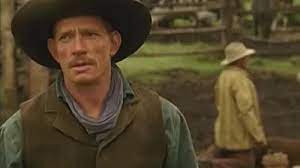
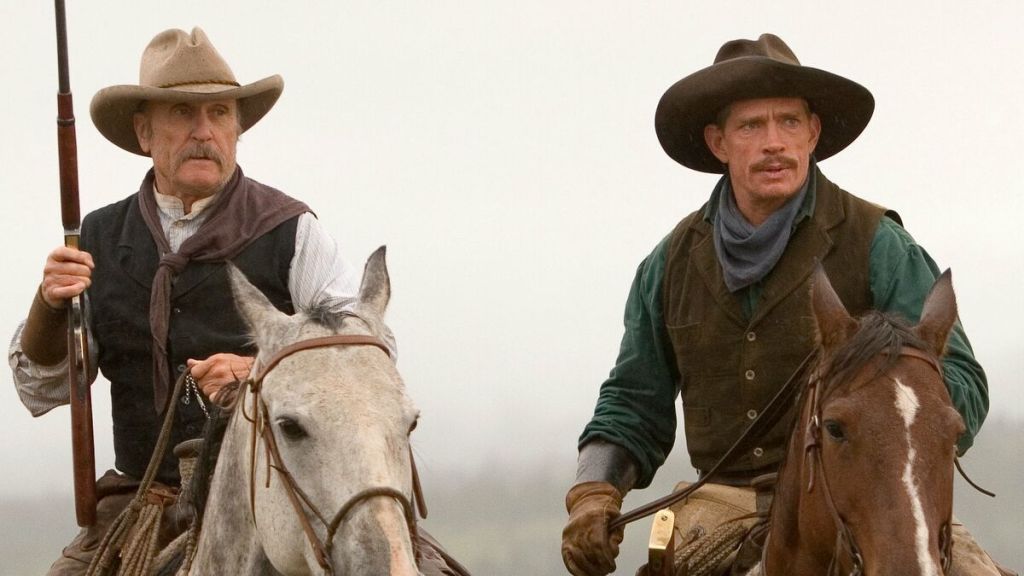
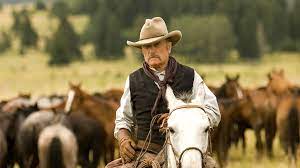
Set against the backdrop of the late 19th century, “Broken Trail” transports viewers to the sprawling landscapes of the American West. The series follows the story of Print Ritter (Robert Duvall), a grizzled cowboy, and his nephew Tom Harte (Thomas Haden Church), as they embark on a journey to drive a herd of horses from Oregon to Wyoming. However, their journey takes an unexpected turn when they rescue five Chinese girls from the clutches of human traffickers. As Ritter and Harte take on the responsibility of protecting and guiding these girls to safety, they find themselves on a path of redemption and self-discovery.
At the heart of “Broken Trail” are the dynamic performances of Robert Duvall and Thomas Haden Church. Duvall’s portrayal of Print Ritter is a masterclass in subtlety and depth. With weathered eyes and a soulful demeanour, Duvall captures the essence of a man burdened by his past, seeking to find purpose in a world that has often been unforgiving. Thomas Haden Church’s depiction of Tom Harte is equally praiseworthy. His character’s transformation from a somewhat reckless and carefree individual to a compassionate protector is depicted with a nuanced approach that adds layers to the narrative.
The supporting cast, including the five Chinese girls, further enriches the series with their individual stories and struggles. Their presence underscores the diversity of experiences during that era and sheds light on the discrimination and hardship faced by immigrants in the American West. Gwei Lun-Mei, who portrays Sun Foy, particularly stands out with her poignant portrayal of a young woman determined to escape the shackles of her past.
Cinematic Excellence
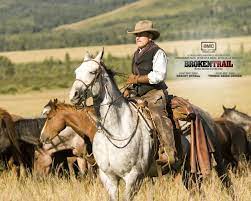
The visual aspects of “Broken Trail” are nothing short of breathtaking. The cinematography by Lloyd Ahern II captures the vastness of the landscape and the rugged beauty of the West. From the sweeping shots of desolate deserts to the tranquil moments by the campfire, each frame is meticulously composed to evoke a sense of both grandeur and intimacy. The attention to detail in recreating the historical setting adds authenticity to the experience, transporting viewers back in time.
At its core, “Broken Trail” is a story about redemption and the power of human connection. The journey of Print Ritter and Tom Harte isn’t just about herding horses; it’s a journey of self-discovery and healing. Through their interactions with the rescued Chinese girls, they find a renewed sense of purpose. As the unlikely group faces numerous challenges, including external threats and internal conflicts, their bond deepens, highlighting the resilience of the human spirit.
The series also delves into the themes of justice, morality, and cultural understanding. The portrayal of the Chinese characters and their struggle for survival in a hostile environment sheds light on the racial tensions of the time. The characters’ actions are driven by a desire for justice and a refusal to succumb to prejudice, which resonates with contemporary discussions about equality and social justice.
“Broken Trail” unfolds at a deliberate pace, allowing the characters’ development and relationships to take center stage. The episodic structure allows for a more nuanced exploration of each character’s backstory and motivations, creating a richer viewing experience. While some might find the pacing slow, it serves a purpose in building tension and emotional resonance. The deliberate pacing enhances the impact of the climactic moments and reinforces the thematic elements of redemption and connection.
Despite airing over a decade ago, “Broken Trail” continues to have a lasting impact on audiences. Its portrayal of complex characters, rich storytelling, and exploration of historical and social themes make it a series that remains relevant and thought-provoking. The performances of Duvall and Church, combined with the captivating visuals, contribute to its status as a timeless piece of television.
Despite its historical setting, “Broken Trail” remains relevant in today’s world due to its exploration of themes that transcend time. The issues of discrimination, human trafficking, and the struggle for justice are sadly still present in modern society. The series encourages viewers to reflect on the progress that has been made and the work that remains to be done in order to create a more equitable and compassionate world. By shedding light on the past, “Broken Trail” serves as a reminder of the importance of acknowledging history and its impact on the present.
One of the standout aspects of “Broken Trail” is its embrace of diversity within its characters. The series provides a window into the experiences of individuals from different cultural backgrounds and highlights their shared humanity. The relationship between the cowboys and the Chinese girls serves as a bridge between cultures, emphasizing the potential for understanding and unity in the face of adversity. This portrayal is a powerful reminder of the strength that comes from embracing diversity and breaking down the barriers that divide us.
While the majority of the main characters are male, “Broken Trail” also challenges traditional gender roles and expectations. The five Chinese girls, despite being victims of human trafficking, are not portrayed as mere damsels in distress. Instead, they demonstrate resilience, agency, and the ability to contribute meaningfully to the group’s survival. This subversion of gender stereotypes adds depth to the narrative and underscores the series’ commitment to portraying multifaceted characters.
In a refreshing departure from many other television dramas, “Broken Trail” consciously avoids incorporating a romantic subplot. This choice allows the series to focus on the bonds of friendship, family, and shared experiences without resorting to predictable romantic clichés. By doing so, “Broken Trail” highlights the complexity of human relationships beyond romantic entanglements, providing a more authentic representation of the characters’ journeys.
The technical aspects of “Broken Trail” contribute significantly to its immersive quality. The costume design, set decoration, and attention to historical accuracy create a vivid and authentic depiction of the late 19th century. Every detail, from the worn leather of the cowboys’ attire to the bustling streets of a Chinese settlement, adds to the series’ visual richness.
In addition, the musical score by David Mansfield complements the on-screen narrative by capturing the emotional nuances of each scene. The evocative melodies enhance the drama’s impact and further draw viewers into the characters’ experiences. The synergy between the visual and auditory elements results in a cohesive and immersive storytelling experience.
“Broken Trail” stands as a testament to the power of television to tell compelling stories that resonate deeply with audiences. Its exploration of themes such as redemption, human connection, justice, and diversity elevates it beyond the boundaries of the western genre. The exceptional performances, breathtaking cinematography, and thoughtful character development make it a series that continues to leave a lasting impression on viewers.
As television continues to evolve, “Broken Trail” remains a reminder of the enduring importance of well-crafted narratives that explore the complexities of the human experience. Through its portrayal of characters who confront their pasts, forge meaningful relationships, and challenge societal norms, the series encourages viewers to reflect on their own lives and the world around them. “Broken Trail” is more than just a television show; it is a work of art that enriches the medium and the lives of those who have the privilege to watch it.
In a world where entertainment often competes for attention, “Broken Trail” serves as a poignant reminder that some stories are timeless, and their impact only deepens with the passage of time. As the series continues to be discovered by new audiences, its legacy is sure to endure, inspiring conversations about history, humanity, and the enduring quest for redemption and connection.
The legacy of “Broken Trail” extends beyond its initial airing, leaving an indelible mark on both television history and the hearts of its viewers. Its influence can be seen in subsequent works that strive for the same level of depth and authenticity. The series serves as an inspiration for storytellers to explore complex characters, tackle relevant themes, and create narratives that resonate on a profound level.
Furthermore, “Broken Trail” has the power to spark conversations and discussions about historical accuracy, cultural representation, and the ongoing relevance of the issues it addresses. As society grapples with questions of identity, justice, and equality, the series provides a historical lens through which to examine these topics, fostering dialogue and understanding.
The enduring appeal of “Broken Trail” lies in its ability to tap into universal aspects of the human experience. The struggles faced by the characters—seeking redemption, forming connections, and confronting prejudice—are timeless themes that resonate across generations. By portraying these struggles in the context of the late 19th century American West, the series invites viewers to reflect on the parallels to their own lives and the ways in which society has evolved.
“Broken Trail” exemplifies the potential of the limited series format to tell a complete and impactful story within a concise timeframe. Unlike long-running shows that might lose focus over multiple seasons, the limited series format allows for a tightly woven narrative that maintains its intensity from start to finish. This approach lends itself to a more deliberate and intentional exploration of characters and themes, resulting in a more satisfying viewing experience.
As the television landscape continues to expand and diversify, the success of “Broken Trail” serves as a reminder that quality storytelling can be found in various formats and genres. It encourages creators to consider the merits of crafting stories that are tailored to the specific needs of the narrative, rather than conforming to predetermined structures.
Television has the unique ability to bridge gaps of time, culture, and experience. “Broken Trail” serves as a prime example of how the medium can shed light on lesser-known aspects of history and diverse perspectives. By immersing viewers in the lives of characters from different backgrounds, the series fosters empathy and a deeper understanding of the challenges and triumphs faced by individuals who existed outside of mainstream narratives.
In a globalized world where connectivity is increasingly emphasized, “Broken Trail” demonstrates the potential of television to contribute to cross-cultural understanding and dialogue. By presenting stories that transcend borders and resonate with audiences across the globe, television has the power to foster connections and promote empathy on a global scale.
Conclusion: A Lasting Legacy
“Broken Trail” is a testament to the enduring impact of television as a medium for storytelling and cultural exploration. Its masterful portrayal of characters, themes, and historical settings has solidified its place as a timeless piece of art that continues to resonate with audiences. The series challenges viewers to reflect on their own lives, the world around them, and the ways in which the past informs the present.
As the years go by, “Broken Trail” remains a beacon of storytelling excellence, inviting new generations to experience its beauty, depth, and emotional resonance. The series’ legacy is a reminder that television has the power to not only entertain but also inspire, educate, and provoke meaningful discussions about the human condition. Through its poignant portrayal of redemption, connection, and the transformative journey of its characters, “Broken Trail” secures its place as a true gem in the tapestry of television history.
In the ever-evolving landscape of television, “Broken Trail” stands as a testament to the enduring power of storytelling. Its masterful portrayal of characters grappling with their pasts, its exploration of themes such as redemption and human connection, and its captivating cinematography all contribute to its status as a remarkable television series. As viewers embark on the emotional journey alongside Print Ritter, Tom Harte, and the five Chinese girls, they are reminded of the resilience of the human spirit and the transformative power of compassion. “Broken Trail” is not merely a television show; it is an immersive experience that leaves an indelible mark on the heart and mind.
Technical Commentary
Video
“Broken Trail” arrives on Blu-ray with a very good 1080p, 1.78:1 framed high definition transfer. This is a most impressive image. Some grain is present over the movie, and the print exhibits some very minor blemishes, notably black and white speckles, but these are only visible on rare occasions. The picture reveals excellent detail: the worn leather of saddles and holsters; frayed rope; trail-depleted clothing; lines and finer nuances seen in human faces; and even the horse’s manes all look authentic. This transfer exhibits wonderful and remarkably clear imagery from its first frame to its last. Black levels are nearly impeccable, as are flesh tones.
Audio
Presented in a lossless Dolby TrueHD 5.1 soundtrack, Broken Trail is almost as good a listen as it is a watch. The film’s score permeates the front of the soundstage but doesn’t blend into the rears with authority, although on occasion it rings true from the back. It’s decidedly front-heavy, but it sounds great. The stampeding of horses, combined with the old west themed music makes for a pleasant, “authentic” Western soundtrack.
Special Features
- Broken Trail – The Making of a Legendary Western (HD 23:12)

 spryfilm.com