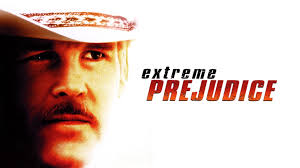
“Extreme Prejudice” (1987)
Action

Running Time: 104 minutes
Written by: Deric Washburn and Harry Kleiner
Directed by: Walter Hill
Featuring: Nick Nolte, Powers Boothe, Rip Torn, Michael Ironside and María Conchita Alonso
Sheriff Hank Pearson: “Hell, Jack… the only thing worse than a politician is a child molester.”
Critical Commentary
In the realm of cinematic storytelling, certain films manage to transcend their genre boundaries and delve into the complexities of human nature. “Extreme Prejudice,” directed by Walter Hill and released in 1987, is one such film that not only falls into the action-thriller category but also offers a thought-provoking exploration of morality, friendship, and the fine line between justice and revenge. Set against the backdrop of the Texas-Mexico border, the film weaves together elements of Westerns, crime dramas, and character-driven narratives to create a tense and gripping experience that lingers in the minds of viewers long after the credits roll.
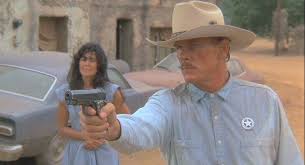
At its core, “Extreme Prejudice” follows Jack Benteen (played by Nick Nolte), a Texas Ranger with a strong sense of duty and an unbreakable friendship with Cash Bailey (played by Powers Boothe). Their friendship, however, is put to the test when Cash becomes a drug lord operating on the Mexican side of the border. As Cash’s criminal empire grows, Benteen finds himself in a precarious position: torn between his loyalty to his friend and his commitment to upholding the law.
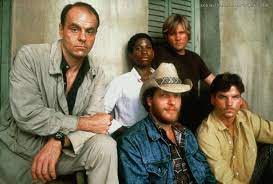
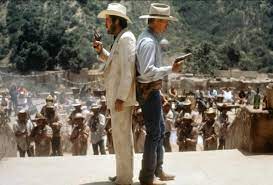
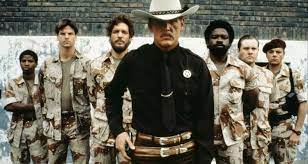
The plot thickens with the introduction of Sheriff Hank Pearson (played by Rip Torn), a character whose motivations and allegiances remain shrouded in mystery. As the film progresses, the audience is drawn into a web of intrigue, shifting alliances, and morally ambiguous decisions. The narrative’s tension is further heightened when a black-ops unit led by Major Paul Hackett (played by Michael Ironside) is sent to eliminate Cash’s operation. This sets the stage for a thrilling clash between law enforcement, the military, and criminal enterprises, all against the backdrop of a harsh and unforgiving landscape.
“Extreme Prejudice” explores a range of themes that transcend its action-driven façade. One of the central themes is the complex nature of friendship. Benteen and Cash’s relationship is depicted as one built on trust, shared experiences, and an unspoken understanding of each other’s moral compass. Yet, the film forces the characters, and by extension the audience, to grapple with the limits of loyalty. What happens when friendship clashes with the pursuit of justice? Can one reconcile the bonds of brotherhood with the responsibilities of duty?
Another prominent theme is the question of morality in the face of extreme circumstances. The film’s title itself speaks to the dangerous territory where preconceived notions and biases can lead. As the characters navigate a world where right and wrong are not as clear-cut as they seem, the audience is prompted to question the decisions they would make when faced with similarly harrowing choices. “Extreme Prejudice” offers no easy answers, leaving viewers to ponder the blurred lines between heroism and villainy.
The film also delves into the concept of identity, particularly in the context of a shifting landscape. The border setting serves as a powerful metaphor for the liminal space between law and lawlessness, order and chaos, and even the individual and society. Benteen’s struggle to maintain his sense of self while navigating these shifting dynamics mirrors the broader exploration of identity’s fluid nature.
Visually, “Extreme Prejudice” employs a gritty and atmospheric style that complements its thematic exploration. The vast, unforgiving landscapes of Texas and Mexico mirror the moral grey areas the characters inhabit. The use of shadows, stark lighting, and intense close-ups accentuate the emotional turmoil experienced by the characters. Additionally, the film’s action sequences are choreographed with a realism that grounds the story, making it more relatable despite its heightened circumstances.
Walter Hill’s direction also shines in his ability to create tension through pacing. The slow build-up of suspense culminates in explosive moments that resonate on both an emotional and visceral level. The film’s sound design and score enhance these moments, heightening the impact of crucial scenes.
“Extreme Prejudice” might not have achieved the same level of mainstream recognition as some of its contemporaries, but its influence on the action-thriller genre is undeniable. Its exploration of complex characters, morally ambiguous situations, and the fine line between good and evil has left a lasting mark on subsequent films and filmmakers.
Moreover, the film’s resonance can be seen in the way it remains relevant in today’s cinematic landscape. As discussions around justice, morality, and the consequences of choices continue to evolve, “Extreme Prejudice” serves as a reminder that these themes are timeless and capable of sparking introspection and dialogue.
Upon its release, “Extreme Prejudice” received mixed reviews from critics, who were divided on its blend of action, drama, and moral ambiguity. Some praised the film’s gritty atmosphere, well-executed action sequences, and the chemistry between the lead actors, while others found fault with the film’s convoluted plot and occasional lapses in pacing. However, as time has passed, the film has garnered a dedicated cult following that appreciates its thematic depth and unique approach to the action genre.
In a contemporary analysis, “Extreme Prejudice” can be seen as a precursor to the modern trend of exploring complex characters and morally gray narratives in action films. The film’s portrayal of friendship tested by conflicting loyalties echoes in many later works that delve into similar themes. Furthermore, the Texas-Mexico border setting can be viewed as a commentary on the socio-political tensions between the United States and its neighboring countries, adding a layer of relevance to the film’s exploration of identity and belonging.
While “Extreme Prejudice” was released over three decades ago, its themes continue to resonate in today’s world. The exploration of loyalty and morality in the face of challenging circumstances remains as pertinent as ever, especially in a global landscape where ethical dilemmas are often magnified by technology and the interconnectedness of societies. The film’s examination of identity also speaks to the ongoing conversations surrounding individuality, cultural diversity, and societal expectations.
In an era when discussions on justice, revenge, and the consequences of one’s actions dominate both real-world conversations and media narratives, “Extreme Prejudice” serves as a reminder that such themes are not confined to the realms of fiction. The film prompts audiences to contemplate the decisions they might make when faced with extreme situations and the implications of those choices on their own sense of self and the world around them.
One of the film’s notable strengths lies in its craftsmanship, particularly in how it balances action with character development. Walter Hill’s directorial vision is evident in the way he uses visual storytelling to convey emotions and relationships. The dynamic between Jack Benteen and Cash Bailey is expertly portrayed, with Nick Nolte and Powers Boothe delivering performances that capture the nuances of their characters’ bond. The tension between duty and friendship is palpable in their interactions, adding depth to the film’s thematic exploration.
Hill’s decision to blend Western and crime elements contributes to the film’s unique atmosphere. The border landscape becomes more than just a backdrop; it becomes a character in itself, reflecting the harsh realities faced by the characters. This blending of genres not only pays homage to cinematic traditions but also adds layers of meaning to the story.
At the heart of “Extreme Prejudice” is its ability to present ethical dilemmas without offering easy answers. The film invites viewers to confront the uncomfortable truth that circumstances can force individuals to make choices that defy conventional notions of right and wrong. Benteen’s internal struggle, torn between his sense of duty as a lawman and his loyalty to Cash, serves as a powerful illustration of the gray areas that often define morality.
The exploration of justice versus revenge is equally thought-provoking. The line between seeking justice and indulging in vengeful acts becomes blurred as characters are driven by personal vendettas and past grievances. The film does not shy away from depicting the consequences of these actions, highlighting the ripple effects they have on individuals and the world around them.
“Extreme Prejudice” also offers a lens through which to view broader societal and political dynamics. The film’s portrayal of the Texas-Mexico border zone as a lawless frontier speaks to issues of jurisdiction, sovereignty, and the challenges of maintaining order in areas where legal boundaries are ambiguous. The conflict between law enforcement and Cash Bailey’s operation can be seen as a microcosm of the larger struggles governments face in combating organized crime and maintaining security.
Furthermore, the film touches on the complexities of identity within a multicultural context. The characters’ interactions and alliances reflect the diverse influences at play in border regions, shedding light on the cultural intersections and clashes that define such areas. This theme of identity resonates even more strongly today as societies grapple with issues of immigration, cultural assimilation, and national identity.
“Extreme Prejudice” remains relevant in discussions surrounding film and society not only due to its thematic depth but also its role in shaping subsequent works. The film’s influence can be seen in the evolution of action cinema, inspiring filmmakers to craft narratives that challenge audiences intellectually while delivering pulse-pounding excitement. Its legacy also extends to television and other forms of media that explore similar moral dilemmas and character dynamics.
In a cinematic landscape that often prioritizes spectacle over substance, “Extreme Prejudice” stands as a testament to the potential of genre films to provoke thought and engage audiences on multiple levels. Its enduring appeal lies in its ability to resonate with viewers regardless of the era, inviting them to question their own beliefs and confront the complexities of the human experience.
“Extreme Prejudice” remains a captivating and thought-provoking film that defies easy classification. Its blend of action, drama, and moral ambiguity elevates it beyond the confines of traditional genre boundaries. Walter Hill’s skillful direction, coupled with strong performances and a richly layered narrative, creates a lasting cinematic experience that continues to be relevant in contemporary conversations. As audiences continue to grapple with questions of justice, morality, and identity, “Extreme Prejudice” serves as a reminder that the exploration of extreme circumstances can illuminate the depths of human nature in ways that resonate far beyond the screen.
“Extreme Prejudice,” directed by Walter Hill, stands as a testament to the power of genre films to explore complex and profound themes. Beyond its surface as an action-thriller, the film delves into the depths of human nature, forcing its characters and viewers to confront moral ambiguity, loyalty, and identity in the face of extreme circumstances. Through a combination of striking visuals, masterful direction, and powerful performances, the film creates an experience that lingers in the minds of its audience, challenging them to reflect on their own beliefs and values.
While the film’s initial critical reception may have been mixed, its legacy has grown over time, influencing subsequent films and filmmakers who seek to merge action-packed narratives with thought-provoking explorations of humanity. As societal discussions on justice, morality, and identity continue to evolve, “Extreme Prejudice” remains a relevant and resonant piece of cinema that encourages viewers to grapple with the complexities of the human experience. In a world where the boundaries between right and wrong are often blurred, the film’s exploration of extreme circumstances serves as a reminder that the true test of character lies in how one navigates these murky waters.
Technical Commentary
Video
“Extreme Prejudice” is presented on Blu-ray courtesy of Lionsgate Film’s Vestron Video Collector’s Series imprint with an AVC encoded 1080p transfer in 1.85:1. As usual with these Vestron Video releases, there’s unfortunately no real technical information given about the transfer, though if you search our news articles (see the tab above), you’ll notice we posted that StudioCanal was working on this film along with a couple of others, and this does have the StudioCanal logo up front. The result is often quite striking, with a nicely suffused palette and generally very commendable detail levels. Fine detail is supported immeasurably by some extremely brightly lit outdoor moments, where things like the stubble on Boothe’s face or even some of the tiny hairs in his nostrils can be easily spotted. There are some kind of curious variances along the way. The last third or so of the film looks a bit dowdy and brown, and not just because of the shooting locations. There are also some dark moments where the grain field is noticeably coarser in appearance, but I noticed no real compression issues of any kind. Clarity can also experience brief moments of ebbing and flowing, not necessarily tied to any lighting conditions.
Audio
“Extreme Prejudice” has a well-wrought DTS-HD Master Audio 2.0 track that capably supports some of the film’s more gonzo elements, like an explosion that just erupts out of nowhere early in the film (Joyner and Parke postulate that it may have been the result of some footage left on the cutting room floor that might have better contextualized what’s going on). Jerry Goldsmith’s typically excellent score also sounds full bodied and propulsive. Dialogue is rendered cleanly and clearly throughout. Optional English, English SDH and Spanish subtitles are available.
Special Features
- Audio Commentary by film critic / author Walter Chaw
- Audio Commentary by film historians Daniel Kremer and Nat Segaloff
- Audio Commentary by film historians C. Courtney Joyner and Henry Parke
- Isolated Score Selections and audio interview with music historian John Takis
- Two interviews with director Walter Hill (2010 and 2019)
- The Major’s Agenda – interview with actor Michael Ironside
- The War Within – interview with actor Clancy Brown
- Capturing The Chaos – interview with director of photography Matthew F. Leonetti
- Original Trailers, Vintage EPK & Photo Gallery

 spryfilm.com