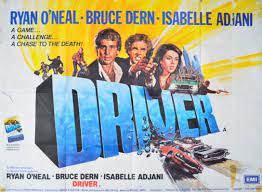
“The Driver” (1978)
Action

Running Time: 91 minutes
Written and Directed by: Walter Hill
Featuring: Ryan O’Neal, Bruce Dern, Isabelle Adjani and Ronee Blakley
The Detective: “I respect a man that’s good at what he does. I’ll tell you something, I’m very good at what I do.”
Critical Commentary
In the vast landscape of cinematic history, certain films leave an indelible mark by blending intense storytelling, masterful direction, and captivating performances. Walter Hill’s “The Driver,” released in 1978, is undoubtedly one such gem. This neo-noir action thriller takes viewers on an adrenaline-fueled journey through the gritty streets of 1970s Los Angeles, and its impact still reverberates through modern cinema.
A Dark Symphony of Minimalism: From the very first frame, “The Driver” establishes its unique identity through minimalistic storytelling. The film opens with a mesmerizing 9-minute sequence devoid of dialogue, during which the titular character (played by Ryan O’Neal) orchestrates a daring heist, demonstrating his unparalleled skills behind the wheel. This absence of conventional exposition sets the tone for the entire film, immersing the audience in an environment where actions speak louder than words.
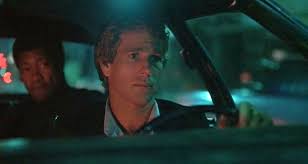
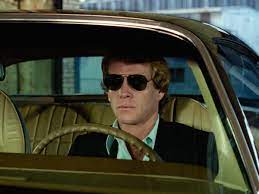
The Enigmatic Characters: Central to the film’s allure are the enigmatic characters, each with their own hidden agendas and motivations. Ryan O’Neal’s portrayal of the Driver is a marvel of restrained emotion, his stoic demeanour concealing a complex character driven by an unquenchable thirst for thrill. The Driver’s nemesis, the Detective (played by Bruce Dern), is equally captivating. Dern brings a relentless intensity to his role, embodying a law enforcement officer who becomes consumed by his obsession with catching the elusive Driver.
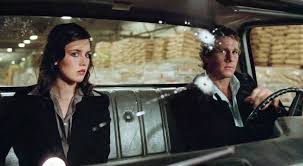
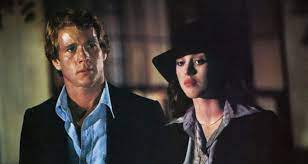
Isabelle Adjani’s character, simply known as “The Player,” introduces an intriguing dynamic to the narrative. Her enigmatic allure and ambiguous intentions keep both the audience and the characters guessing. Adjani’s performance is a testament to her ability to convey depth and complexity through subtlety, adding layers to a character that could have easily been relegated to a one-dimensional archetype.
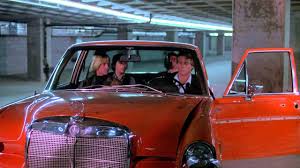
Walter Hill’s direction shines most brightly in the action sequences. The film’s car chases are a symphony of screeching tires and adrenaline-pumping maneuvers. Hill’s decision to eschew CGI and rely on practical stunts and real driving creates an unparalleled sense of authenticity. The viewer can practically smell the burning rubber and feel the wind rush by as the vehicles navigate hairpin turns and narrow alleyways.
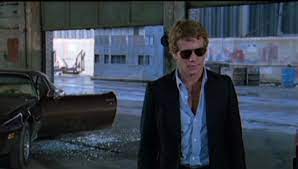
“The Driver” pays homage to the classic film noir genre through its visual style. Cinematographer Philip H. Lathrop’s use of shadows, neon lights, and rainy nights creates an atmosphere that is both stylish and evocative. The film’s Los Angeles is a bleak and desolate landscape, reflecting the moral ambiguity of its characters and the dangerous world they inhabit.
Beneath the surface of high-speed chases and tense standoffs lies a rich tapestry of subtext and themes. “The Driver” explores concepts of identity, obsession, and the blurred line between law and lawlessness. The characters’ interactions are often laced with an underlying tension, as they navigate a world where trust is a luxury and betrayal is the norm. The film’s climax is a masterstroke that brings these themes to a head in a showdown that is as much a battle of wits as it is a physical confrontation.
“The Driver” has left an indelible mark on the cinematic landscape. Its influence can be seen in subsequent films that prioritize visceral action and character-driven narratives over excessive dialogue. Directors like Nicolas Winding Refn, who helmed “Drive” (2011), have openly cited “The Driver” as a source of inspiration. The legacy of Hill’s film can also be observed in the resurgence of neo-noir aesthetics and themes in contemporary cinema.
One cannot discuss “The Driver” without acknowledging its exceptional ability to capture the essence of the 1970s urban landscape. The film’s portrayal of Los Angeles provides a window into a bygone era, where the city’s neon-lit streets were juxtaposed with the shadows of corruption and crime. The gritty realism of the locations and the cars of that era serves as a time capsule, transporting viewers back to a time before the digital age, where the tactile sensation of a manual transmission and the sound of a revving engine were integral to the cinematic experience.
One of the most distinctive aspects of “The Driver” is its utilization of silence to convey emotion, tension, and character development. The minimalist approach to dialogue allows the actors’ facial expressions, body language, and actions to communicate volumes. This emphasis on non-verbal communication invites the audience to actively engage with the narrative, piecing together the characters’ motivations and relationships through subtle cues. It’s a testament to the power of visual storytelling when executed with precision.
At the heart of “The Driver” lies a web of intricate relationships that are both fascinating and puzzling. The tension between the Driver and the Detective serves as the film’s core conflict, an electrifying battle of wits that transcends the traditional cat-and-mouse trope. Their interactions are marked by a mix of respect, frustration, and obsession, blurring the lines between antagonist and antihero. This complexity elevates “The Driver” beyond a straightforward action film, delving into the psychological realm of character dynamics.
Michael Small’s haunting musical score adds another layer of depth to the film. The somber and almost hypnotic score enhances the mood, creating an atmospheric backdrop that encapsulates the emotional turmoil of the characters. The music’s minimalistic approach mirrors the film’s visual style, allowing moments of tension and reflection to breathe, unfettered by bombastic orchestrations. The score lingers in the mind, becoming a character in its own right.
Walter Hill’s approach to storytelling is characterized by its economy. Each scene, every line of dialogue, and every shot serves a purpose in propelling the narrative forward. There’s an almost surgical precision to the pacing, as the film avoids unnecessary detours and distractions. This discipline not only respects the audience’s intelligence but also maintains a sense of urgency that mirrors the breakneck speed of the car chases.
“The Driver” defies easy categorization, seamlessly blending elements of film noir, action, and character-driven drama. This genre hybridity adds depth and richness to the viewing experience, appealing to a wide range of tastes. The film’s ability to transcend genre conventions is a testament to its timeless appeal, making it as relevant to cinephiles today as it was to audiences in the late 1970s.
While “The Driver” is undoubtedly a product of its time, its thematic exploration and storytelling transcend eras. The film’s homage to classic cinema, particularly film noir, pays tribute to the works that have shaped the cinematic landscape. By marrying classic aesthetics with a contemporary sensibility, “The Driver” bridges the gap between past and present, making it a work that speaks to cineastes across generations.
“The Driver” garnered both critical acclaim and controversies upon its release. While many critics lauded its visual style, character-driven narrative, and action sequences, some took issue with its perceived lack of depth in dialogue and character development. However, it’s precisely this departure from traditional storytelling that has contributed to the film’s enduring legacy. “The Driver” stands as a daring experiment in cinematic minimalism that continues to inspire filmmakers to challenge conventions and push the boundaries of visual storytelling.
The influence of “The Driver” can be seen in a lineage of films that have drawn inspiration from its themes, style, and character dynamics. Nicolas Winding Refn’s “Drive” (2011), often hailed as a spiritual successor to “The Driver,” pays homage to the original while injecting its own modern sensibilities. Both films explore similar themes of loner antiheroes navigating treacherous underworlds, and they both share a penchant for using silence as a powerful storytelling tool.
Decades after its release, the themes explored in “The Driver” remain as relevant as ever. The film’s exploration of identity and the struggle between law and chaos continues to resonate in a world where moral ambiguity and shades of gray are increasingly prevalent. The blurred lines between protagonist and antagonist are emblematic of the complexities of the human experience, where motivations are rarely black and white.
In recent years, a renewed interest in classic cinema has led to the restoration and revaluation of many films from the past. “The Driver” has benefited from this trend, with restored versions allowing modern audiences to experience the film in all its visual glory. This resurgence has sparked conversations about the film’s place in cinematic history and its impact on subsequent generations of filmmakers.
What makes “The Driver” truly timeless is its ability to resonate across generations. While the setting and aesthetics might be rooted in the 1970s, the core themes of identity, obsession, and the struggle for control are universal. As long as audiences are drawn to characters grappling with their inner demons, as long as the allure of high-stakes chases and tense confrontations endures, “The Driver” will continue to find its place in the hearts of cinephiles old and new.
“The Driver” (1978) is not just a film; it’s a testament to the power of cinematic storytelling to transcend time and genre. Walter Hill’s audacious experiment in minimalism, combined with the brilliant performances of its cast and the visceral excitement of its action sequences, has left an indelible mark on the cinematic landscape. It’s a film that challenges conventions, invites interpretation, and invites viewers to immerse themselves in a world where actions speak louder than words.
In an era dominated by CGI extravaganzas and dialogue-heavy narratives, “The Driver” serves as a reminder of the artistry that can be achieved through restraint. It’s a film that demands active engagement, where every glance, every gesture, and every rev of an engine carries weight and meaning. As the years roll on, “The Driver” continues to occupy a special place in the annals of cinematic history, a testament to the enduring power of storytelling that refuses to be confined by the passage of time.
A Timeless Classic: In conclusion, “The Driver” (1978) stands as a timeless classic that defies the boundaries of its genre. Walter Hill’s masterful direction, the impeccable performances of the cast, and the sleek action sequences coalesce to create a film that is as thrilling today as it was upon its release. Its minimalistic storytelling, enigmatic characters, and exploration of timeless themes ensure its enduring relevance in the ever-evolving world of cinema. “The Driver” is not merely a movie; it’s an exhilarating journey that lingers in the mind long after the credits roll.
Technical Commentary
Video
In native 4K with HDR, the film looks exceptionally vibrant and simply immaculate. The fluidity of the visuals is incredible and the few bumps that are present on the previous 1080p presentations are virtually impossible to detect, so if you have a very large screen, I have to assume that this type of quality will make you very, very happy. Grain appears better exposed in 1080p and native 4K, but in native 4K, the visuals resemble those of the previous 1080p presentation. Why? Because in native 4K the visuals tighten up quite a bit and on the previous 1080p presentation the grain isn’t as nicely exposed. This is one of the main benefits of the new 4K makeover.
Audio
There are three standard audio tracks on this release: English LPCM 2.0., French LPCM 2.0, and German LPCM. Optional English SDH, French, and German subtitles are provided for the main feature.
Special Features
4K BLU-RAY DISC
- Masterclass with Walter Hill – in this exclusive new program, Walter Hill discusses the early stages of his career and specifically his work as a screenwriter as well as the craft of filmmaking. Mr. Hill also has some very interesting observations about the type of music he favors in his films and its significance in shaping their mood, tone, and drama, as well as the tremendous impact Seven Samurai had on him and his love for westerns. In English, not subtitled. (15 min).
- Interview with Walter Hill – in this exclusive new program, Walter Hill explains how the original idea for The Driver materialized and what it was like to work on the screenplay for it and its eventual production. There are some particularly interesting comments about the generic names the main characters received and how they were used by the critics to declare that The Driver was a deeply flawed film, as well as the casting of Isabelle Adjani. (Tuesday Weld was initially considered for the same part). Mr. Hill even shares a good story about his ‘difficult’ relationship with Charles Bronson after the completion of Hard Times. In English, not subtitled. (31 min).
- Alternate Opening – in English, not subtitled. (4 min).
- Trailer – original trailer for The Driver. In English, not subtitled. (3 min).
- Teasers – thirteen original teasers for The Driver. In English, not subtitled. (7 min).
BLU-RAY DISC
- Masterclass with Walter Hill – in this new exclusive program, Walter Hill discusses the early stages of his career and specifically his work as a screenwriter as well as the craft of filmmaking. Mr. Hill also has some very interesting observations about the type of music he favors in his films and its significance in shaping their mood, tone, and drama, as well as the tremendous impact Seven Samurai had on him and his love for westerns. In English, not subtitled. (15 min).
- Interview with Walter Hill – in this exclusive new program, Walter Hill explains how the original idea for The Driver materialized and what it was like to work on the screenplay for it and its eventual production. There are some particularly interesting comments about the generic names the main characters received and how they were used by the critics to declare that The Driver was a deeply flawed film, as well as the casting of Isabelle Adjani. (Tuesday Weld was initially considered for the same part). Mr. Hill even shares a good story about his ‘difficult’ relationship with Charles Bronson after the completion of Hard Times. In English, not subtitled. (31 min).
- Alternate Opening – in English, not subtitled. (4 min).
 spryfilm.com