
“Hard Times” (1975)
Drama

Running Time: 93 minutes
Written by: Walter Hill, Bryan Gindoff and Bruce Henstell
Directed by: Walter Hill
Featuring: Charles Bronson, James Coburn Jill Ireland and Strother Martin
Speed: “Every town had somebody who thinks he’s tough as a nickel steak; but, they all come to old Speed for the do-re-mi.”
Critical Commentary
In the annals of cinematic history, certain films stand as testament to the power of storytelling, character development, and raw authenticity. Walter Hill’s “Hard Times,” released in 1975, is an enduring exemplar of this very essence. As we step back into the mid-20th century, it becomes evident that this film is a timeless portrayal of resilience, honor, and the intricate dance between human vulnerability and strength.
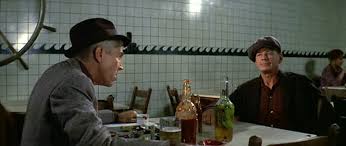
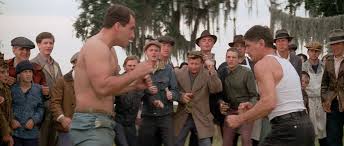
Plot and Characterization: “Hard Times” is an unvarnished narrative that revolves around the enigmatic loner Chaney, played flawlessly by Charles Bronson. Set against the backdrop of Depression-era New Orleans, Chaney finds himself drawn into the underground world of bare-knuckle street fighting, a world where courage, skill, and sheer determination collide. As he navigates this brutal milieu, he forms an unlikely partnership with the shrewd and charismatic Speed, portrayed by James Coburn.
Bronson’s portrayal of Chaney is nothing short of mesmerizing. His minimalistic yet expressive performance speaks volumes about the character’s stoicism and internal struggle. Coburn, in turn, injects a palpable charisma into Speed, offering a captivating counterbalance to Chaney’s silent intensity. Together, they create a dynamic that embodies the film’s themes of camaraderie and the indomitable spirit of the working class.
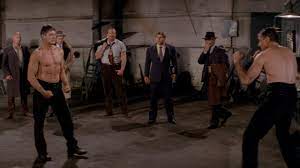
Walter Hill’s direction is a masterclass in restraint and nuance. The film’s deliberate pacing allows for the exploration of characters and their motivations, while the scenes in the smoky, dimly lit fighting arenas showcase Hill’s adeptness at capturing visceral moments with a stark and unapologetic visual style. The film’s setting, evocatively realized by cinematographer Philip H. Lathrop, becomes an integral character itself, echoing the struggles and hardships of the era.
“Hard Times” excels in its exploration of themes that resonate across time and generations. The film delves into the paradox of vulnerability within strength, offering a contemplative look at men who defy societal norms to prove their worth. It is a window into the lives of those who battle economic hardship with tenacity, transforming their pain into determination.
Hill’s storytelling is anchored in a sense of realism that underlines the characters’ journey. The film doesn’t shy away from depicting the gritty nature of bare-knuckle fighting, allowing the audience to experience the brutal physicality and emotional toll it exacts on those involved.
Barry De Vorzon’s musical score is a melodic accompaniment that underscores the emotional depth of the film. The score tastefully complements the scenes without overpowering them, enhancing the film’s authenticity by offering a subdued yet impactful auditory experience.
In the decades since its original release, “Hard Times” has not faded into obscurity; rather, it has solidified its place as a cinematic cornerstone. Its resonance remains undiminished, its themes ever-pertinent.
The impact of “Hard Times” is visible in subsequent films that draw inspiration from its blueprint. Its portrayal of complex masculinity, the struggle for dignity, and the cost of resilience echoes in narratives across genres. Filmmakers and storytellers have continued to explore the human condition with a similar degree of depth and authenticity.
Charles Bronson’s portrayal of Chaney is a pivotal component of the film’s enduring appeal. His quiet intensity, magnetic screen presence, and ability to convey volumes with a mere expression have etched his character into the cinematic canon. Bronson’s dedication to his craft shines through, creating a portrayal that lingers in the minds of audiences, making Chaney a symbol of quiet strength.
Walter Hill’s directorial prowess is exemplified by “Hard Times.” His knack for delving into the human psyche, combined with his deft touch in orchestrating raw, unfiltered moments, has earned him a place among the great directors of his time. Hill’s ability to craft narratives that resonate emotionally while remaining grounded in reality continues to inspire filmmakers.
The themes explored in “Hard Times” remain timeless—economic struggle, the desire for self-worth, and the quest for belonging are facets of the human experience that transcend generations. As society evolves, the film’s resonance evolves with it, inviting fresh interpretations and introspection.
What sets “Hard Times” apart is its unwavering commitment to authenticity. In an era dominated by larger-than-life spectacle, the film stands as a testament to the power of simplicity and genuine storytelling. Its impact lies in its ability to connect on a human level, reminding us that amidst the cacophony of life, the quiet moments often hold the most profound truths.
As we delve deeper into the impact of “Hard Times,” it becomes apparent that its legacy extends far beyond the boundaries of the silver screen. The film’s ability to resonate with audiences and provoke contemplation on the human condition has left an indelible mark on cinema and storytelling as a whole.
In an age increasingly defined by high-octane visuals and CGI extravaganzas, “Hard Times” remains a beacon of the power of subtlety. The film’s reliance on nuanced performances, evocative cinematography, and a compelling narrative underscores the fact that sometimes, less is more. This principle has reverberated through subsequent generations of filmmakers, encouraging them to prioritize storytelling over spectacle.
“Hard Times” not only captures a bygone era with meticulous attention to detail but also encapsulates the timeless aspects of the human experience. The struggles faced by its characters are as relevant today as they were during the Great Depression. This authenticity allows the film to act as a bridge between different generations, fostering empathy and understanding.
The film’s technical achievements, from the gritty cinematography that mirrors the setting’s rough-edged atmosphere to the carefully curated soundtrack that heightens emotional resonance, showcase the dedication of the filmmakers to their craft. “Hard Times” reminds us that every element of a film can contribute to its overall impact and storytelling efficacy.
Revisiting Themes with Fresh Eyes: In the year 2000, the themes of “Hard Times” find new resonance amidst the complexities of the modern world. Economic challenges, the quest for identity, and the struggle to find purpose are themes that continue to echo across generations. The film serves as a mirror reflecting society’s evolution while reminding us of our shared humanity.
“Hard Times” is more than just a film; it’s a cultural touchstone. Its influence can be seen in literature, music, and subsequent cinematic works. It has inspired artists to delve into the depths of human emotion and to explore characters who defy convention in their pursuit of dignity and self-discovery.
As we celebrate “Hard Times” in 2000, we must recognize that its impact has only grown over the years. Its themes, performances, and craftsmanship continue to inspire filmmakers and captivate audiences. This celebration is a testament to the enduring power of cinema to touch hearts, challenge perspectives, and foster connections that transcend time.
“Hard Times,” released in 1975, remains an ageless testament to the art of storytelling and the potency of human emotion. As we revisit its narrative in the year 2000, the film’s legacy shines brighter than ever. Its ability to bridge the gap between generations, evoke empathy, and explore the intricacies of the human spirit cements its status as a masterpiece. Walter Hill’s directorial vision, Charles Bronson’s iconic performance, and the film’s commitment to authenticity continue to resonate, reminding us that even amidst the passage of time, the impact of genuine storytelling remains unwavering.
Technical Commentary
Video
“Hard Times” is presented on Blu-ray with an AVC encoded 1080p transfer in 2.35:1. The care that this studio regularly lavishes on films that few remember is truly astounding, and it’s once again completely in evidence in this beautiful high definition presentation of “Hard Times”. This is a naturally filmic presentation, but the clarity and precision of the image here are really outstanding. Though the film tends to traffic almost exclusively in a pretty dour colour scheme that highlights browns and greys, the palette here is surprisingly warm and inviting and always very accurate looking. Best of all, fine detail is exceptional throughout this presentation.
Audio
Perhaps surprisingly “Hard Times” has been granted a repurposed surround mix which is delivered via DTS-HD Master Audio 5.1. The bulk of the surround activity is limited to some of the crowd noises during the fight sequences as well as Barry De Vorzon’s nice, rootsy score. Dialogue is very cleanly presented. the fight scenes.



 spryfilm.com