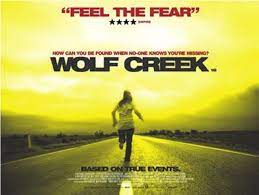
“Wolf Creek” (2005)
Horror

Running Time: 109 minutes
Written and directed by: Greg McLean
Featuring: Nathan Phillips, Cassandra Magrath, Kestie Morassi and John Jarratt
Mick Taylor: “I’m going to do something now they used to do in Vietnam. It’s called making a head on a stick.”
Critical Commentary
“Wolf Creek”, directed by Greg McLean and released in 2005, is a renowned Australian horror film that has left an indelible mark on the genre. The movie’s intense portrayal of survival horror, inspired by actual events, explores the darkest corners of the human psyche. With its unique blend of horror and psychological tension, “Wolf Creek” has not only established itself as a seminal work in the genre but has also raised discussions about cultural representation, the ethics of depicting real-life tragedies, and the impact of true-crime narratives in cinema.
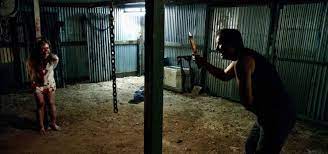
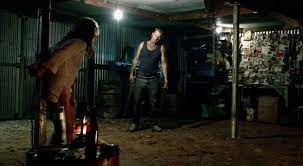
“Wolf Creek” is set in the remote Australian Outback and follows the harrowing journey of three young backpackers – Liz, Kristy, and Ben – who find themselves stranded after their car breaks down. They are soon picked up by a seemingly helpful local named Mick Taylor, who offers to tow their car to his camp. However, their situation takes a sinister turn as they realize Mick is not the saviour he appears to be, but rather a sadistic psychopath who revels in torturing and killing his victims.
The film draws inspiration from the infamous “Backpacker Murders” case that occurred in Australia in the 1990s. This real-life series of murders involved the abduction, assault, and murder of several young backpackers. The case was widely covered by the media, creating a lasting impact on Australian society. “Wolf Creek” plays on the fears and unease generated by these events, offering a fictionalized exploration of the unknown dangers lurking in isolated landscapes.
One of the most striking elements of “Wolf Creek” is its ability to create a palpable sense of dread and fear. The desolate Outback setting becomes a character in itself, serving as a relentless and unforgiving backdrop against which the characters’ struggles unfold. The characters’ isolation, vulnerability, and helplessness evoke a primal fear that resonates deeply with audiences. The film masterfully builds tension, making the viewer feel as trapped and powerless as the protagonists.
Survival is a central theme in the movie. The characters’ fight for survival pushes them to their limits and exposes their inner strengths and weaknesses. Liz, Kristy, and Ben’s attempts to outsmart Mick Taylor highlight the lengths to which humans will go to preserve their lives. This exploration of survival instinct offers a glimpse into the complexities of human behavior under extreme duress.
Mick Taylor, portrayed with chilling charisma by John Jarratt, is one of the most memorable horror antagonists of the 21st century. His seemingly friendly demeanor and exaggerated Aussie charm create an unsettling contrast with his sadistic acts. Mick’s penchant for torture, his nonchalant attitude towards murder, and his disturbing monologues create an atmosphere of horror that lingers long after the film ends. The character taps into the fear of encountering evil hidden beneath an unassuming façade.
While “Wolf Creek” is a work of fiction, its connection to real-life events raises important ethical questions. Depicting actual tragedies for entertainment purposes can be seen as insensitive and exploitative. Some critics argue that the film sensationalizes real suffering and might perpetuate stereotypes about rural areas or perpetrate fear among potential tourists. On the other hand, supporters argue that the film serves as a cathartic outlet for societal fears and functions as a cautionary tale about the dangers of traveling alone.
The film also brings up questions about cultural representation. The portrayal of a malevolent Australian figure in a vast, unforgiving landscape raises discussions about the depiction of Australia and its people in global cinema. The Outback, while visually stunning, is presented as a hostile and dangerous place, potentially perpetuating negative stereotypes about the continent.
“Wolf Creek”’s impact on the horror genre is undeniable. It revitalized the survival horror subgenre, inspiring numerous films that explore the theme of being hunted by a sadistic killer. The film’s success led to a sequel, ““Wolf Creek” 2,” and a television series adaptation. Additionally, the character of Mick Taylor became an iconic figure in horror folklore, demonstrating the enduring power of well-crafted villains.
The film’s popularity also spurred discussions about the intersections of true crime, horror, and entertainment. True crime narratives have gained immense popularity in various media, including podcasts, documentaries, and films. The success of “Wolf Creek” underscores society’s fascination with the darker aspects of human nature and the blurred lines between reality and fiction.
“Wolf Creek”’s legacy extends beyond its impact on the horror genre. The film’s ability to tap into deep-seated fears and anxieties resonates with audiences on a psychological level. It leverages the fear of the unknown, the fear of isolation, and the fear of encountering malevolence in unexpected places. These primal fears transcend cultural boundaries and contribute to the film’s international appeal.
The film’s legacy has also been instrumental in the resurgence of Australian horror cinema. Prior to “Wolf Creek”, Australian horror had experienced a lull, with few notable entries in the genre. However, the film’s success prompted a renewed interest in horror filmmaking within the country. This shift catalysed a wave of Australian horror films that continue to explore various themes, styles, and approaches to horror storytelling.
Cinematic Techniques and Aesthetics:
“Wolf Creek”’s success can be attributed to its effective use of cinematic techniques and aesthetics. Director Greg McLean employs a slow-burning narrative structure, gradually building tension and suspense. The film’s cinematography captures the vast, harsh landscapes of the Australian Outback, enhancing the feelings of isolation and vulnerability. Wide shots of the characters juxtaposed against the vastness of the terrain emphasize their insignificance in the face of nature’s forces.
The use of practical effects and visceral violence adds to the film’s intensity. The scenes of torture and violence are depicted in a raw, unfiltered manner, contributing to the film’s gritty realism. These scenes are not merely gratuitous but serve to enhance the horror and dread by making the viewer deeply uncomfortable. The visceral nature of the violence blurs the line between the fictional and the real, amplifying the film’s impact.
“Wolf Creek”’s release sparked discussions not only about the ethics of exploiting real tragedies for entertainment but also about Australia’s representation in global media. The film garnered attention from both Australian and international audiences, leading to conversations about how Australian culture, landscapes, and stereotypes were portrayed on the big screen. The portrayal of Mick Taylor as a quintessential Australian figure, juxtaposed with his sinister nature, created a complex character that challenged established perceptions.
The success of “Wolf Creek” also highlighted the marketability of horror in the Australian film industry. The film’s box office success domestically and internationally paved the way for increased investment in horror projects within the country. This success demonstrated that Australian stories, even within the horror genre, could resonate with global audiences, providing a fresh avenue for filmmakers to explore.
“Wolf Creek” emerged during a time when true-crime narratives were becoming increasingly popular. The film’s connections to real events tapped into the growing fascination with crime stories rooted in reality. This true-crime phenomenon has since expanded across various media platforms, including podcasts, documentaries, and docudramas. “Wolf Creek”’s blend of true-crime inspiration and horror storytelling foreshadowed the cultural shift toward exploring the darker aspects of human nature and society’s obsession with the macabre.
The impact of “Wolf Creek” isn’t limited to the confines of the movie theatre. The film’s success prompted an engaged fan base that extended its influence into various forms of media. Discussions about the film, its characters, and its themes proliferated in online forums, fan sites, and social media platforms. This level of fan engagement contributed to the film’s cultural significance, as it demonstrated the lasting resonance the movie had on viewers’ minds.
The success of the original film also paved the way for additional entries in the franchise. ““Wolf Creek” 2,” released in 2013, continued the tale of Mick Taylor’s reign of terror, further expanding the character’s mythology. While it faced challenges of living up to the impact of the first film, it reinforced the character’s legacy and showcased his menacing charisma.
“Wolf Creek”’s release marked a turning point for the horror genre. It was part of a broader wave of horror films that emerged in the early 2000s, including “Saw,” “Hostel,” and “The Texas Chainsaw Massacre” remake, all of which adopted a more visceral and intense approach to horror. These films collectively helped reshape horror cinema, ushering in an era of what some critics termed “torture porn.” While the term carries pejorative connotations, it indicates a shift towards more graphic and extreme depictions of violence and terror.
The impact of “Wolf Creek”, however, wasn’t solely defined by its association with this trend. Instead, the film succeeded in blending this intense style with a strong focus on characters and their psychological struggles. This balanced approach set it apart from its contemporaries and contributed to its lasting appeal.
“Wolf Creek” also highlights the potential for horror films to reflect and comment on cultural identity. Australian cinema has often explored the country’s unique landscapes and cultural heritage, and “Wolf Creek” is no exception. The stark contrast between the vastness of the Outback and the terror inflicted by a fellow Australian serves as a metaphor for the unknown dangers that can lurk beneath the surface of familiarity. In this sense, the film taps into broader anxieties about the “known” turning into the “unknown,” a theme that resonates globally.
In conclusion, “Wolf Creek” stands as a significant contribution to the horror genre, offering a terrifying exploration of survival and the darkest corners of human cruelty. The film’s unique blend of horror, suspense, and psychological tension continues to captivate audiences, while also sparking important conversations about ethics, cultural representation, and the impact of true-crime narratives in cinema. Whether one views it as a cautionary tale, an examination of human survival instincts, or a chilling example of horror storytelling, “Wolf Creek” has solidified its place as a compelling and thought-provoking cinematic experience.
Technical Commentary
Video
Shot using the Sony HDW-F900 camera system, “Wolf Creek” scores an often impressive 1080p transfer. Between both cuts, there are some hallmarks of early digital cinematography that can hold the show back, but most of the time the image can be quite stunning. Details are usually very sharp and clear with clean lines and facial features – especially if the camera isn’t moving too much. There are a few sequences that felt notably softer than others and looked much more “Digital Video” than film where fine details don’t quite emerge, but that’s also to be expected somewhat with that generation of camera.
Audio
The Theatrical Cut of “Wolf Creek” rocks a solid DTS-HD MA 5.1 mix while the Unrated Cut sports an effective LPCM Stereo track. I’m not sure why the difference there, but I like both auditory experiences for what they accomplish. The 5.1 on the theatrical can feel open and wide and more desolate letting you really feel like this movie takes place in the middle of nowhere. Dialog is clean and clear without issue and the film’s minimal use of music cues isn’t at odds with the other elements. Maybe not the most robust surround track, much of the action is kept to the front/center channels with surrounds used for spacing and atmospherics most of the time but it’s a moody and effective mix all the same.
Special Features
Theatrical Cut Disc
- Audio Commentary featuring Greg McLean, Matt Hern, Cassandra Magrath and Kestie Morassi
- The Making of “Wolf Creek” (SD 51:51)
- Deleted Scenes (HD 6:13 Total)
Unrated Cut Disc
- Meet Mick Taylor – Interview with John Jarratt (SD 21:49)
- Broken and Twisted – Music Clip bt Auxiliary One (SD 5:00)
- Storyboard and Production Sketch Montage (SD 3:09)



 spryfilm.com