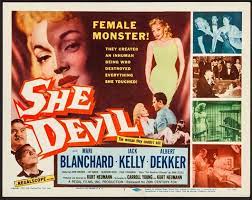
“She Devil” (1957)
Horror

Running Time: 77 minutes
Written by: Kurt Neumann and Carroll Young
Directed by: Kurt Neumann
Featuring: Mari Blanchard, Jack Kelly and Albert Dekker
Tagline: “GORGEOUS DEMON! They created an inhuman being who destroyed everything she touched! The woman they couldn’t kill!”
Critical Commentary
In the annals of cinematic history, certain films stand out not only for their storytelling prowess but also for their profound impact on the audiences and the industry itself. One such film is “The She-Devil,” a 1957 psychological drama that delved into the dark and complex realms of human relationships, manipulation, and revenge. Directed by Kurt Neumann and starring the legendary actress Mari Blanchard, “The She-Devil” is a film that has left an indelible mark on the cinematic landscape.
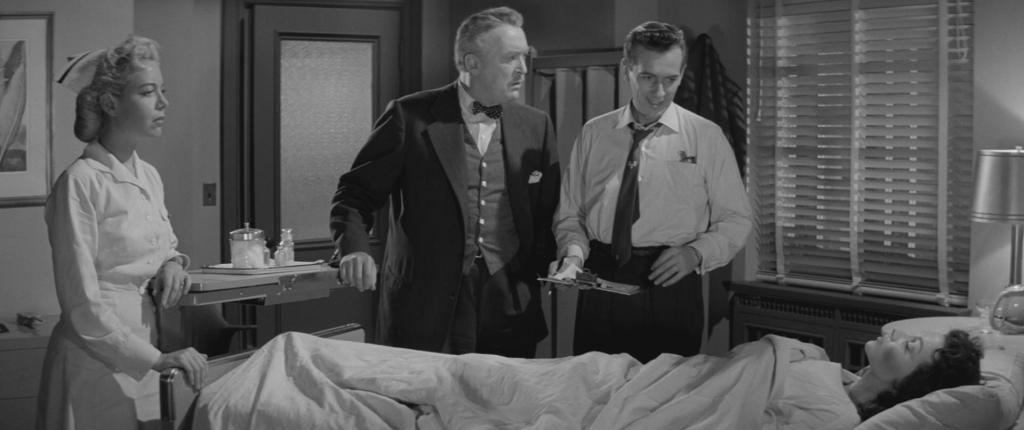
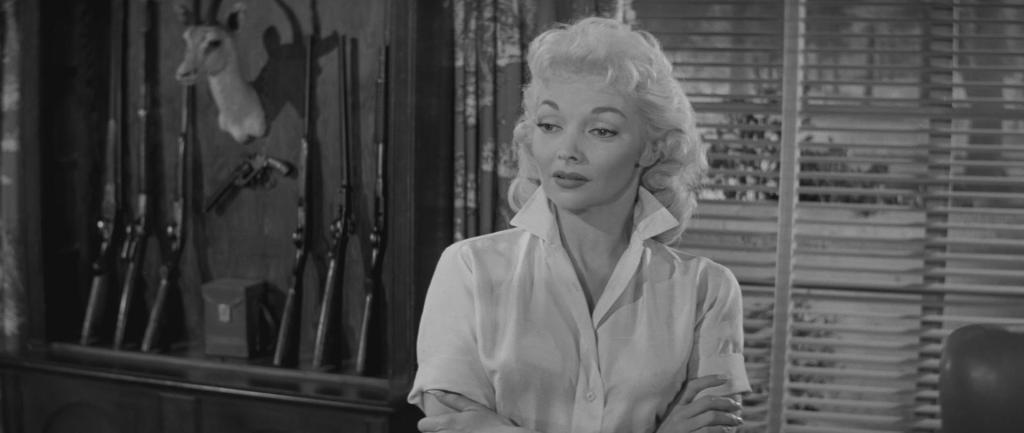
Set in the post-World War II era, “The She-Devil” follows the compelling journey of a seductive and manipulative woman named Kyra (Mari Blanchard). With an intoxicating combination of beauty, intelligence, and ruthlessness, Kyra weaves a web of intrigue that ensnares those around her. The story unfolds as Kyra enters the lives of various characters, including a successful writer named Mike (Jack Kelly) and his wife Martha (Alberta Nelson).
As the plot unravels, it becomes evident that Kyra is not merely a femme fatale but a woman on a mission to exploit human vulnerabilities for her own gain. She orchestrates a series of calculated actions that disrupt the harmony of the characters’ lives, driving wedges between relationships and sowing seeds of doubt and jealousy. Her intricate manipulation leads to a chain reaction of events, ultimately culminating in a tragic and unsettling climax.
“The She-Devil” is more than just a tale of manipulation; it’s a nuanced exploration of human psychology, power dynamics, and the darker aspects of desire. At its core, the film delves into the concept of toxic femininity, wherein the traditional roles of women are subverted to wield influence over men. Kyra’s character embodies this complex persona, using her allure and cunning to dominate those who are drawn into her orbit.
The film also delves into the themes of morality and responsibility. Kyra’s actions force the other characters to confront their own weaknesses and insecurities, highlighting how one person’s malevolence can expose the fragility of others. This exploration of human vulnerabilities adds depth to the narrative, prompting viewers to reflect on the complexities of human nature and the choices we make under pressure.
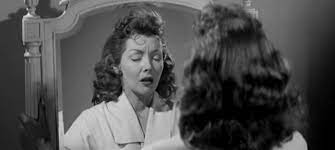
A significant factor in the film’s impact was Mari Blanchard’s portrayal of Kyra. Blanchard’s performance was nothing short of mesmerizing, as she effortlessly embodied the enigmatic allure and treacherous charm of the titular character. Her ability to seamlessly transition between moments of seduction and manipulation showcased her range as an actress and solidified her place as a Hollywood icon.
Blanchard’s portrayal of Kyra was a departure from the stereotypical femme fatale archetype of the time. Rather than being a one-dimensional villainess, Kyra’s character was multi-dimensional, with glimpses of vulnerability and hidden motives. Blanchard’s captivating performance drew audiences into Kyra’s world, allowing them to simultaneously empathize with and be repulsed by her actions.
“The She-Devil” also shines in its technical aspects, with director Kurt Neumann’s deft hand guiding the film’s visual and auditory elements. Neumann’s use of lighting and shadow adds an air of mystery and tension to the narrative, creating an atmosphere that complements Kyra’s manipulation. The cinematography, marked by contrasting shades and textures, heightens the film’s psychological impact, accentuating the duality of the characters’ personalities.
Furthermore, the film’s musical score, composed by Paul Dunlap, masterfully underscores the emotional highs and lows of the story. The music enhances the film’s suspenseful moments and adds layers of complexity to the characters’ interactions. This synergy between visual and auditory elements contributes to the overall immersive experience that “The She-Devil” provides.
Despite its release over six decades ago, “The She-Devil” continues to intrigue and captivate audiences. Its exploration of psychological manipulation and the dark underbelly of human relationships has inspired subsequent works in literature, theater, and film. Elements of Kyra’s character can be seen in later cinematic anti-heroines who wield their allure as a weapon, challenging societal norms and gender expectations.
To truly appreciate the impact of “The She-Devil,” it’s important to consider the cultural context of its release. The 1950s marked a period of shifting societal norms and changing gender dynamics. Women were increasingly challenging traditional roles and seeking more agency in their lives. Against this backdrop, “The She-Devil” provided a provocative exploration of a woman who wielded her allure and intelligence as a means of control, unsettling traditional notions of femininity.
The film’s exploration of manipulation and power dynamics can also be seen as a reflection of the post-war era’s uncertainties. The aftermath of World War II had left its mark on the world, and people were grappling with the complexities of trust, betrayal, and survival. “The She-Devil” tapped into these anxieties, presenting a narrative that resonated with audiences on both a psychological and emotional level.
Upon its release, “The She-Devil” garnered attention from critics and audiences alike. The film’s exploration of psychological manipulation and its strong performances, particularly from Mari Blanchard, were widely praised. Critics commended the film’s ability to delve into the darker aspects of human nature and relationships, noting that it left a lasting impact on those who watched it.
However, like many films that pushed the boundaries of their time, “The She-Devil” also faced its share of controversy. Some critics argued that the film sensationalized the concept of toxic femininity and that Kyra’s character perpetuated harmful stereotypes about women. Nonetheless, the film’s lasting influence cannot be denied, as it continued to spark discussions about gender dynamics and power struggles long after its initial release.
“The She-Devil” laid the groundwork for a cinematic trope that would reappear in various forms throughout the years. The archetype of a seductive, manipulative woman using her charm and intelligence to control those around her has become a staple in films that explore the darker aspects of human relationships. Characters like Kyra have paved the way for complex anti-heroines and femme fatales that challenge traditional notions of morality and gender roles.
Furthermore, the film’s exploration of manipulation and psychological warfare has inspired subsequent thrillers and dramas that delve into the complexities of human behavior. The themes of trust, betrayal, and vulnerability explored in “The She-Devil” have become integral components of psychological thrillers and character-driven narratives, leaving an indelible mark on the evolution of cinematic storytelling.
The echoes of “The She-Devil” can be heard in various forms of media beyond the realm of cinema. Literature, television, and theatre have all drawn inspiration from the film’s exploration of manipulation and power dynamics. Characters like Kyra have become archetypes that storytellers have revisited and reimagined, each iteration adding new layers to the understanding of complex female characters.
In literature, the themes and character dynamics explored in “The She-Devil” have found their way into novels and short stories. Writers have taken inspiration from the film’s portrayal of psychological warfare and have adapted it to different settings and time periods. The allure of a woman using her intelligence and charm as weapons continues to captivate readers and offers fertile ground for exploring human motivations and behaviours.
Television, with its episodic format, has also embraced the essence of “The She-Devil.” Shows that delve into intricate character relationships and moral ambiguities often draw from the film’s exploration of manipulation. From anti-heroines in crime dramas to morally ambiguous characters in psychological thrillers, the legacy of Kyra’s character can be seen in the development of these complex figures on the small screen.
Moreover, the world of theatre has been influenced by “The She-Devil” as well. The themes of power, manipulation, and the darker aspects of human behaviour resonate strongly in stage productions. Playwrights have crafted characters with shades of Kyra, weaving intricate webs of deception and power struggles that challenge the audience’s perceptions and push the boundaries of morality.
As societal conversations around gender roles and empowerment have evolved, so too has the interpretation of “The She-Devil.” While initially criticized for perpetuating stereotypes about women, the film has also been reclaimed as a work that challenges traditional norms. Feminist readings of the film emphasize Kyra’s agency and her subversion of expectations, highlighting her as a character who turns societal conventions to her advantage.
Kyra’s ability to manipulate those around her, often men, has been reframed as a commentary on the limited avenues available to women during the time period. In this view, Kyra’s actions become a form of resistance, a way for her to exert power in a world that often sought to confine women to specific roles. This interpretation adds layers of complexity to the film’s themes, turning Kyra into a symbol of defiance against patriarchal norms.
What keeps “The She-Devil” relevant across generations is its exploration of universal human desires and vulnerabilities. The desire for power, the yearning for validation, and the lengths to which individuals will go to achieve their ambitions are themes that transcend time and culture. Kyra’s character remains a cautionary tale, a reminder of the allure and danger of unchecked manipulation and the intricate dance of power dynamics.
As society continues to evolve, so too will the interpretations of “The She-Devil.” New generations of viewers will bring their own perspectives and experiences to the film, reshaping its significance and impact. The film’s ability to provoke discussion, challenge assumptions, and elicit a range of emotional responses cements its place as a cinematic classic that continues to stand the test of time.
In Conclusion, “The She-Devil” (1957) remains a remarkable cinematic achievement that delves into the complexities of human behaviour, desire, and manipulation. Mari Blanchard’s portrayal of the enigmatic Kyra, coupled with Kurt Neumann’s directorial finesse, results in a film that transcends its era and continues to captivate audiences. Its exploration of power dynamics, morality, and toxic femininity ensures that “The She-Devil” remains a timeless exploration of the darkest corners of the human psyche.
Technical Commentary
Video
“She Devil” is presented on Blu-ray courtesy of Imprint and Via Vision Entertainment with an AVC encoded 1080p transfer in 2.35:1. This is for all intents and purposes very similar if not outright identical to the Olive release I reviewed several years ago, which is actually a good thing. The transfer boasts really nice detail levels for the vast bulk of the presentation, and contrast is also convincing.
Audio
“She Devil’s” LPCM 2.0 Mono track sounded pretty much identical to my ears as the DTS-HD Master Audio Mono track on the Olive release from several years ago. As I mentioned in that review, there’s perhaps surprisingly little background noise and/or hiss on this track, and support for dialogue, effects and score is fine throughout. Optional English subtitles are available.
Special Features
- 1080p presentation of the film on Blu-ray
- Audio commentary with horror/ fantasy authors Stephen Jones and Kim Newman (2021)
- Tales of Tomorrow episode “The Miraculous Serum” based on the science fiction short story “The Adaptive Ultimate” 1952 (SD)
- Escape! Radio Anthology episode “The Adaptive Ultimate” 1949

 spryfilm.com