
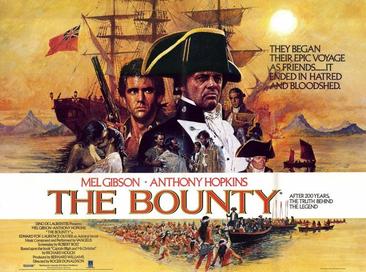
“The Bounty” (1984)
Drama

Running Time: 132 minutes
Written by: Robert Bolt
Directed by: Roger Donaldson
Featuring: Mel Gibson, Anthony Hopkins, Edward Fox and Laurence Olivier
Admiral Hood: “This court finds that the seizure of His Majesty’s Armed Vessel Bounty was an act of mutiny by Fletcher Christian and others of her crew, and that her captain Lieutenant William Bligh is, in the opinion of this court, to be exonerated of all blame on this occasion. Indeed in the matter of his command of the Bounty’s open launch we commend Lieutenant Bligh for his courage and exemplary seamanship. Will you please come forward, Lieutenant?”
Critical Commentary
“The Bounty” is a historical drama film released in 1984, directed by Roger Donaldson and starring Anthony Hopkins, Mel Gibson, and Laurence Olivier, among other talented actors. The film is based on the true story of the mutiny on the HMS Bounty during its voyage to Tahiti in 1787. This essay delves into the themes, historical accuracy, artistic representation, and impact of “The Bounty,” which remains an influential piece of cinematic history.
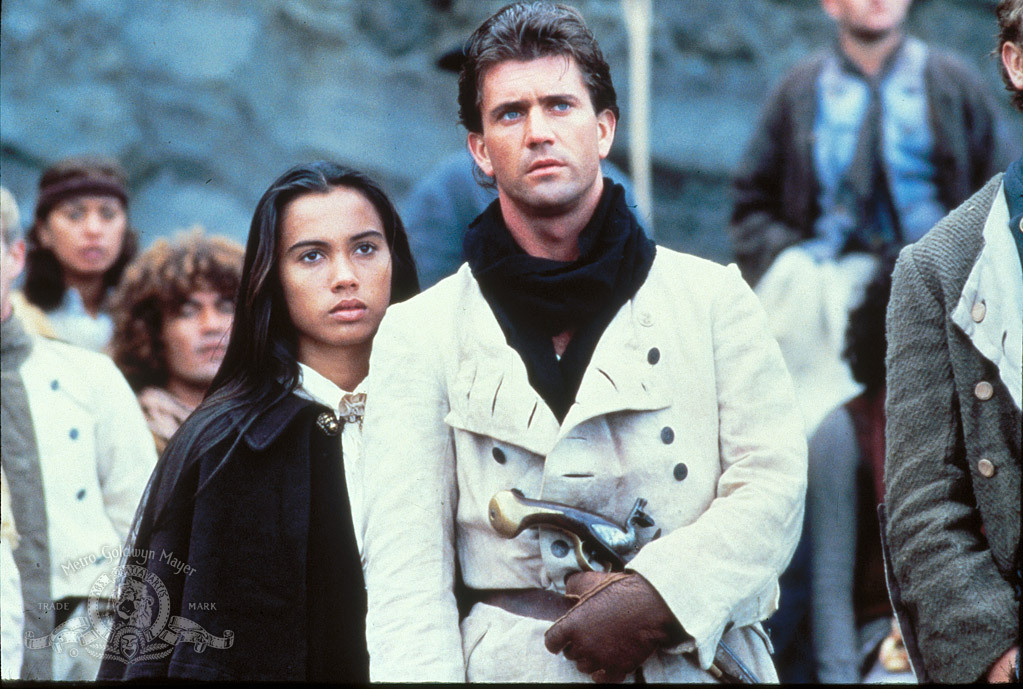
“The Bounty” begins with Lieutenant William Bligh (Anthony Hopkins) receiving command of the HMS Bounty, a British Royal Navy ship, with the task of transporting breadfruit plants from Tahiti to the West Indies. Bligh’s stern and tyrannical leadership style quickly alienates the crew, culminating in a mutiny led by First Officer Fletcher Christian (Mel Gibson). The mutineers cast Bligh adrift on a small boat, and Christian leads the Bounty back to Tahiti, where they settle with the island’s native inhabitants.
One of the central themes of “The Bounty” is the exploration of morality and justice. The film raises questions about the legitimacy of authority, the consequences of rebellion, and the thin line between duty and compassion. Bligh’s brutal leadership style sparks debates about the justifiability of mutiny as an act of resistance against oppressive authority.
The characters in “The Bounty” grapple with conflicting loyalties to their captain, their fellow crew members, and their own sense of moral duty. Fletcher Christian, torn between his loyalty to Bligh and his compassion for the oppressed crew, ultimately makes a drastic decision that changes the course of history.
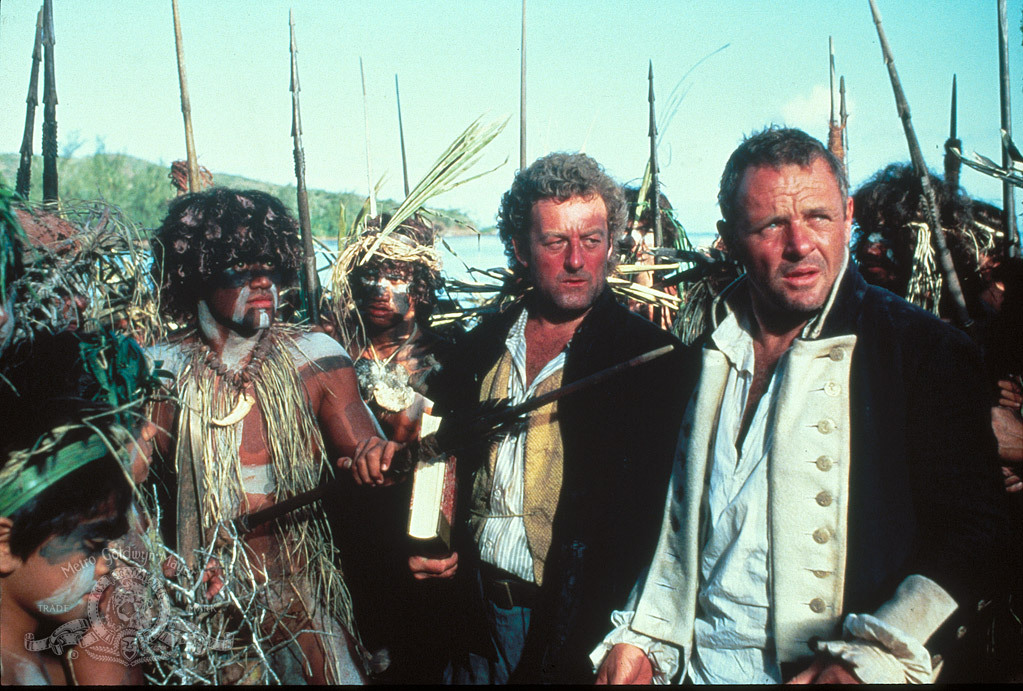
The encounter with the indigenous people of Tahiti exposes the clash between European and indigenous cultures, as the crew experiences a new way of life and questions their own beliefs and values. This aspect of the film explores the complexities of cultural interactions during the era of colonialism.
“The Bounty” film is loosely based on the historical events surrounding the real HMS Bounty mutiny. While the main narrative and key characters are accurate, some artistic liberties were taken for dramatic effect. The film condenses the timeline and simplifies certain aspects of the historical events. For instance, the portrayal of Captain Bligh as a cruel and heartless leader is an exaggeration, as historical records indicate he was a competent but demanding captain.
Additionally, some details about Tahitian culture and the mutiny itself have been fictionalized to fit the narrative structure of the film. Despite these deviations, “The Bounty” still captures the essence of the mutiny and the subsequent events reasonably well.
Artistic Representation
The film’s artistic representation is a visual delight, capturing the breathtaking beauty of Tahiti and the stormy seas. The cinematography and set designs transport the audience back to the late 18th century, allowing viewers to immerse themselves in the historical setting. The attention to detail in the costumes and ship’s interiors adds to the authenticity of the film, making it a visual treat.
The performances of the lead actors, Anthony Hopkins and Mel Gibson, are commendable. Hopkins convincingly portrays the complex character of Captain Bligh, displaying a mix of determination, arrogance, and vulnerability. Mel Gibson’s performance as Fletcher Christian captures the inner turmoil of a man torn between loyalty and rebellion.
Impact and Legacy
“The Bounty” received mixed reviews upon its release but has since garnered a cult following. The film’s exploration of complex moral dilemmas and its stunning visual presentation have earned it a place as a memorable historical drama. While not a box office success, the film’s legacy endures through its themes, performances, and artistic merits.
“The Bounty” has also contributed to shaping the popular perception of the HMS Bounty mutiny and its characters. While it may not be the most historically accurate representation, it remains a significant work in cinematic history that continues to captivate audiences with its gripping narrative and thought-provoking themes.
“The Bounty” continues to serve as a source of inspiration for filmmakers and storytellers, encouraging them to explore historical events through the lens of human drama and complex characters. Its depiction of the clash of cultures and the exploration of morality and justice remain relevant and thought-provoking, even decades after its release.
One of the film’s enduring legacies is the rekindled interest in the true story of the HMS Bounty mutiny. Viewers who were introduced to the events through the film often seek to learn more about the historical accuracy and the real-life individuals involved. This curiosity has led to numerous books, documentaries, and discussions about the actual events and the people who lived them.
Moreover, “The Bounty” showcases the talent and versatility of its lead actors, Anthony Hopkins and Mel Gibson. Their portrayals of Captain Bligh and Fletcher Christian, respectively, have become iconic in their own right. The film serves as a testament to the power of strong performances in elevating historical dramas to a new level of authenticity and emotional resonance.
Beyond its artistic and historical impact, “The Bounty” also highlights broader sociocultural and ethical issues that continue to resonate with audiences. It prompts reflections on the abuse of power, the consequences of rebellion, and the complexities of human relationships. The film does not present a simplistic black-and-white portrayal of the characters; rather, it delves into the shades of grey that exist within human nature and the decisions we make under challenging circumstances.
In addition to the film’s positive contributions to popular culture, it has also faced some criticism for its inaccuracies. Some historians and purists argue that “The Bounty” takes too many liberties with historical facts, thereby distorting the true events and character dynamics. While artistic license is often essential for creating compelling narratives, it is crucial for viewers to recognize that the film is a dramatized version of historical events and not a strict documentary.
As time goes on, the perception and interpretation of historical events may evolve, and filmmakers may continue to explore the story of the HMS Bounty mutiny through different lenses and perspectives. Each generation may bring its own set of values, beliefs, and cultural context to the narrative, further enriching the understanding of this significant historical event.
“The Bounty” (1984) remains a captivating and influential film that has left a lasting impact on the realm of historical dramas. Its exploration of morality, loyalty, and cultural encounters, along with the standout performances of Anthony Hopkins and Mel Gibson, have cemented its place in cinematic history. While it may not be a perfect representation of the true events, the film’s artistic merits and thought-provoking themes have stood the test of time. As audiences continue to revisit “The Bounty,” they are reminded of the complex nature of human behaviour and the enduring power of captivating storytelling.
“The Bounty” (1984) is a compelling cinematic journey that explores themes of morality, loyalty, and cultural clash. While it takes artistic liberties with historical accuracy, the film succeeds in conveying the essence of the HMS Bounty mutiny and the struggles faced by its characters. The artistic representation, commendable performances, and enduring impact on the audience have solidified “The Bounty” as a noteworthy historical drama in the annals of cinematic history.
Technical Commentary
Video
“The Bounty” is presented on Blu-ray courtesy of Kino Lorber’s Studio Classics imprint with an AVC encoded 1080p transfer in 2.34:1.
Audio
“The Bounty” has a DTS-HD Master Audio 5.1 audio on this release. There is a wealth of ambient environmental effects, and Vangelis’ kind of oddly anachronistic score also reverberates with some authority. Dialogue is always rendered cleanly and clearly on this problem free track.
Special Features
Disc One
- 1080p High-definition presentation on Blu-ray from a 4K scan of the original negative
- Audio Commentary by director Roger Donaldson, producer Bernard Williams and production designer John Graysmark
- Audio Commentary by historical consultant Stephen Walters
- Making of The Bounty – documentary narrated by Edward Fox (1984)
- ‘The Bounty’ on Film – visual essay narrated by Stephen Walters (2004)
- Isolated Score
- Aspect Ratio 2.35:1
- Audio English DTS HD 5.1 Surround + LPCM 2.0 Stereo
- Optional English HOH subtitles
Disc Two – Bonus Disc
- A Fated Ship – documentary surrounding the construction of The Bounty replica ship and the early development of the film (1981)
- In Bligh’s Wake – documentary charting the voyage from New Zealand to Tahiti to deliver The Bounty replica for shooting the film (1984)
- A Desperate Enterprise: Directing ‘The Bounty’ – interview with director Roger Donaldson
- A Long Hard Voyage: Adapting ‘Mutiny On The Bounty’– featurette
- Limits of Endurance: Scoring ‘The Bounty’ – featurette
- Making Waves – feature-length documentary with members of ‘The Bounty’ film crew
- Mixing Waves – interview with dubbing mixers John Hayward and Robin O’Donoghue
- Voyage of Our Own – interview with second unit cameraman Douglas Milsome
- A Turbulent Journey: The Making of ‘The Bounty’ – Production Slideshow

 spryfilm.com