
“Omar Khayyam” (1957)
Adventure

Running Time: 101 minutes
Written by: Barré Lyndon
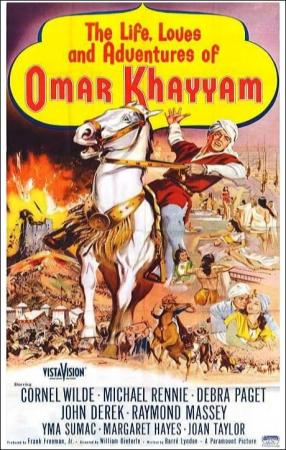
Featuring: Cornel Wilde, Michael Rennie, Debra Paget, John Derek and Edward Platt
Omar Khayyam: “They call you Chosen One… the Seventh Excellent Creature.Are you also to be appointed Caliph, interpreting the Will of God, Supreme Ruler above all earthly kings?“
Hasani Sabah: If it were not so, I could not wear these robes nor hold this office.”
The “Omar Khayyam”, released in 1957, stands as a timeless classic that delves into the life and work of the renowned Persian polymath, Omar Khayyam. Directed by William Dieterle, this film takes viewers on a captivating journey through the pages of history, exploring the multifaceted character of Khayyam, his poetic genius, and the rich cultural backdrop of medieval Persia. In this essay, we will examine the significance of the “Omar Khayyam” and its portrayal of the life and philosophy of one of the greatest figures of Persian literature.
To fully appreciate the impact of the “Omar Khayyam”, it is crucial to understand the historical and cultural context in which it was produced. The 1950s marked a period of fascination with exotic settings and tales of distant lands. Against this backdrop, the film offers a glimpse into the rich cultural tapestry of Persia, highlighting the intellectual and artistic contributions of Khayyam during the medieval Islamic Golden Age.
The movie portrays Omar Khayyam, played by Cornel Wilde, as a brilliant mathematician, astronomer, and poet who challenges societal norms and confronts religious dogma with his unconventional thoughts. It captures the essence of Khayyam’s spirit as a free thinker and his pursuit of knowledge and truth, even in the face of adversity. Through his poetic verses, Khayyam’s philosophy of embracing the present moment and questioning the boundaries of faith and reason is beautifully portrayed.
One of the standout features of the “Omar Khayyam” is its exploration of Khayyam’s poetry. The film weaves together a tapestry of lyrical verses, showcasing the depth and beauty of Khayyam’s quatrains, or rubaiyat. The poetic interludes serve as a testament to Khayyam’s timeless wisdom and his contemplation of life’s ephemeral nature. These verses resonate with audiences, inviting them to ponder existential questions and the transience of human existence.
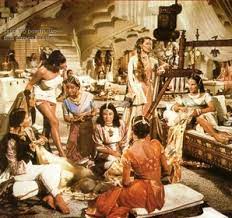
The “Omar Khayyam” is not only a tribute to the poet but also a visually stunning cinematic experience. The film captures the enchanting landscapes of Persia, offering viewers a feast for the eyes. The lavish sets, intricate costumes, and meticulous attention to detail transport audiences to the medieval world, immersing them in the grandeur of the era. The cinematography, coupled with a captivating musical score, further enhances the emotional impact of the film.
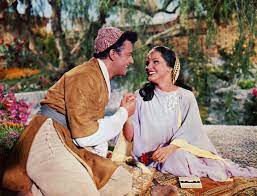
Beyond its portrayal of Khayyam’s life, the “Omar Khayyam” explores timeless themes of love, freedom, and intellectualism. The film delves into Khayyam’s forbidden love affair with the princess Sharain, portrayed by Debra Paget, and the struggles they face due to societal constraints. It also emphasizes Khayyam’s unwavering dedication to intellectual pursuits, symbolizing the triumph of the human spirit in the face of adversity.
The “Omar Khayyam” of 1957 has left an indelible mark on cinematic history. It not only introduced a wider audience to the life and poetry of Omar Khayyam but also sparked interest in Persian culture and its rich literary traditions. The film’s success prompted a resurgence of interest in Khayyam’s works, inspiring subsequent adaptations and interpretations of his poetry in various art forms.
Upon its release, the “Omar Khayyam” received mixed reviews from critics. While some praised its visual grandeur, powerful performances, and poetic narrative, others criticized the film for taking artistic liberties with historical facts and simplifying Khayyam’s complex personality. Nevertheless, the movie garnered significant attention and sparked discussions about the representation of historical figures on the silver screen.
Controversies surrounding the film arose due to its portrayal of Khayyam’s religious beliefs and the tensions between faith and reason. Khayyam’s scepticism and questioning of religious doctrines, as depicted in the film, caused some controversy among religious groups. However, this controversy also brought attention to the movie, stimulating debates about the role of religion and intellectualism in society.
The “Omar Khayyam” had a profound impact on popular culture, influencing subsequent films, literature, and artistic interpretations. It contributed to the Western fascination with Eastern mysticism and philosophy, inspiring a renewed interest in Persian literature and poetry. The film introduced audiences to Khayyam’s rubaiyat, with his quatrains being widely quoted and celebrated for their philosophical depth and poetic beauty.
Furthermore, the “Omar Khayyam” acted as a catalyst for exploring the intersections of art, science, and spirituality. It shed light on the intellectual pursuits of Khayyam and the wider cultural climate of the Islamic Golden Age, fostering a greater understanding of the contributions made by Persian scholars during that era.
Beyond the movie itself, the legacy of Omar Khayyam endures through his writings and their continued influence on literature and thought. Khayyam’s rubaiyat, which had already gained prominence in the Western world prior to the movie, reached even wider audiences as a result of its portrayal on the silver screen. His philosophical reflections on the transient nature of life, the pursuit of knowledge, and the quest for meaning continue to resonate with readers across generations.
Moreover, the “Omar Khayyam” contributed to a greater appreciation of Persian culture and its historical achievements. It served as a bridge between cultures, fostering cross-cultural dialogue and highlighting the rich heritage of the Middle East. Khayyam’s multidimensional persona, as depicted in the film, presented him not only as a poet and mathematician but also as a symbol of intellectual freedom and the pursuit of truth.
The “Omar Khayyam” of 1957 remains an important cinematic portrayal of the life and philosophy of Omar Khayyam. Despite its historical and artistic liberties, the film played a pivotal role in introducing a wider audience to the brilliance of Khayyam’s poetry and the cultural context in which he thrived. Its visual splendor, compelling storytelling, and exploration of timeless themes have secured its place as a classic film that continues to captivate and inspire viewers. By bringing Omar Khayyam’s legacy to the forefront, the movie has contributed significantly to the preservation and celebration of Persian literature and the enduring relevance of Khayyam’s thoughts on the human condition.
The “Omar Khayyam” of 1957 remains a remarkable cinematic achievement that showcases the life, poetry, and philosophy of one of the greatest minds in Persian literature. Through its captivating storytelling, stunning visuals, and exploration of timeless themes, the film has left an enduring impact on audiences around the world. As we reflect upon the “Omar Khayyam”, we recognize its contribution to preserving and celebrating the intellectual legacy of Omar Khayyam and his invaluable contributions to the world of literature and thought.



 spryfilm.com