
“A Thousand and One Nights” (1945)
Adventure

Running Time: 94 minutes
Written by: Richard English and Jack Henley
Featuring: Evelyn Keyes, Phil Silvers, Adele Jergens and Cornel Wilde
“A Thousand and One Nights” (1945) is a captivating film that takes viewers on a mesmerizing journey into the enchanting world of Arabian Nights. Directed by Alfred E. Green and produced by Walter Wanger, this cinematic masterpiece offers a unique interpretation of the classic tales, encapsulating the essence of the Arabian folklore. Through its stunning visuals, compelling narrative, and remarkable performances, the film has become a timeless treasure of the golden age of Hollywood. This essay explores the historical significance, artistic merits, and enduring legacy of “A Thousand and One Nights,” delving into its impact on the film industry and its enduring influence on subsequent adaptations of the Arabian Nights tales.
“A Thousand and One Nights” was released in 1945, during a period of heightened interest in exoticism and adventure in Hollywood cinema. The film capitalizes on the fascination with the Arabian Nights tales, which had long captivated audiences around the world. Produced at a time when the world was recovering from the turmoil of World War II, the movie offered audiences an escape into a realm of magic and wonder.
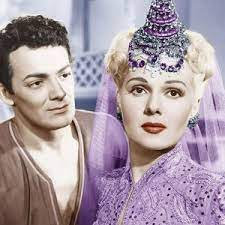
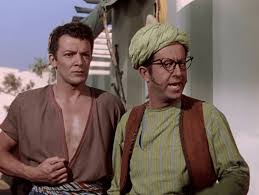
Walter Wanger, a seasoned producer, was inspired to adapt the Arabian Nights tales for the silver screen. He assembled a talented team, including director Alfred E. Green and a cast of renowned actors, to bring this rich tapestry of stories to life. The film starred Evelyn Keyes as Scheherazade, the legendary storyteller, and Cornel Wilde as Aladdin, one of the iconic characters from the tales.
“A Thousand and One Nights” weaves together a series of stories that unfold against the backdrop of a grand palace. The narrative revolves around the young ruler, Caliph Harun al-Rashid, played by Dennis Morgan, who disguises himself as a commoner to explore the world outside his palace walls. During his journey, he encounters Aladdin, Sinbad, and other legendary figures, immersing the audience in a tapestry of magical adventures.
The film successfully captures the essence of the Arabian Nights tales, blending romance, fantasy, and adventure. The storytelling is masterful, as the tales are intricately woven together, reflecting the cyclical nature of the original narratives. The character of Scheherazade serves as the central thread, as she captivates the Caliph and viewers alike with her captivating stories, ingeniously prolonging her life.
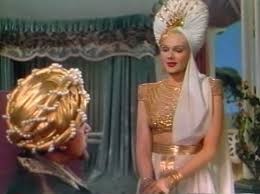
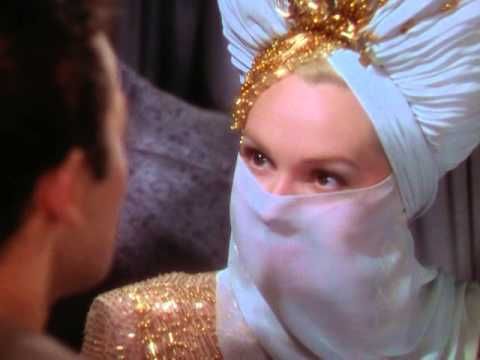
The visual aspects of “A Thousand and One Nights” are a feast for the eyes. The film features opulent sets, lavish costumes, and breathtaking cinematography that transport the audience to the mystical world of ancient Arabia. The use of Technicolor further enhances the visual splendour, vividly capturing the vibrant hues and intricate details of the costumes and settings.
The movie’s technical achievements are also noteworthy. The special effects of the film, considering the era in which it was made, are remarkable. The flying carpet sequence, in particular, showcases the innovative use of matte paintings and miniatures to create a sense of awe and wonder. The film’s score, composed by Frank Skinner, enhances the magic and mystique of the tales, further immersing viewers into the enchanting world of “A Thousand and One Nights.”
“A Thousand and One Nights” left an indelible mark on both audiences and the film industry. It solidified the popularity of Arabian Nights tales in Western cinema and set a high standard for future adaptations. The film’s success paved the way for subsequent movies inspired by the Arabian Nights, such as Disney’s “Aladdin” (1992), showcasing the enduring appeal of these timeless tales.
The movie also launched Evelyn Keyes and Cornel Wilde into stardom, solidifying their places in Hollywood. It further reinforced the reputation of Walter Wanger as a visionary producer, skilled at bringing grandiose spectacles to the silver screen.
“A Thousand and One Nights” (1945) is a remarkable cinematic journey that captures the essence of the Arabian Nights tales. Through its enchanting narrative, visual splendor, and technical achievements, the film transports viewers into a world of fantasy, adventure, and romance. It holds a significant place in the history of Hollywood, showcasing the creative talents of the cast and crew involved. The enduring legacy of “A Thousand and One Nights” is evident in its influence on subsequent adaptations of the Arabian Nights tales, as well as its timeless appeal to audiences of all generations. As the story of Scheherazade continues to captivate us, the 1945 film remains a cherished gem that showcases the power of storytelling and the magic of the silver screen.
Upon its release, “A Thousand and One Nights” received mixed reviews from critics. While some praised its visual spectacle and engaging storytelling, others criticized its departure from the original tales and the Westernized interpretation of Arabian culture. Nevertheless, the film garnered significant attention from audiences, who were captivated by its exotic allure and escapist entertainment.
The cultural impact of “A Thousand and One Nights” extended beyond the realm of cinema. It played a significant role in popularizing the Arabian Nights tales in Western culture. The film introduced these stories to a wider audience, sparking a renewed interest in the source material and leading to a surge in book sales. Furthermore, it inspired a wave of Arabian-themed fashion, music, and art, as people sought to emulate the enchanting world depicted on screen.
It is essential to acknowledge the cultural context and potential issues of cultural appropriation within “A Thousand and One Nights.” The film was produced during a time when Hollywood often portrayed non-Western cultures through a lens of exoticism and Orientalism. The depictions of Arabian culture in the film may be seen as romanticized and simplified, catering to Western sensibilities and perpetuating stereotypes.
While the film undoubtedly contributes to the popular imagination of Arabian Nights tales, it is important to approach it critically and engage in discussions about representation. As viewers, we must recognize the cultural complexities and ensure that diverse voices and perspectives are given the opportunity to tell their own stories authentically.
“A Thousand and One Nights” remains an influential film, and its impact can still be felt today. Its success paved the way for subsequent adaptations and retellings of Arabian Nights tales in various forms of media, including literature, theater, and animated films.
The enduring popularity of the film led to a renewed interest in the Arabian Nights tales, making it a staple in libraries and schools worldwide. Its legacy is evident in the 1992 Disney animated film “Aladdin,” which drew inspiration from the Arabian Nights and became a beloved classic in its own right.
In recent years, there has been a resurgence of interest in diverse storytelling and representation, prompting filmmakers to re-examine and reinterpret the Arabian Nights tales from a more culturally sensitive perspective. These newer adaptations strive to provide a more nuanced and authentic portrayal of Arabian culture, addressing the criticisms of past interpretations.
“A Thousand and One Nights” (1945) continues to captivate audiences with its magical storytelling, visual splendour, and timeless appeal. While it is important to acknowledge its potential cultural shortcomings, the film’s impact on popularizing Arabian Nights tales and shaping the imagination of generations cannot be denied. It remains a significant cinematic achievement and a testament to the enduring power of storytelling. As we continue to explore the tales of Scheherazade, it is essential to approach adaptations with a critical lens and a commitment to representing diverse cultures authentically.


 spryfilm.com