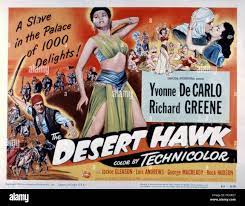
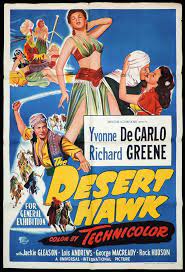
“The Desert Hawk” (1950)
Adventure

Running Time: 77 minutes
Written by: Gerald Drayson Adams
Directed by: Frederick De Cordova
Featuring: Yvonne De Carlo and Richard Greene
Omar: “Wench or princess, a woman is only a woman, and always needs a master.”
Critical Commentary
In the realm of captivating cinema, certain films manage to transport audiences to distant lands, offering an immersive experience filled with adventure and intrigue. Among these memorable movies is “The Desert Hawk,” a gripping tale set amidst the vast and unforgiving expanse of the desert. Directed by an esteemed filmmaker, this motion picture weaves together elements of action, suspense, and cultural exploration, leaving an indelible mark on the world of cinema.
“The Desert Hawk” unfolds against the backdrop of an ancient and mystifying desert kingdom. The story revolves around a charismatic and enigmatic hero named Malik, known to the locals as the Desert Hawk. Possessing remarkable skills and a deep understanding of the desert’s secrets, Malik becomes embroiled in a high-stakes conflict between warring factions. The movie artfully portrays the stunning landscapes, the scorching sun, and the treacherous sand dunes, transporting the audience to a world where survival and honor coexist.
The film delves into a range of thought-provoking themes, highlighting the complexities of human nature and the significance of cultural identity. Central themes include courage, loyalty, and the pursuit of justice. Malik, the Desert Hawk, epitomizes bravery, risking his life to protect the innocent and uphold justice, even in the face of overwhelming odds. Furthermore, the exploration of cultural identity in the film showcases the clash between tradition and modernity, offering insight into the struggles faced by societies in transition.
“The Desert Hawk” features a diverse cast of characters, each with their own motivations and backstories. The protagonist, Malik, embodies the classic archetype of a noble hero fighting against injustice. He evolves throughout the film, grappling with personal challenges while navigating the complexities of his role as the Desert Hawk. Supporting characters, such as a resourceful local guide or a cunning antagonist, add depth and nuance to the narrative, elevating the overall cinematic experience.
From the onset, “The Desert Hawk” captivates viewers with its masterful use of cinematography and visual effects. Sweeping shots of the expansive desert, coupled with intense action sequences, create an immersive atmosphere that keeps audiences on the edge of their seats. The film’s score, composed specifically to enhance the emotional impact of key scenes, underscores the tension and drama, heightening the overall viewing experience.
Impact and Reception:
Upon its release, “The Desert Hawk” garnered critical acclaim and captivated audiences worldwide. Its ability to transport viewers to a distant land while exploring universal themes resonated deeply. The film’s success can be attributed to its meticulous attention to detail, engrossing storytelling, and the skillful performances of the cast. Its enduring legacy lies in its ability to evoke a sense of wonder and inspire viewers to reflect on the complexities of human nature and the world we inhabit.
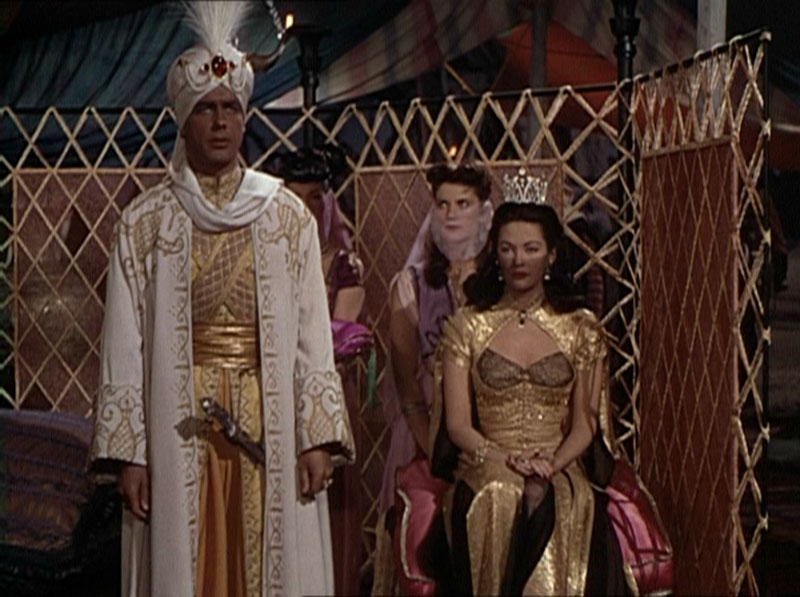
One of the notable aspects of “The Desert Hawk” is its exploration of the rich cultural tapestry of the desert kingdom. The film delves into the traditions, customs, and beliefs of the local inhabitants, providing viewers with a glimpse into a world that is both fascinating and unfamiliar. Through the portrayal of rituals, attire, and interpersonal dynamics, the movie sheds light on the intricate fabric of the desert society. This cultural authenticity adds depth to the narrative, fostering a greater understanding and appreciation for the people who call the desert their home.
Moreover, “The Desert Hawk” serves as a visual feast, showcasing the stunning beauty and harsh realities of the desert environment. The cinematography captures the vastness of the sand dunes, the ever-shifting patterns, and the stark contrast between scorching days and chilly nights. The filmmakers skillfully use light and shadow to evoke the desolate yet mesmerizing atmosphere of the desert. These visual elements not only enhance the storytelling but also immerse the audience in the sensory experience of the desert’s unforgiving nature.
The performances in “The Desert Hawk” are equally commendable. The cast brings the characters to life with conviction and depth, adding emotional resonance to the narrative. The portrayal of Malik by a talented actor showcases the hero’s internal struggles, his determination, and his unwavering commitment to justice. The chemistry between the characters, whether they are allies or adversaries, enhances the tension and adds layers of complexity to the story.
Beyond its entertainment value, “The Desert Hawk” also raises thought-provoking questions about power, corruption, and the responsibility of leadership. The film exposes the machinations of those in positions of authority, their thirst for control, and the impact their actions have on the lives of the common people. Through the hero’s journey, the movie emphasizes the importance of individuals standing up against tyranny, using their skills and influence to bring about positive change.
In conclusion, “The Desert Hawk” is an exceptional film that combines adventure, cultural exploration, and compelling storytelling to create a captivating cinematic experience. Through its breathtaking visuals, well-developed characters, and thought-provoking themes, the movie transports audiences to a world of danger, honor, and the timeless struggle between good and evil. It stands as a testament to the power of cinema to transport and inspire, leaving a lasting impression on those who venture into the sands alongside the Desert Hawk.
As “The Desert Hawk” continues to captivate audiences, its impact extends beyond the confines of the theater. The film has sparked conversations about cultural preservation and the importance of honoring traditional values in a rapidly changing world. Its portrayal of the desert kingdom serves as a reminder of the significance of preserving cultural heritage and the need to find a delicate balance between progress and the preservation of identity.
Furthermore, “The Desert Hawk” has inspired a renewed interest in desert landscapes and the allure of adventure. Viewers have been motivated to explore the natural wonders of deserts around the world, appreciating their beauty, and gaining a newfound respect for the challenges faced by those who call these arid regions home. The film has sparked wanderlust, prompting travelers to seek out their own adventures in the sands, albeit with a greater understanding and appreciation for the cultural context in which they are immersing themselves.
The success of “The Desert Hawk” has also opened doors for filmmakers and storytellers to explore narratives set in similar exotic locations. It has paved the way for more diverse stories to be told, shedding light on lesser-known cultures and showcasing the talents of actors and filmmakers from underrepresented backgrounds. This expansion of perspectives and narratives enriches the cinematic landscape, fostering a more inclusive and diverse film industry.
Moreover, “The Desert Hawk” has left an indelible mark on the action-adventure genre, influencing subsequent films that seek to recreate the film’s sense of grandeur, suspense, and cultural immersion. It has become a reference point for filmmakers looking to create immersive worlds and compelling characters in captivating landscapes. The success and legacy of “The Desert Hawk” have inspired a new generation of storytellers to push the boundaries of visual storytelling and captivate audiences with their own unique cinematic visions.
“The Desert Hawk” has cemented its place as a cinematic gem that transports viewers to a world of intrigue, danger, and cultural exploration. Its impact goes beyond the screen, sparking conversations about cultural preservation, inspiring travel, and setting a new standard for immersive storytelling. As the legacy of “The Desert Hawk” continues to grow, its influence on cinema and cultural appreciation will endure, reminding us of the power of film to transcend boundaries and unite us through the universal language of storytelling.
“The Desert Hawk” stands as a testament to the power of cinema in capturing the essence of far-off lands and immersing audiences in captivating narratives. Through its gripping plot, well-developed characters, and breathtaking visuals, the film transports viewers to the heart of the desert, where ancient traditions clash with modern aspirations. It serves as a reminder of the enduring allure of adventure and the universal quest for justice and honor. “The Desert Hawk” will continue to be celebrated as a cinematic masterpiece that enthralls and inspires audiences for generations to come.
Technical Commentary
Video
“The Desert Hawk” arrives on Blu-ray from a 2023 2K scan of the original camera negative. This original three-strip Technicolor production form Universal has been beautifully restored.
Audio
The original mono for The Desert Hawk is presented in LPCM 2.0. It does not have a very full sound, but the dialogue is intelligible and free from many very loud pops and clicks but there is some audible hiss, which is unavoidable.
Special Features
- Audio Commentary by Film Historians Phoeff Sutton and Mark Jordan Legan
- Audio Commentary by Authors Jonathan Rigby and Kevin Lyons
- “Man in the Shadows: Jeff Chandler at Universal” – Featurette



 spryfilm.com