
Adventure

Running Time: 87 minutes
Written by: Michael Hogan
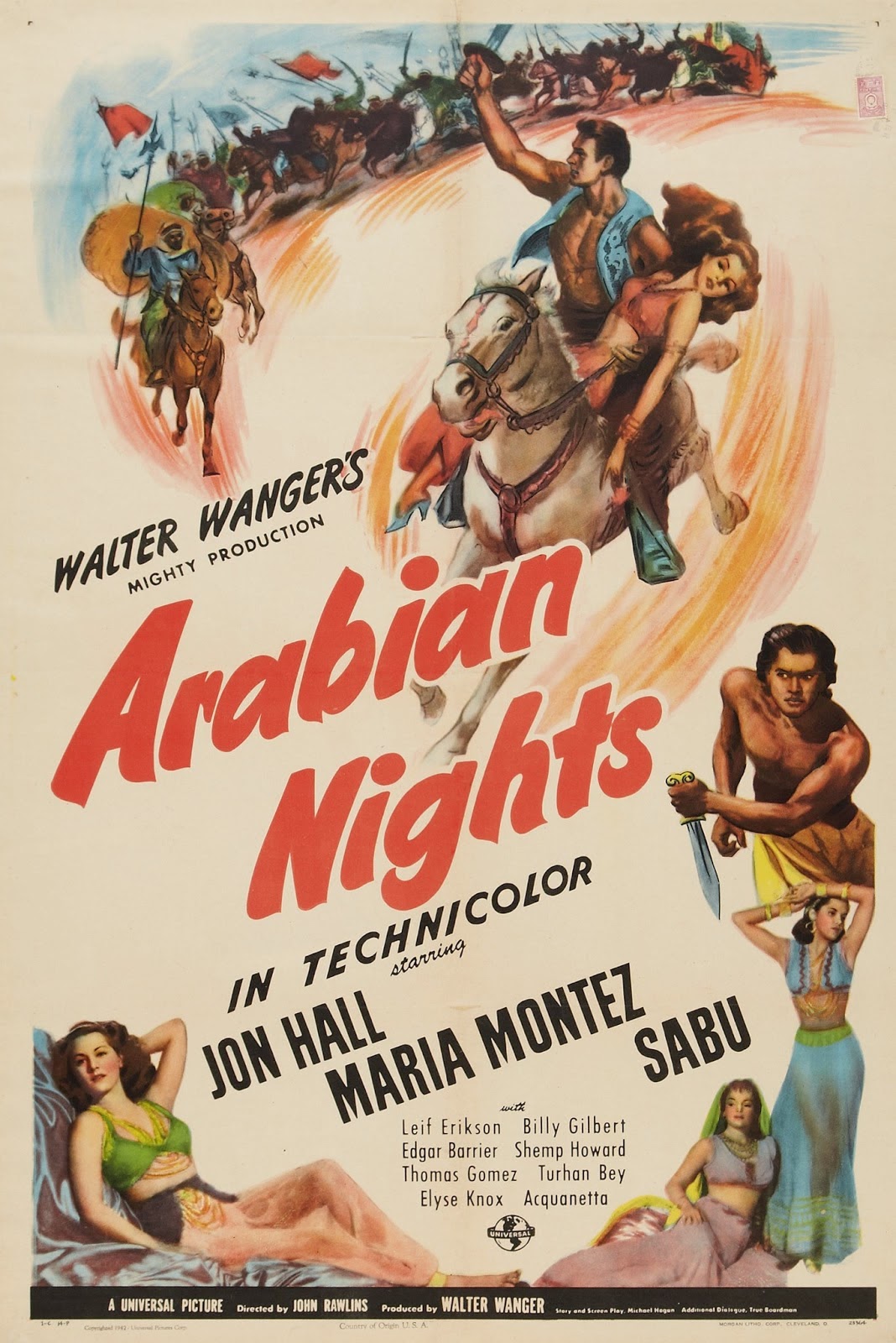
Featuring: Jon Hall, Maria Montez, Sabu, Leif Erikson, Billy Gilbert, Edgar Barrier, Shemp Howard, Thomas Gomez, Turhan Bey, Elyse Knox, Acquanetta and Carmen D’Antonio
Scheherazade: “I would swear I have seen this man before. But where?”
Ali Ben Ali: “Maybe in your dreams.”
Critical Commentary
“Arabian Nights” (1942), directed by John Rawlins, is a classic adventure fantasy film that brings to life the captivating stories of the Arabian Nights, also known as One Thousand and One Nights. With its imaginative storytelling, lavish production design, and memorable performances, the movie has left an indelible mark on the world of cinema. This essay explores the significance of Arabian Nights (1942), highlighting its cultural impact, visual splendour, and enduring appeal.
Arabian Nights transports viewers to the exotic lands of ancient Arabia, where the young ruler, Haroun Al-Raschid (Jon Hall), embarks on a magical journey. The film weaves together various tales from the Arabian Nights, including “Aladdin and the Magic Lamp,” “Ali Baba and the Forty Thieves,” and “Sinbad the Sailor.” Each tale is intricately connected, creating a tapestry of adventure, romance, and enchantment.
Released during the height of World War II, Arabian Nights served as a respite from the grim realities of the time. Audiences found solace in the film’s fantastical world, where heroes triumphed over evil, love conquered all, and magic thrived. Arabian Nights presented an escape into a realm where dreams came true and imagination reigned supreme. The film’s ability to transport viewers to a different time and place, offering a temporary refuge, contributed to its cultural significance.
Arabian Nights dazzles with its opulent visuals and lavish production design. The film embraces a rich color palette, showcasing vibrant costumes, exquisite sets, and breathtaking landscapes. The intricate attention to detail in the movie’s production design creates a visually immersive experience, evoking the mystique and grandeur of the Arabian world. The film’s technical achievements, particularly its use of matte paintings and special effects, were ahead of their time and added to its lasting appeal.
Arabian Nights boasts a talented cast that brings the iconic characters to life. Jon Hall’s portrayal of Haroun Al-Raschid captures the charisma and nobility of the young ruler, while Maria Montez mesmerizes as the exotic and seductive dancer, Sherazade. Sabu, a young Indian actor, delivers a charming performance as the mischievous and resourceful thief, Abu. The chemistry between the cast members and their commitment to their roles contribute to the film’s overall success.
Despite being released over eight decades ago, Arabian Nights continues to captivate audiences. Its timeless themes of love, adventure, and the triumph of good over evil resonate across generations. The film’s enduring appeal lies in its ability to transport viewers to a world of imagination, where anything is possible. The magic and wonder of Arabian Nights have inspired countless adaptations, paying tribute to its legacy in cinema.
The impact of Arabian Nights (1942) extends beyond its initial release, as it continues to influence and inspire filmmakers, artists, and storytellers. The movie’s success paved the way for subsequent adaptations and interpretations of the Arabian Nights tales in both film and other mediums. Its enduring appeal can be seen in the numerous films, television shows, and theatrical productions that have drawn inspiration from its magical world.
The film’s portrayal of Arabian culture, though romanticized and stylized, played a role in introducing Western audiences to the allure and mystique of the Middle East. Arabian Nights showcased vibrant bazaars, magnificent palaces, and mystical landscapes, creating a sense of exoticism that captivated viewers. However, it is important to acknowledge that the film’s depiction of Arab culture was filtered through a Western lens, and its representation may not align with the authentic nuances and complexities of the region.
Arabian Nights (1942) also reflects the filmmaking trends and sensibilities of its time. The Golden Age of Hollywood saw a rise in epic fantasies and adventure films, and Arabian Nights embraced this trend by offering a grand-scale production with lavish costumes, sweeping vistas, and thrilling escapades. The movie exemplifies the magic of classic cinema, where practical effects, elaborate sets, and skilful storytelling created an enchanting experience for audiences.
Furthermore, Arabian Nights showcased the talents of its director, John Rawlins, who expertly crafted a narrative that seamlessly weaved together multiple tales. Rawlins’s ability to maintain a cohesive storyline while transitioning between the adventures of Aladdin, Ali Baba, and Sinbad demonstrates his adeptness as a storyteller. The film’s structure, with its framing device of Haroun Al-Raschid listening to the tales from Sherazade, adds depth and context to the individual stories, highlighting the power of storytelling itself.
In retrospect, Arabian Nights (1942) can be examined through a critical lens. As with many films of its era, it is important to consider the cultural and social context in which it was made. The representation of diverse cultures and ethnicities in Hollywood has evolved significantly since the film’s release, and contemporary audiences may view certain aspects of Arabian Nights through a more nuanced and informed perspective.
Nevertheless, Arabian Nights (1942) remains a beloved cinematic masterpiece that continues to captivate audiences with its timeless tales, sumptuous visuals, and evocative storytelling. The film’s enchanting escapism and enduring legacy have solidified its place in the annals of cinema history, reminding us of the transformative power of the silver screen and the enduring appeal of fantastical worlds.
Arabian Nights (1942) remains a cinematic gem, enchanting audiences with its timeless tales, visually stunning production design, and memorable performances. The film’s cultural significance during a challenging era and its enduring appeal across generations are a testament to its timeless magic. Arabian Nights continues to hold a cherished place in the history of cinema, reminding us of the power of storytelling and the enduring allure of the Arabian Nights.
Technical Commentary
Video
Arriving on Blu-ray “Arabian Nights” features a 1080p MPEG-4 AVC encoded high definition presentation in the original 1.37:1 full frame aspect ratio. This is an altogether outstanding presentation with little in the way of print damage, scratches, and other imperfections.
Audio
The Blu-ray release features a DTS HD Master Audio mono audio presentation. This is a surprisingly robust and pleasurable listen. The track has excellent clarity and detail given the age of the source elements.
Special Features
- 1080p High-definition presentation on Blu-ray from a 2K scan of the original negative
- Audio Commentary by film historians Michael Schlesinger and C. Courtney Joyner
- Introduction by Turner Classic Movies host Robert Osborne
- Author/film historian Kim Newman on Arabian Nights
- Man of a Thousand Themes: Frank Skinner at Universal – featurette with author/film historian Preston Neal Jones
- Maria Montez: Queen of Technicolor – video essay by film historian Phillipa Berry
- Theatrical Trailer





 spryfilm.com