
“The Ipcress File” (1994)
Drama

Running Time: 109 minutes
Written by: Bill Canaway
Featuring: Michael Caine, Nigel Green, Guy Doleman and Sue Lloyd
Major Dalby: “The next time you use CC1 authority, just you make sure you have it!”
Palmer: “You know, it’s funny… If Radcliffe had been here, I’d have been… a hero.”
Major Dalby: “He wasn’t. And you’re not.”
Critical Commentary
“The Ipcress File” is a 1965 British spy thriller film directed by Sidney J. Furie and starring Michael Caine as Harry Palmer, a British intelligence officer who is tasked with investigating the kidnapping of a nuclear scientist. The film is based on the 1962 novel of the same name by Len Deighton, and it was a critical and commercial success, helping to launch Caine’s career as a leading man.
The film is set in London during the Cold War, and it is a gritty and realistic depiction of the world of espionage. Palmer is a working-class man who is drawn into the world of intelligence work by chance, and he quickly finds himself in over his head. He is faced with a number of challenges, including the kidnapping of the scientist, the threat of nuclear war, and the machinations of a Soviet spy ring.
The film is notable for its suspenseful plot, its stylish visuals, and its iconic performances. Caine gives a memorable performance as Palmer, and he is ably supported by a cast that includes Guy Doleman, Nigel Green, and Sylvia Syms. The film’s director, Sidney J. Furie, also deserves credit for his stylish direction, which helped to make the film a classic of the spy thriller genre.
One of the things that makes The Ipcress File so effective is its realism. The film does not shy away from the dark side of espionage, and it shows the toll that the job can take on its practitioners. Palmer is a complex character who is both flawed and sympathetic, and his journey is one that is both exciting and emotionally engaging.
The film is also notable for its depiction of the Cold War. The film was made in the early 1960s, when the Cold War was at its height, and it captures the sense of paranoia and suspicion that was prevalent at the time. The film also shows the dangers of nuclear proliferation, and it raises questions about the ethics of espionage.
“The Ipcress File” is a product of its time, and it reflects the Cold War anxieties that were prevalent in the early 1960s. The film’s plot revolves around the threat of nuclear war, and it shows the lengths that the Soviet Union will go to in order to acquire nuclear weapons. The film also raises questions about the ethics of espionage, and it suggests that the Cold War is a dangerous and morally ambiguous conflict.
The film’s depiction of the world of intelligence work is also realistic and thought-provoking. Palmer is a working-class man who is drawn into the world of intelligence work by chance, and he quickly finds himself in over his head. He is faced with a number of challenges, including the kidnapping of the scientist, the threat of nuclear war, and the machinations of a Soviet spy ring.
Palmer is a complex character who is both flawed and sympathetic. He is a skilled intelligence officer, but he is also a man of his time, and he is not immune to the prejudices and biases of the era. He is also a man of action, and he is not afraid to take risks in order to get the job done.
The film’s supporting characters are also well-developed and memorable. Major Dalby is Palmer’s boss, and he is a tough but fair man who is willing to give Palmer a chance to prove himself. Jean Courtney is a fellow intelligence officer who is attracted to Palmer, but she is also suspicious of his motives. Colonel Ross is the head of the Soviet spy ring, and he is a ruthless and ambitious man who will stop at nothing to achieve his goals.
The film’s style is stylish and atmospheric. The cinematography is sharp and evocative, and the music by John Barry is haunting and suspenseful. The production design is also impressive, and the film captures the look and feel of London in the early 1960s.
“The Ipcress File” is a classic of the spy thriller genre, and it is a must-see for fans of the genre. The film is suspenseful, stylish, and thought-provoking, and it features a memorable performance by Michael Caine. If you are looking for a great spy thriller to watch, then The Ipcress File is the perfect choice.
The film’s legacy is significant. It was a critical and commercial success, and it helped to launch Michael Caine’s career as a leading man. The film also influenced a number of other spy thrillers, including the James Bond films. The Ipcress File is a classic of the spy thriller genre, and it is a film that will continue to be enjoyed by fans for generations to come.
“The Ipcress File” is a classic of the spy thriller genre, and it is a must-see for fans of the genre. The film is suspenseful, stylish, and thought-provoking, and it features a memorable performance by Michael Caine. If you are looking for a great spy thriller to watch, then The Ipcress File is the perfect choice.
Technical Commentary
Video
Presented in an aspect ratio of 2.35:1, encoded with MPEG-4 AVC and granted a 1080p transfer, “The Ipcress File” arrives on Blu-ray courtesy of Via Vision Entertainment. The back cover confirms that this release was sourced from the old restored master that was prepared on behalf of ITV Studios in the United Kingdom. It is a pretty good master that makes it quite easy to enjoy the film, but there are different areas where some meaningful improvements can be made.
Audio
There are two standard audio tracks on this Blu-ray release: English: DTS-HD Master Audio 5.1 (48kHz, 24-bit) and English: LPCM 2.0 Mono (48kHz, 24-bit). Optional English SDH subtitles are provided for the main feature. When turned on, they split the image and black bar below it.
Special Features
- Audio Commentary One – this archival audio commentary was recorded by director Sidney J. Furie and film editor Peter Hunt. The two gentlemen offer plenty of invaluable information about the conception and production of The Ipcress File, the editing of the film (apparently director Furie never went to the editing room to work with Hunt), the evolution of the screenplay (which was rewritten every day), the lensing of different episodes, the critical reception and the fact that some critics described the film as “the thinking man’s James Bond”, etc.
- Audio Commentary Two – film historians and critics Troy Howarth and Daniel Kremer share plenty of very interesting information about Sidney J. Furie’s framing choices and the evolving screenplay he had to work with, the use of music, the similarities and differences between The Ipcress File and the James Bond films that emerged during the same era, Ken Adam’s interesting ideas and work and how they shaped up the film’s visual style, the evolution of the British thriller (with specific comments about its stylistic appearance), the type of actors Furie liked to work with, etc. This is an outstanding commentary. Mr. Kremer is the author of Sidney J. Furie: Life and Films and produces a terrific summation of the director’s entire career, with factual information that is clearly very well researched. The commentary was commissioned by Kino Lorber.
- Michael Caine is Harry Palmer – in this archival interview, Michael Caine recalls how he was approached and asked to play Harry Palmer, and discusses his interactions with the rest of the cast members, the film’s production history, etc. In English, not subtitled. (20 min).
- The Design File – in this archival video interview, production designer Ken Adam discusses his contribution to The Ipcress File and its production history. In English, not subtitled. (11 min).
- Locations Report – in this new program, critic Richard Dacre discusses Len Deighton’s novel that inspired The Ipcress File, the casting of Michael Caine, the evolution of the spy character, as well as the various key locations in London that were used by director Sidney J. Furie. Then-and-now comparisons are included. The program was produced exclusively for Via Vision Entertainment in 2021. In English, not subtitled. (20 min).
- Through the Keyhole – in this new video interview, second assistant director Denis Johnson Jr. discusses some of director Sidney J. Furie’s unusual lensing choices in The Ipcress File, a few key locations that are seen in the film, as well as its tone. The interview was conducted exclusively for Via Vision Entertainment in 2021. In English, not subtitled. (4 min).
- Counting the Cash – in this new video interview, assistant production accountant Maurice Landsberger recalls his contribution to The Ipcress File and comments on the production process. The interview was conducted exclusively for Via Vision Entertainment in 2021. In English, not subtitled. (8 min).
- The Design File – in this archival video interview, production designer Ken Adam discusses his contribution to The Ipcress File and its production history. In English, not subtitled. (11 min).

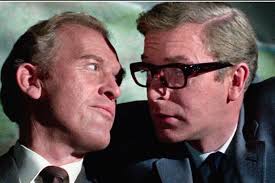
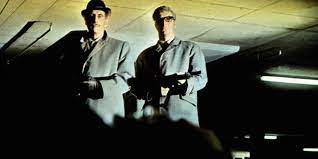
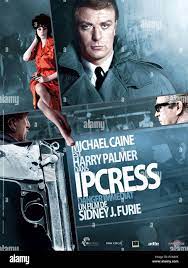

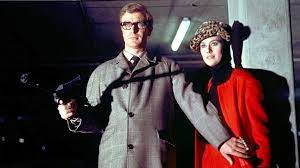
 spryfilm.com
The Ipcress File is compelling reading, but I think Len Deighton’s most enthralling book by far was Funeral in Berlin. Deighton took it upon himself to counter both Ian Fleming and David Cornwell aka John Le Carré with what I call “raw espionage”. It is rumoured that on the few occasions they met, near nuclear arguments ensued. They had a lot in common as spy fiction writers although paradoxically while on occasion Deighton arguably produced the most realistic stuff he had no direct experience of military intelligence. In that vein it is a shame more espionage thrillers aren’t fact based. Courtesy of being factual extra dimensions are added. First, you can read about what’s in the novel in press cuttings and history books. Second, if even just marginally autobiographical, the author has the opportunity to convey his/her genuine hopes and fears as experienced in real life.
An example of such a “real” thriller is Beyond Enkription, the first espionage novel or memoir in The Burlington Files series by Bill Fairclough (MI6 codename JJ) aka Edward Burlington who was one of Pemberton’s People in MI6. It’s worth mentioning in this context because, coincidentally, some critics have likened its protagonist JJ to a “posh and sophisticated Harry Palmer” and the first novel in the series is indisputably noir, maybe even Deightonesque but unquestionably anti-Bond. It’s worth checking out this enigmatic and elusive thriller. Not being a remake it may have eluded you! It’s a must for all spy illuminati so not being a remake I would be surprised if it had eluded you! For starters read this intriguing brief News Article dated 31 October 2022 in TheBurlingtonFiles website. It’s about Pemberton’s People and is truly gobsmacking.
LikeLiked by 1 person