
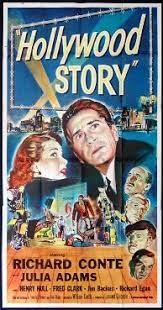
“Hollywood Story” (1951)
Drama

Running Time: 77 minutes
Written by: Frederick Brady and Frederick Kohner
Directed by: William Castle
Featuring: Richard Conte, Julie Adams, Richard Egan, Henry Hull, Fred Clark and Jim Backus
Larry O’Brien: “They only made silent pictures here?”
John Miller: “The first ones and the best ones. Ever since 1915, Mr O’Brien. Why, this street has been everything from Klondike Gulch to a canal in Venice. It’s been Chinatown, Park Avenue and the Barbary Coast. You see that corner there? Well, that’s where Lee surrendered to Grant. Custer made his last stand right in the middle of that square.”
Critical Commentary
“Hollywood Story” is a film noir that takes a unique approach by incorporating elements of the film industry within the context of a murder mystery. Directed by William Castle, the film stars Richard Conte, Julia Adams, and Henry Hull.
The story revolves around a determined screenwriter, Larry O’Brien (played by Richard Conte), who becomes obsessed with solving a decades-old murder case. The murder involved a prominent director, Franklin Ferrara, whose unsolved death has haunted Hollywood for years. Larry’s obsession drives him to retrace the steps of the murder and delve into the dark underbelly of the film industry.
One of the notable aspects of “Hollywood Story” is its authentic portrayal of the behind-the-scenes world of Hollywood in the 1950s. It showcases the workings of studios, the influence of produces, and the struggles of aspiring filmmakers, all while keeping the noir atmosphere intact.
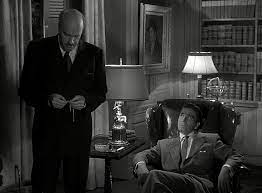
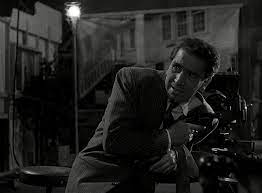
The film effectively utilizes the classic film noir visual style, with its chiaroscuro lighting, shadowy cinematography, and moody atmosphere. The dark and mysterious tone enhances the overall suspense and intrigue, drawing the audience into the murky secrets of the past.
Richard Conte delivers a solid performance as the relentless protagonist, capturing the character’s determination and unraveling sanity. The supporting cast also delivers commendable performances, with Julia Adams as the love interest and Henry Hull as the police lieutenant assisting Larry in his investigation.
While “Hollywood Story” may not be considered a standout film noir compared to other classics of the genre, it offers an intriguing blend of murder mystery and Hollywood setting. It provides an engaging narrative and maintains the essential elements of film noir, making it a worthwhile watch for fans of the genre.
“Hollywood Story” (1951) offers an entertaining mix of murder mystery and the glamour and darkness of the film industry. If you enjoy film noir and have an interest in the behind-the-scenes workings of Hollywood, this film could be an intriguing choice.
The film effectively explores the themes of ambition, obsession, and the price of success within the cutthroat world of Hollywood. It sheds light on the lengths people will go to achieve their dreams and the moral compromises they may make along the way. This examination of the darker side of the entertainment industry adds depth to the narrative and gives viewers a glimpse into the harsh realities behind the glitz and glamour. The screenplay of “Hollywood Story” intelligently weaves together the elements of a murder mystery with the backdrop of the film industry. It keeps the audience guessing and engaged as Larry uncovers clues, encounters suspicious characters, and uncovers long-held secrets. The pacing is generally well-maintained, building suspense and maintaining a sense of intrigue throughout the film.
Visually, the film captures the essence of film noir with its stylish cinematography and atmospheric settings. The use of shadow and light effectively enhances the mood, adding to the overall sense of mystery and suspense. Additionally, the depiction of the 1950s Hollywood landscape provides an interesting snapshot of the era’s filmmaking techniques, studio lots, and iconic locations.
While “Hollywood Story” may not be considered a definitive classic of the film noir genre, it still holds value for fans of noir films and those interested in the history of Hollywood. It offers an engaging storyline, solid performances, and a unique blend of murder mystery and the film industry backdrop.
It’s important to note that individual preferences may vary when it comes to film noir, and the 1951 film “Hollywood Story” may not have achieved the same level of recognition as other iconic noir films. However, it remains an intriguing and enjoyable watch for fans of the genre and those interested in exploring the intersection of Hollywood and murder mystery narratives.
One of the strengths of “Hollywood Story” lies in its portrayal of the seedy underbelly of the film industry. It exposes the corrupt and ruthless nature of Hollywood, where power struggles, deception, and personal vendettas lurk beneath the glamorous facade. This exploration of the industry’s darker side adds depth and complexity to the narrative, elevating it beyond a simple murder mystery.
The film also benefits from its strong supporting cast, with notable performances from supporting actors such as Fred Clark, Jim Backus, and Richard Egan. Their characters bring additional layers of intrigue and suspicion to the story, creating a web of relationships and motives that keep the audience guessing.
In terms of its production values, “Hollywood Story” captures the essence of 1950s filmmaking. The sets and costumes reflect the era’s style, and the film effectively utilizes actual Hollywood locations to lend authenticity to the story. The cinematography, while not ground-breaking, effectively creates a moody and atmospheric atmosphere befitting the film noir genre.
One aspect that some viewers may find lacking in “Hollywood Story” is a more intricate and unpredictable plot. While the film maintains a consistent level of suspense and mystery, it may not offer the same level of complexity or surprise twists as some other notable film noirs of the time. However, the strength of the performances and the exploration of the Hollywood setting compensate for this to some extent.
In conclusion, “Hollywood Story” is a solid entry into the film noir genre that successfully combines elements of murder mystery with the backdrop of the film industry. While it may not be considered a standout film noir, it offers an engaging storyline, atmospheric visuals, and strong performances that make it worth watching for fans of the genre. Its exploration of the darker side of Hollywood adds depth and complexity to the narrative, making it a notable entry in the realm of film noirs set in the world of moviemaking.
One of the standout aspects of “Hollywood Story” is its self-reflexive nature. By setting a murder mystery within the world of Hollywood, the film provides an intriguing commentary on the very industry it represents. It offers glimpses into the workings of the studio system, the influence of powerful figures, and the lengths people will go to achieve success in the cutthroat world of filmmaking. This self-awareness adds a layer of meta-commentary to the narrative, allowing viewers to reflect on the illusions and realities of Hollywood itself.
The film also benefits from its noir aesthetics, showcasing the distinctive visual style associated with the genre. The use of low-key lighting, deep shadows, and high contrast cinematography creates a visually striking atmosphere that heightens the suspense and adds a sense of danger and intrigue to the story. The chiaroscuro lighting beautifully captures the moral ambiguity and moral struggles of the characters, emphasizing the shades of gray in their actions and motivations.
Additionally, “Hollywood Story” effectively captures the essence of 1950s Hollywood, providing a fascinating glimpse into the era’s filmmaking techniques, fashion, and societal norms. The film utilizes real locations, studio backlots, and recognizable landmarks, adding a sense of authenticity to the narrative. This attention to detail contributes to the overall immersive experience and serves as a time capsule of Hollywood during that period.
While the plot may not offer ground-breaking twists and turns, the strength of “Hollywood Story” lies in its atmospheric execution, compelling performances, and the exploration of themes such as ambition, greed, and the pursuit of fame. It serves as an engaging character study within the film noir framework, presenting morally complex individuals navigating a treacherous landscape of dreams and deceit.
“Hollywood Story” (1951) is a notable entry in the film noir genre, blending elements of murder mystery with a self-reflexive exploration of the Hollywood industry. While it may not be as widely recognized as some of the genre’s classics, the film offers a captivating narrative, strong performances, and a visually striking representation of the era. It will appeal to fans of film noir, lovers of Hollywood history, and those intrigued by stories that peel back the layers of the entertainment industry.
Technical Commentary
Video
Presented in an aspect ratio of 1.36:1, encoded with MPEG-4 AVC and granted a 1080p transfer, “Hollywood Story” arrives on Blu-ray courtesy of Via Vision Entertainment. The master that was used to source the release isn’t new. However, despite some minor limitations, I think that it is quite good.
Audio
There is only one standard audio track on this Blu-ray release: English LPCM 2.0. Optional English SDH subtitles are provided for the main feature.
Special Features
- Commentary – in this exclusive new commentary, professor and film scholar Jason A. Ney offers a wonderful analysis of Hollywood Story and discusses many of the key locations where it was shot, the era in which the film was completed, the studio system and the unsolved murder of director William Desmond Taylor. It it is a very good commentary.
- Interview with Kim Newman – in this exclusive new video interview, critic Kim Newman discusses the real story that inspired Hollywood Story, the careers and leagacies of some of the people that made the film, the era in which the film emerged and the evolution of film noir. In English, not subtitled. (17 min).
- Julie Adams on “Hollywood Story” – in this archival interview, Julie Adams recalls what it was like to play Sally Rousseau and interact with some of the other stars that made Hollywood Story with her (including the silent era stars that quickly pop up before the camera). There are some interesting comments about Old Hollywood as well. In English, not subtitled. (6 min).
- Eddie Muller on “Hollywood Story” – in this archival interview, film noir expert quickly addresses the conception of Hollywood Story as well as the some of the key pieces of the puzzle that inspired the film. In English, not subtitled. (5 min).


 spryfilm.com