
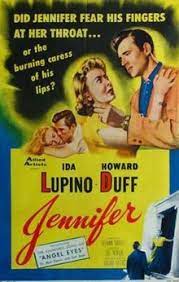
“Jennifer” (1953)
Drama

Running Time: 73 minutes
Written by: Bernard Girard and Richard Dorso
Directed by: Joel Newton
Featuring: Ida Lupino, Howard Duff, Robert Nichols and Mary Shipp
Critical Commentary
“Jennifer” is a film noir directed by Joel Newton, and Lupino plays the lead role of Agnes Langley, a woman who suffers from a split personality disorder.
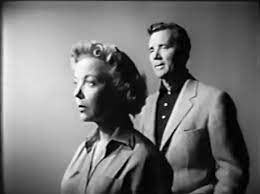
The movie revolves around Agnes, a married woman who starts experiencing blackouts and finds herself in dangerous situations with no recollection of what happened. As her condition worsens, she seeks help from a psychiatrist, Dr. Hallet (played by Howard Duff), to uncover the root cause of her disorder.
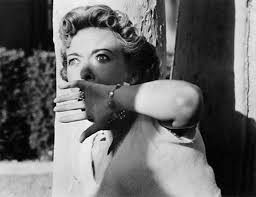
Ida Lupino delivers a strong performance as Agnes/Jennifer, skilfully portraying the contrasting personalities of a troubled woman. She captures the fear, confusion, and vulnerability of her character, effectively conveying the internal struggles Agnes faces.
The film’s plot is intriguing, exploring Agnes’ psychological battle and the mystery surrounding her condition. It delves into the nature of her dissociative identity disorder and the toll it takes on her personal and marital life. The suspense builds as Agnes becomes increasingly entangled in a web of deceit and danger.
“Jennifer” showcases some classic noir elements, including shadowy cinematography, atmospheric settings, and a sense of impending doom. The film effectively captures the mood and atmosphere prevalent in the noir genre. While “Jennifer” may not be as well-known as some of Ida Lupino’s other works, it still offers a compelling story and showcases her acting skills. If you enjoy psychological thrillers and classic film noir, “Jennifer” from 1953 might be worth watching.
“Jennifer” stands out as a unique entry in Ida Lupino’s filmography. Not only did she star in the film, but she also took on the role of director, making her one of the few prominent female directors in the 1950s.
Lupino’s direction brings a distinct perspective to the movie, adding depth and nuance to the storytelling. Her experience as an actress shines through in her ability to extract strong performances from the cast and create an atmosphere that enhances the film’s suspenseful nature.
The supporting cast in “Jennifer” also delivers solid performances. Howard Duff portrays Dr. Hallet, the psychiatrist trying to unravel the mysteries of Agnes’ condition. His character brings a sense of rationality and compassion to the narrative, serving as a counterbalance to Agnes’ troubled state.
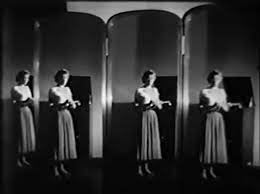
The cinematography in “Jennifer” deserves praise as well. The use of lighting and shadows effectively captures the film noir aesthetic, heightening the tension and adding an air of mystery. The visuals play a crucial role in establishing the film’s atmosphere and enhancing the psychological aspects of the story.
One aspect of “Jennifer” that may be subject to individual interpretation is the portrayal of mental illness. While the film tackles the topic of dissociative identity disorder, it does so through the lens of 1950s cinema, which might not align with contemporary understanding and sensitivity towards mental health issues. It’s important to approach the movie with the understanding that its depiction of mental illness may not fully align with modern perspectives. “Jennifer” is a notable entry in Ida Lupino’s career, showcasing her versatility as both an actress and director. It offers an engaging story, solid performances, and a classic film noir atmosphere. If you appreciate Lupino’s work or enjoy films from the era, “Jennifer” is certainly worth exploring.
One notable aspect of “Jennifer” is its exploration of gender dynamics and societal expectations during the 1950s. Agnes Langley’s struggles with her identity and mental illness can be seen as a reflection of the pressures placed on women during that era. The film touches on themes of repression, conformity, and the limited options available to women at the time. This adds an additional layer of depth to the story and offers a commentary on the societal context in which the film is set.
The pacing of “Jennifer” is deliberate, allowing the audience to become fully immersed in the psychological turmoil of the protagonist. The film takes its time to build tension and suspense, gradually revealing the layers of Agnes’ fractured psyche. This deliberate approach may appeal to those who appreciate a slower, more introspective storytelling style.
The production design and costumes in “Jennifer” effectively capture the 1950s aesthetic, enhancing the film’s period setting. From the fashion choices to the interior decor, the attention to detail contributes to the overall immersion and authenticity of the film.
It’s worth mentioning that “Jennifer” may not have received as much attention or recognition as some of the more iconic films from the film noir era. However, it remains an interesting and engaging entry within the genre, offering a captivating performance from Ida Lupino and an exploration of psychological turmoil that will appeal to fans of classic noir.
“Jennifer” (1953) is a film that showcases Ida Lupino’s talent both in front of and behind the camera. With its suspenseful story, strong performances, atmospheric visuals, and thematic depth, the film provides an intriguing and thought-provoking viewing experience. If you have an appreciation for classic film noir or are interested in exploring Lupino’s filmography, “Jennifer” is definitely worth seeking out.
Technical Commentary
Video
There are some mild noise issues in certain landscape shots, but this image is generally attractive. Blacks are luscious, and background clarity enhances the film’s occasionally clever blocking. Textures, particularly of the sand that plays a pivotal role in the narrative, are well-detailed. There is a substantial amount of detail present throughout with subtle textures on the outfits and in the environments and production design. The contrast is steady with only a minor level of density fluctuation in the print. Black levels are pretty solid but could be given a bit more depth. There are no substantial occurrences of black crush or compression artefacts across the five films. The black-and-white photography holds up well across every film as they make the most of their high definition presentation with natural grain intact.
Audio
The soundtrack is clean and packs a bit of nicely understated oomph. Franz Waxman’s score is irritating, but it sounds great. The Blu-Ray set comes with a pretty solid LPCM 2.0 track for each of these five films that presents them well even with some years under their belt. Dialogue comes through clearly without sounding gauzy or weak. It is balanced well with the environmental elements so important elements stay prominent in the mix.
Special Features
- 1080p High-definition presentation on Blu-ray from a 2021 4K scan
- Original Aspect Ratio 1.37:1
- Audio English LPCM 2.0 Mono
- Optional English HOH subtitles


 spryfilm.com