
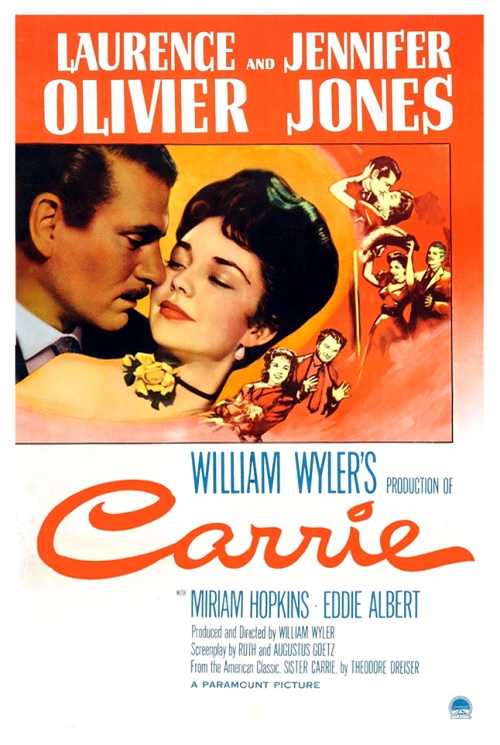
“Carrie” (1952)
Drama

Running Time: 106 minutes
Written by: Theodore Dreiser, Ruth Goetz and Augustus Goetz
Directed by: William Wyler
Featuring: Laurence Olivier, Jennifer Jones and Edward Albert
Julie Hurstwood: “Will you give her up?”
George Hurstwood: “I’m not like you, Julia. I don’t make threats, and I don’t make promises.”
Julie Hurstwood: “Well, I make them. And I keep them.”
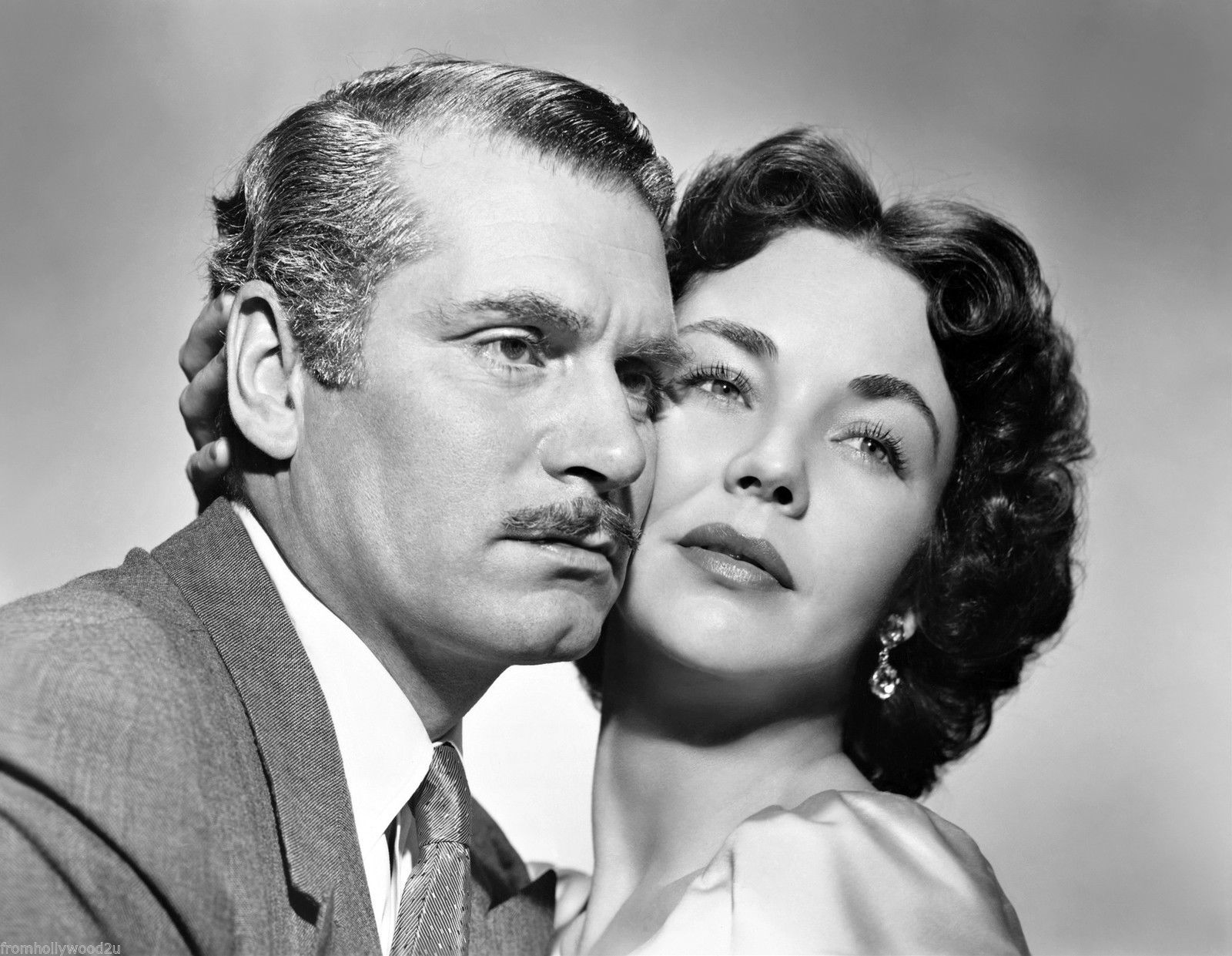
William Wyler’s 1952 melodrama Carrie, based on the classic American novel Sister Carrieby Theodore Dreiser, was not a major success when it was released, despite its cast featuring Laurence Olivier, Jennifer Jones, and Eddie Albert. The controversial and bleak subject matter of the film made it a box office failure. Ruth and Augustus Goetz turn Dreiser’s novel into a taut screenplay about class, poverty, sex, romance, and social mores.
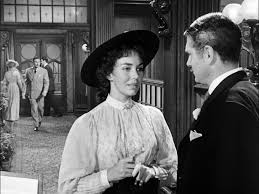
Jones plays Carrie, a naïve young small, farming town woman who, at eighteen sets off from her smalltown to the big city of Chicago to make it. She stays with her older sister and brother-in-law believing with her education she will be able to find a job and success soon, but in the early 20th century, it proves difficult for a woman to find work, even in the bustling metropolis of Chicago. She gets a job in a textile plant but quickly suffers an industrial injury and loses her job. Down and out, she becomes the mistress to the fast-talking traveling salesman Charles Drouet (Albert), the only person who will help her financially. She soon ditches Charles for the older – and wealthier – restauranteur George Hurstwood (Olivier).
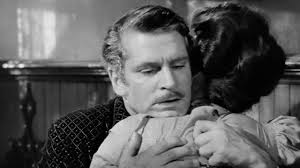
George is trapped in a loveless marriage with a guileful wife working to steal his fortune. He becomes so obsessed with Carrie that he steals money from his boss to run away with her and keep her in luxury. They are tracked down in New York by investigators and George has to pay back the money, leaving him destitute and blacklisted in the resteraunt business starting a downward spiral of poverty and despair for the couple. Carrie eventually starts a career as an actress and becomes successful, but it may be too late to save her relationship with George.
Carrie’s derision of both the American class structure and capitalism’s abandonment of the destitute, the difficult themes of industrial accidents, contemplated suicide, marital affairs and even bigamy made it a hard sell for audiences. But it is the melodramatic romance and chemistry between Olivier and Jones that carry the film. Wyler also imbues the film’s visual palette with detail, plenty of balance between shadow and light, and high luxury costumes from the designers.
Video
The black and white 35mm source for Carrie is presented in a 1.33:1 AVC 1080p encodement on this Blu-ray from Imprint. It does not look particularly great compared to some other films of the same era that have been issued on Blu-ray or 4K. There are a lot of scratches, tramlines, speckling, and there is some flicker. The black levels are a bit inconsistent. Some areas show a bit of washout while sometimes it crushes a bit. White levels also tend to clip a bit. Grain looks natural and overall detail is reasonable, especially on the many close-ups on faces; depth-of-field is just a bit limited.
Audio
Carrie arrives with its original mono mix in LPCM 2.0. This is a very reasonable track given the 1952 vintage of the film. It offers up intelligible dialogue with little in the way of clipping, pops, or hiss.
Special Features
- Audio commentary by professor/film scholar Jason A. Ney
- Neil Sinyard on Carrie – interview with the author of A Wonderful Heart: The Films of William Wyler (1080p; 00:30:24)
- Theatrical Trailer (720p)

 spryfilm.com